
The Rise and Challenges of Stair Climbing as Exercise
From Smoking Cessation to Security Concerns
For Tom McGee, a 69-year-old market researcher from the Chicago area, stair climbing started as a simple strategy to kick a smoking habit two decades ago. What began as a health intervention has evolved into a lifelong exercise routine, though not without its peculiar complications. McGee jokes that he’s “gotten kicked out of about every hotel in the city” as his workout sessions in hotel stairwells have repeatedly attracted the attention of suspicious security guards. His experience highlights a curious paradox in modern fitness culture: while stair climbing has gained recognition as an excellent form of exercise and has been increasingly incorporated into official health guidelines, many dedicated climbers find themselves facing unexpected obstacles in the form of locked doors and security restrictions. This disconnect between health recommendations and practical access has created frustration for fitness enthusiasts who simply want to take advantage of the vertical spaces that surround them in urban environments. The irony isn’t lost on people like McGee—buildings are full of perfectly good stairs, yet using them for their intended purpose can sometimes feel like a clandestine operation.
The Science Behind Stepping Up
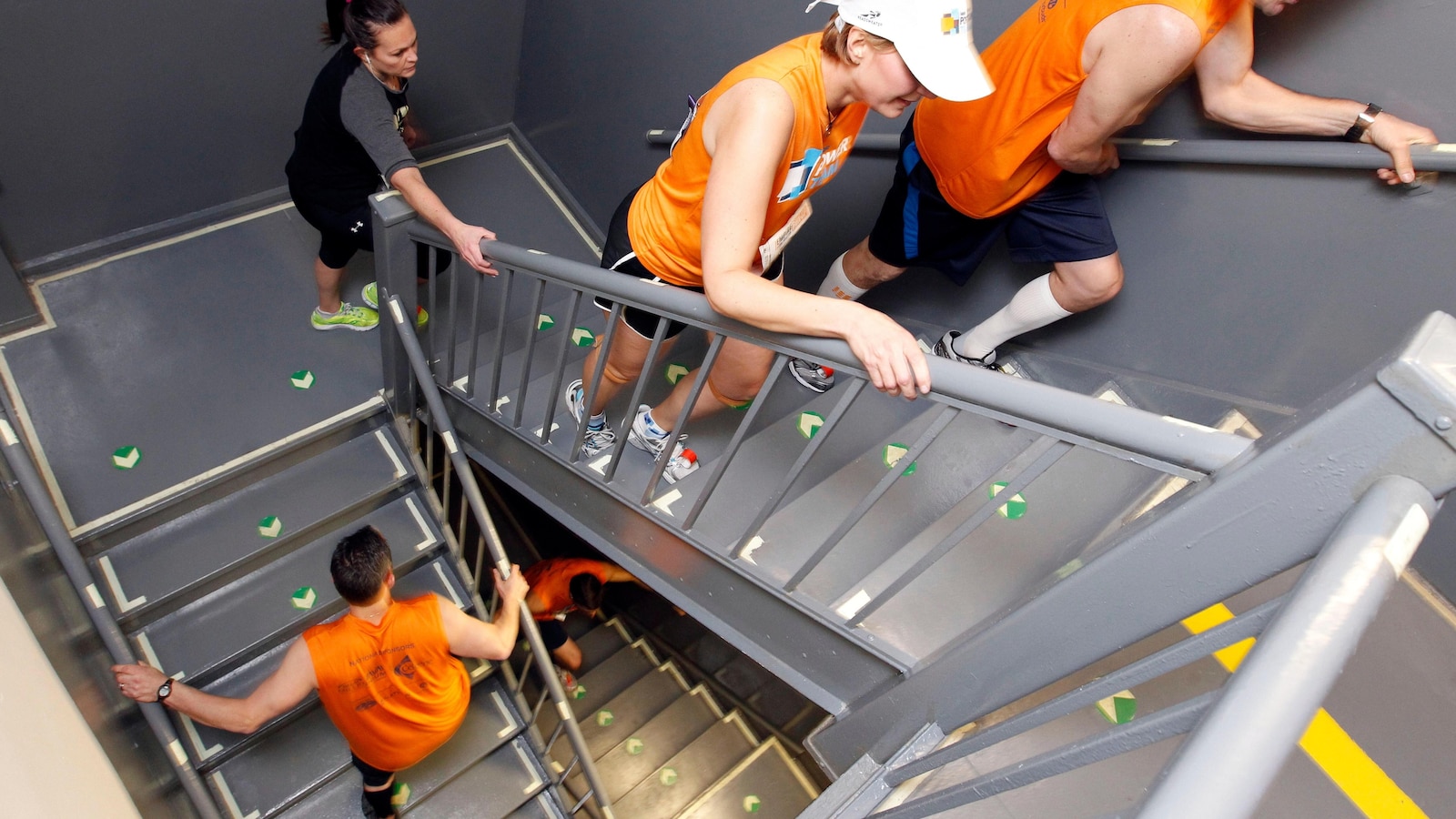
The medical and scientific community has provided substantial evidence supporting stair climbing as an exceptionally efficient exercise. Dr. Luis Rodriguez, a 66-year-old semi-retired pediatric pulmonologist who participates in stair-climbing events, enthusiastically advocates for the practice, explaining that “you are working your legs, you are working your heart, you are working your lungs.” His professional and personal experience underscores the multifaceted benefits of this simple activity. Research has quantified these advantages in compelling terms: climbing stairs for just four minutes provides roughly the same cardiovascular benefit as approximately ten minutes of brisk walking or twenty minutes of slower-paced walking. This remarkable efficiency makes stair climbing an attractive option for people seeking maximum health benefits from minimal time investment. The federal government recognized this potential when it updated its physical activity guidelines in 2018 to specifically promote short-burst activities like stair climbing. This represented a significant shift in thinking about exercise, acknowledging that fitness gains don’t require lengthy, dedicated workout sessions but can accumulate through brief periods of activity scattered throughout the day. Whether it’s choosing stairs over elevators during your workday or deliberately seeking out staircases for dedicated climbing sessions, these incremental efforts can add up to substantial health improvements over time.
Beyond Physical Benefits: Mental and Emotional Rewards
The advantages of stair climbing extend well beyond cardiovascular fitness and muscle strength. Stella Volpe, an exercise expert at Virginia Tech, emphasizes that many people remain unaware that exercise doesn’t need to happen “all in one bout for it to be effective,” a revelation that can make fitness goals feel more achievable for busy individuals. Jennifer Gay, a public health researcher at the University of Georgia, has investigated the psychological dimensions of stair climbing and found associations with improved mental health and enhanced feelings of energy. This connection between physical activity and emotional well-being adds another dimension to the case for stair climbing, suggesting that those brief climbs between floors might be lifting spirits as well as heart rates. The accessibility of stairs—when they are actually accessible—makes this form of exercise particularly democratic, requiring no special equipment, gym membership, or athletic ability. However, health experts appropriately caution that individuals who might have mobility issues or other health concerns should consult with their doctors before embarking on a stair-climbing regimen. The American Lung Association has embraced stair climbing’s profile by organizing “Fight for Air” fundraising events each spring in office towers across the country, where participants climb dozens of floors for charity. These events have proven popular and fun, though organizers note that the name deliberately references both the shortness of breath climbers experience and the experience of living with lung disease, creating awareness while promoting fitness.
The Liability Problem: When Safety Concerns Lock Doors
The disconnect between health recommendations and stair access often comes down to legal concerns. Building owners and landlords have increasingly restricted stairwell access based on advice from law firms warning about potential liability for injuries. Attorneys point to various hazards—poor lighting, liquids on steps, broken handrails—that could lead to lawsuits if someone falls and gets hurt on a staircase. This legal caution has prompted many property managers to designate stairs for emergency use only, effectively removing them from everyday circulation. A 2018 study examining hospital emergency department visits lends some credibility to these concerns, finding that more than one million stair-related injuries occur annually in the United States. The research revealed that broken bones are more common among older people, and more than 60% of those injured are women. However, public health researchers like Jennifer Gay argue that the actual risk of injury while climbing stairs is quite low, with most injuries occurring during descent rather than ascent. Gay points out that building managers “can’t make it a one-way street,” acknowledging the practical difficulty of preventing downward stair travel while encouraging upward climbing. Health advocates have spent more than a decade pushing back against overly restrictive policies. In 2013, ChangeLab Solutions, a California-based health policy nonprofit, published a resource guide urging property owners to open their stairwells, arguing that they pose no greater liability risk than other common areas in buildings and that the public health benefits outweigh the minimal additional risk.
The Reality of Finding Stairs to Climb
Despite the theoretical abundance of stairs in urban environments, actually finding accessible ones can prove surprisingly difficult. Researchers estimate that about 60% of U.S. workers perform their jobs in multistory buildings with stairwells, yet there are no comprehensive statistics on what percentage of these buildings restrict stair access. Anecdotal evidence from climbing enthusiasts suggests the restrictions are widespread. Lisa Bai, who works in real estate in New York, represents a common frustration—she cannot use the stairs in her own office building. What should be a convenient opportunity to incorporate exercise into her workday is instead prohibited, illustrating how “it’s not” always easy to access stairs, even when they’re physically present. Many dedicated climbers have developed workarounds. Fitness equipment like StairMaster machines can simulate the physical exertion of climbing, though enthusiasts who participate in tower climb events insist the machines don’t quite replicate the demands of ascending actual flights of stairs. The search for climbable stairs requires creativity and persistence. Some people scout out public spaces like parks with long staircases, while others identify hospital parking decks as accessible alternatives. The challenge intensifies when traveling, as McGee’s experiences with hotel security demonstrate, turning what should be a simple workout into an obstacle course of locked doors and suspicious guards.
Persistence and Community: Making It Work
Some stair-climbing devotees have found that determination and social support can overcome access challenges. Carmen Erickson and Vivian Dawson, who live in the Detroit suburbs, exemplify this approach. For roughly a decade, they’ve met about three times weekly to climb stairs together, typically at a nearby park. Their commitment extends to their vacation planning—they deliberately book top-floor rooms in tall hotels specifically so they can use the stairs during their stay. They also seek out hills and hospital parking decks when traveling. Their most significant victory came through negotiation: they secured after-hours access to one building’s stairwells by agreeing to sign liability waivers and check in with security officers each visit. Erickson, 53, notes optimistically that “if you connect with the right people and tell them what they’re doing and agree to the rules, it hasn’t really been a problem for us.” However, Dawson, 64, adds a note of realism: “You have to really want to do it.” Their experience illustrates both the possibilities and the limitations of the current situation. Yes, dedicated individuals can find ways to climb stairs regularly, but it requires extra effort, planning, creativity, and often negotiation that shouldn’t be necessary for such a beneficial activity. As public health guidelines increasingly recognize the value of brief, intense activities like stair climbing, the gap between recommendations and practical access becomes more glaring, suggesting a need for policy changes that would make this simple, effective exercise more readily available to everyone.