
Stephen Colbert vs. CBS: A Late-Night Showdown Over Censorship and Political Pressure
The Controversy Erupts Over a Blocked Interview
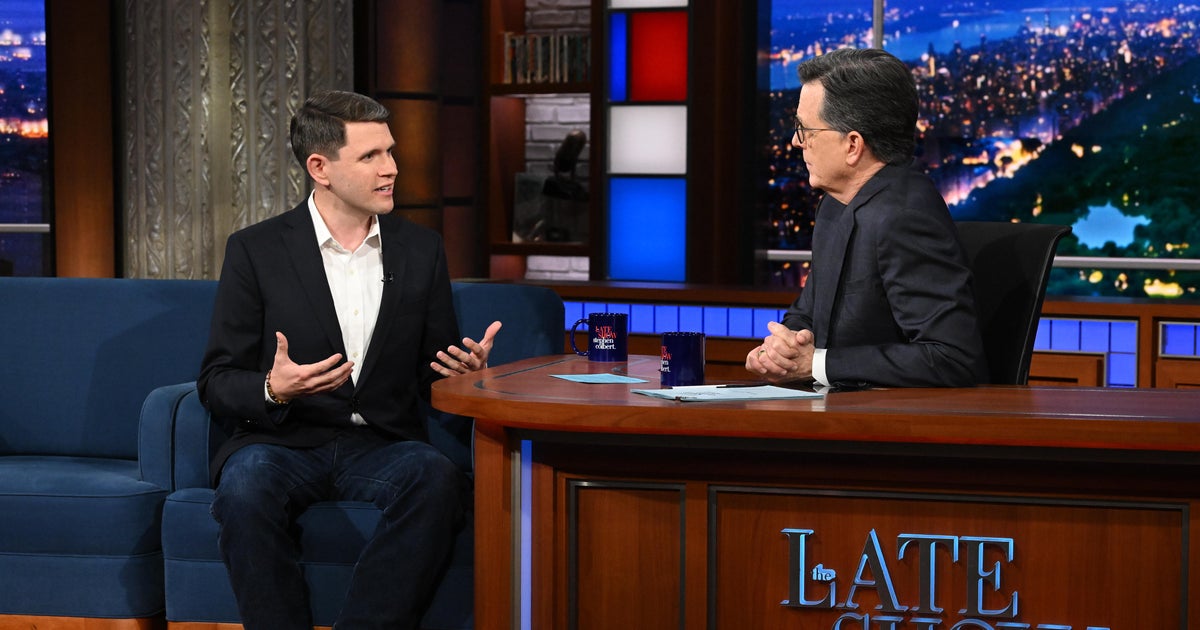
What started as a routine interview on “The Late Show with Stephen Colbert” has escalated into a full-blown conflict between the veteran late-night host and his own network. On Tuesday night, Colbert didn’t hold back his frustration with CBS after the network released a statement about his interview with Texas Democrat James Talarico—an interview that mysteriously never made it to broadcast television. In a moment of dramatic television, Colbert literally crumpled up the network’s statement, stuffed it into a dog poop bag, and threw it away on camera. “For the lawyers to release this without even talking to me is really surprising. I don’t even know what to do with this crap,” he said, clearly exasperated. Despite his visible frustration, Colbert was careful to add that he wasn’t angry and didn’t want an adversarial relationship with the network he’s called home for years. It’s a delicate dance—expressing genuine disappointment while trying not to burn bridges with the corporate entity that signs his paychecks.
The controversy centers around CBS’s decision not to air Colbert’s interview with Talarico, a Democratic candidate running for the U.S. Senate from Texas, on traditional broadcast television. Instead, the interview was relegated to YouTube, where Federal Communications Commission (FCC) rules don’t apply. Colbert initially criticized CBS on Monday night, explaining to his audience that the network had blocked the interview from airing on TV due to recent FCC guidance about “equal time” provisions for political candidates. This decades-old rule requires broadcasters to offer equal opportunities to all candidates running for the same office if they give airtime to one candidate. However, the rule has long exempted legitimate news programming and news interviews—categories that late-night talk shows have traditionally fallen under without controversy.
CBS Responds, But Colbert Isn’t Buying It
CBS quickly issued a statement pushing back against Colbert’s characterization of events, insisting that the network did not prohibit “The Late Show” from broadcasting the Talarico interview. According to the network, they simply provided “legal guidance” that airing the interview could trigger the FCC’s equal-time rule for two other candidates in the race, including Representative Jasmine Crockett. The statement claimed that CBS presented options for how equal time could be fulfilled for the other candidates, but “The Late Show” decided on its own to present the interview through YouTube with only on-air promotion during the broadcast. It’s a carefully worded statement that attempts to shift responsibility from the network to the show itself—a move that clearly didn’t sit well with Colbert.
On Tuesday night, Colbert took direct aim at this statement, calling it out as lawyer-speak written “by—and I’m guessing for—lawyers.” He pointed out the absurdity of the network’s position by revealing that “every word” of his Monday night script had been “approved by CBS’ lawyers who, for the record, approve every script that goes on the air.” In other words, the network’s legal team had signed off on his original explanation of events. Colbert went even further, disclosing that between his Monday monologue and his on-air discussion of the issue, he was called backstage for additional notes from these same lawyers—something he said had “never, ever happened before.” They specifically told him what language to use when describing the equal-time exception, and he used exactly that language. The implication was clear: the network was trying to have it both ways, controlling his message while simultaneously claiming he made the decision independently.
The FCC’s New Enforcement Push and Political Motivation
To understand this controversy fully, it’s important to look at the broader context of what’s happening at the FCC. Last month, the commission issued a notice highlighting a decades-old law requiring FCC-licensed broadcasters that allow political candidates to appear on air to offer “equal opportunities” to all other candidates running for the same office. While the law exempts “bona fide newscasts” and news interviews, FCC Chair Brendan Carr—appointed by President Trump and widely considered a Trump ally—made waves by suggesting on social media that legacy TV networks have been wrongly assuming their late-night and daytime talk shows qualify as “bona fide news” programs, “even when motivated by purely partisan political purposes.” Carr’s statement served as a warning shot across the bow of late-night television, which has been overwhelmingly critical of Trump.
Colbert didn’t mince words about what he sees as the real motivation behind this sudden enforcement push. He accused Carr of being “motivated by partisan purposes” himself and argued that the Trump administration “wants to silence anyone who says anything bad about Trump on TV, because all Trump does is watch TV.” It’s a charge that resonates with many who see this FCC action as part of a broader pattern of the administration targeting critical media voices. Colbert expressed genuine surprise that CBS, “this giant, global corporation would not stand up to these bullies.” He pointed out that his team had researched the issue thoroughly and “can’t find one example of this rule being enforced for any talk show interview, not only for my entire late-night career, but for anyone’s late-night career going back to the 1960s.” In other words, this interpretation of the equal-time rule represents a radical departure from decades of precedent, all happening under an administration known for its hostility toward critical media coverage.
An FCC Commissioner Weighs In and the First Amendment Question
The controversy took another turn when FCC Commissioner Anna Gomez, who was nominated by former President Joe Biden, publicly criticized CBS’s decision. Speaking out on Tuesday before Colbert’s latest comments, Gomez emphasized that CBS is protected under the First Amendment “to determine what interviews it airs.” Her point was significant: the network wasn’t legally required to pull the interview from broadcast television. “That makes its decision to yield to political pressure all the more disappointing,” Gomez wrote on social media, adding that “corporate interests cannot justify retreating from airing newsworthy content.” Her statement underscores a crucial point in this debate—this wasn’t about legal compliance but about corporate courage, or the lack thereof.
Gomez’s intervention highlights the dangerous precedent being set here. If major networks begin self-censoring political content out of fear of FCC scrutiny under a politically motivated commission, the implications for free speech and press freedom are profound. The equal-time rule was never intended to chill legitimate news programming and interviews; it was designed to prevent broadcasters from giving unfair advantages to preferred candidates through direct campaign airtime. Late-night interviews with political figures have been a staple of American television for more than half a century, across countless elections and administrations. Hosts from Johnny Carson to David Letterman to Jon Stewart have interviewed politicians from all parties without triggering equal-time concerns. The fact that this is suddenly an issue now, under this particular administration, raises obvious questions about whether this is truly about FCC compliance or about intimidating networks into reducing critical political coverage.
The Aftermath and What It Means for Late-Night Television
The fallout from this controversy has been swift and multifaceted. The Talarico campaign announced that it raised an astonishing $2.5 million in the 24 hours after the controversy began—the largest single-day fundraising total in the campaign’s history. What CBS may have intended as a cautious legal maneuver has instead turned into a publicity bonanza for the very candidate they were worried about giving too much exposure to. It’s a perfect illustration of the Streisand effect, where attempts to hide or limit information only draw more attention to it. The YouTube version of the interview has likely been viewed by far more people than would have watched it on traditional broadcast television, and Talarico has become a national story overnight.
For the broader landscape of late-night television and political discourse, the implications are deeply troubling. If networks are going to preemptively pull interviews with candidates out of fear of FCC retaliation, the quality and diversity of political coverage will inevitably suffer. Late-night shows have evolved into important forums for political discussion, reaching audiences—particularly younger viewers—who might not watch traditional news programming. When Colbert and his colleagues interview politicians, they’re performing a journalistic function, asking questions and challenging answers in ways that inform the public. If that function is compromised by corporate legal departments worried about regulatory backlash from a politicized FCC, everyone loses except those in power who would prefer not to face tough questions. As this story continues to develop, with CBS News reaching out to the FCC, the White House, and Paramount (the parent company of both CBS and CBS News) for comment, one thing is clear: Stephen Colbert has drawn a line in the sand. Whether CBS and other networks will stand with him in defense of editorial independence, or continue to cave to political pressure, will determine not just the future of late-night television, but the health of political discourse in America.