
Supreme Court Justices Alito and Thomas Not Stepping Down: What This Means for Trump and the Court
No Retirement Plans on the Horizon
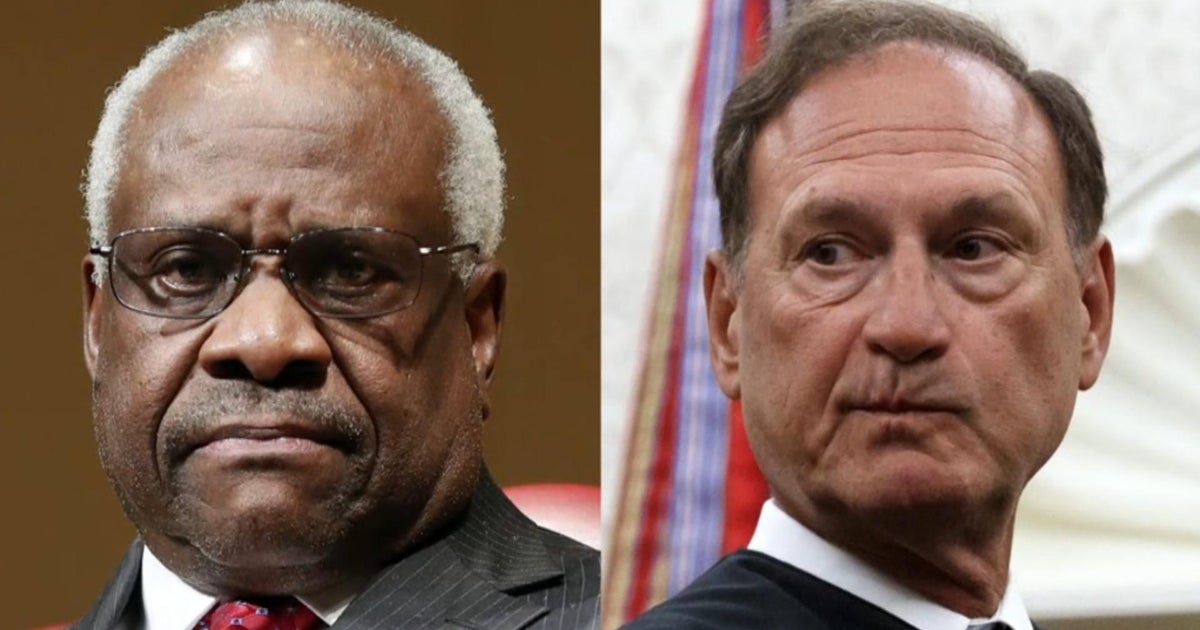
In a significant development for the composition of America’s highest court, Supreme Court Justice Samuel Alito has made it clear through sources close to him that he has no intention of retiring from the bench this year. Similarly, Justice Clarence Thomas, another pillar of the Court’s conservative wing, has also signaled through those in his inner circle that stepping down is not in his plans for the foreseeable future. This news, which was initially broken by Fox News and subsequently confirmed by CBS News, carries substantial implications for the current political landscape and the future direction of the Supreme Court. The announcement effectively closes the door on what would have been a historic opportunity for former President Donald Trump to secure his fourth Supreme Court nomination, a feat that would have further cemented his influence on the judicial branch for generations to come.
The Conservative Stronghold Remains Intact
Both Justice Alito and Justice Thomas represent cornerstone figures within the Supreme Court’s conservative majority, a bloc that has increasingly shaped American jurisprudence on critical issues ranging from reproductive rights to administrative law. Their decision to remain on the bench ensures continuity in the Court’s ideological composition, at least for now. Justice Alito, appointed by President George W. Bush in 2006, has consistently been one of the most conservative voices on the Court, authoring major opinions that have reshaped American law. Justice Thomas, who was nominated by President George H.W. Bush in 1991, is the Court’s longest-serving current member and has built a reputation for his originalist interpretation of the Constitution and his willingness to challenge long-standing precedents. Together, these two justices form part of the six-justice conservative supermajority that has dominated recent Supreme Court decisions, fundamentally altering the legal landscape on issues that affect millions of Americans. Their continued presence means that this conservative influence will persist, shaping decisions on everything from environmental regulations to voting rights, from gun control to religious freedom cases.
Political Implications and the Midterm Election Landscape
The timing of this announcement is particularly noteworthy given the political calendar. With midterm elections approaching, the composition of the Supreme Court often becomes a rallying point for both political parties, energizing their respective bases and influencing voter turnout. Had either justice announced their retirement, it would have created a major political firestorm, potentially dominating the national conversation and overshadowing other important issues on the ballot. For President Trump and his supporters, the possibility of a fourth Supreme Court nomination would have represented an unprecedented opportunity to further consolidate conservative judicial philosophy at the highest level of American jurisprudence. However, with both justices choosing to remain, this scenario is effectively off the table for this electoral cycle. This development may shift the focus of midterm campaigns away from Supreme Court nominations and toward other pressing issues such as the economy, healthcare, immigration, and other policy matters that directly impact Americans’ daily lives. Political strategists on both sides will need to recalibrate their messaging accordingly, though the Supreme Court’s recent decisions and future potential cases will undoubtedly still play a role in motivating voters.
The Legacy of Trump’s Court Appointments
President Trump’s impact on the Supreme Court has already been profound and historically significant. During his single term in office, he successfully appointed three justices to the bench: Neil Gorsuch in 2017, Brett Kavanaugh in 2018, and Amy Coney Barrett in 2020. These appointments shifted the Court’s ideological balance decisively to the right and have had far-reaching consequences for American law and society. The most dramatic example of this shift came with the Court’s decision to overturn Roe v. Wade in 2022, ending nearly fifty years of constitutional protection for abortion rights—a decision that would likely not have been possible without Trump’s appointments. Beyond this landmark ruling, Trump’s justices have influenced decisions on gun rights, religious liberty, regulatory authority, and numerous other areas of law. The fact that Trump will not have the opportunity to add a fourth justice to this roster does not diminish the lasting impact he has already made. His three appointees are relatively young by Supreme Court standards, meaning they could serve for decades, shaping American law well into the 21st century. This judicial legacy may ultimately be viewed by historians as one of the most consequential aspects of Trump’s presidency, outlasting many of his policy initiatives and executive actions.
What This Means for the Court’s Future Direction
With Justices Alito and Thomas remaining on the bench, the Supreme Court’s conservative majority appears secure for the immediate future. This stability means that the Court will likely continue on its current trajectory, revisiting and potentially overturning previous precedents that conservative legal scholars have long criticized. Areas of law that may see continued evolution include affirmative action policies, environmental regulations through challenges to administrative agency authority, campaign finance laws, Second Amendment rights, and the separation of church and state. The Court’s recent terms have already demonstrated a willingness to take on controversial cases and issue sweeping decisions that fundamentally alter established legal frameworks. With the same configuration of justices remaining in place, this pattern is likely to continue. However, it’s worth noting that Supreme Court justices sometimes evolve in unexpected ways once on the bench, occasionally surprising those who appointed them. While Alito and Thomas have been remarkably consistent in their judicial philosophies, the law often presents complex questions that don’t neatly align with political ideologies. Additionally, the Court’s decisions are often more nuanced than simple conservative versus liberal labels suggest, with justices sometimes forming unexpected coalitions on specific issues.
Looking Ahead: The Next Potential Opening
The news that Alito and Thomas are staying put naturally raises questions about when the next Supreme Court vacancy might occur. Supreme Court justices serve lifetime appointments, meaning they can choose to retire whenever they wish or serve until they are no longer physically or mentally capable. Historically, justices have sometimes timed their retirements to allow presidents who share their judicial philosophy to nominate their successors, though this is not always the case. Justice Thomas, at 76 years old, and Justice Alito, at 74, are among the older members of the current Court, though not the oldest—that distinction belongs to Justice Sonia Sotomayor, who turns 70 this year. The liberal wing of the Court, which is now in the minority, consists of Justices Sotomayor, Elena Kagan, and Ketanji Brown Jackson. Any future vacancy, depending on which justice departs and who holds the presidency at that time, could either reinforce the current conservative majority or potentially begin to shift the balance back toward the center. For now, though, the Court’s composition remains unchanged, and Americans can expect the ideological makeup of the nation’s highest court to remain stable. This continuity allows for a degree of predictability in how the Court might rule on major cases, even as it continues to take on some of the most contentious and divisive issues facing American society today.