
Supreme Court Takes Aim at Federal Gun Law for Drug Users: A Constitutional Crossroads
The Case That’s Testing America’s Gun Rights Framework
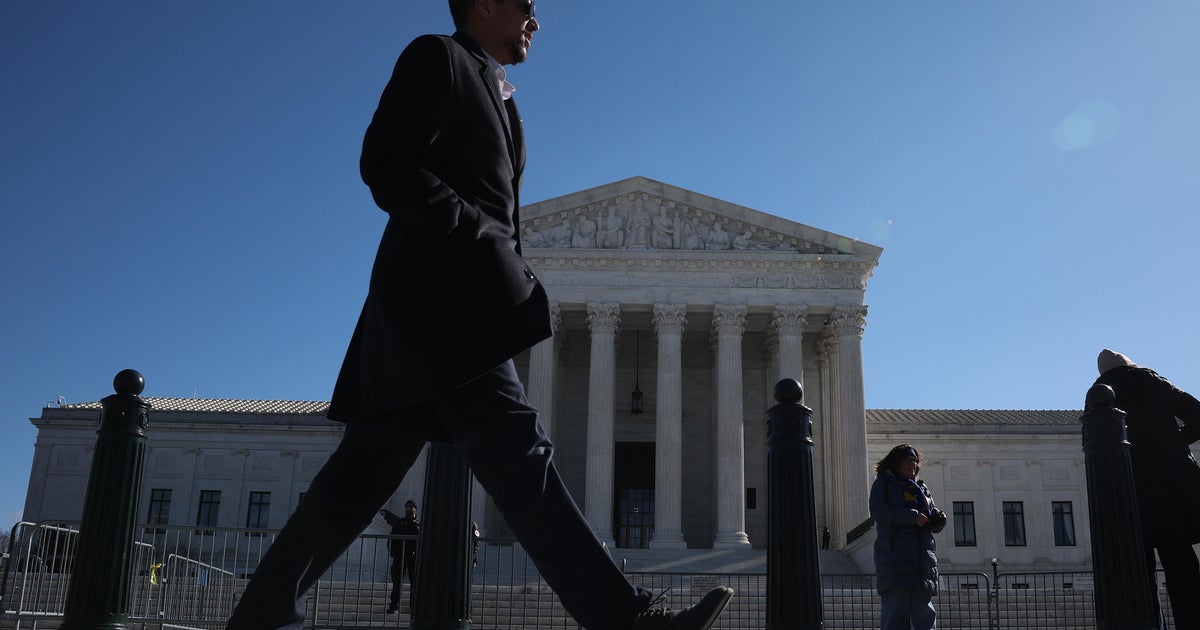
The United States Supreme Court finds itself at another critical juncture in defining the boundaries of Second Amendment rights as it hears arguments in United States v. Hemani. This case centers on a decades-old federal statute that prohibits unlawful drug users from possessing firearms—a law that has stood largely unchallenged until the Supreme Court’s 2022 landmark decision fundamentally changed how courts evaluate gun regulations. The case involves Ali Hemani, a Texas man charged with illegal firearm possession after FBI agents discovered a Glock 9mm pistol along with marijuana and a small amount of cocaine during a search of his family’s home. What makes this case particularly significant is that it represents the second major gun rights dispute the Court is considering this term, following closely on the heels of arguments about Hawaii’s concealed-carry restrictions. The Hemani case has created unusual political alignments, with gun violence prevention groups supporting the Trump administration’s position to uphold the law, while the American Civil Liberties Union has joined forces with gun rights organizations like the National Rifle Association in arguing for its invalidation. This strange-bedfellows scenario underscores just how complex and multifaceted gun rights issues have become in modern America, cutting across traditional ideological lines and forcing us to confront fundamental questions about constitutional rights, public safety, and governmental authority.
Understanding the Law and Its Most Famous Violator
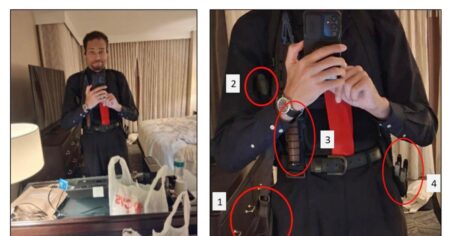
The statute at the heart of this legal battle was enacted by Congress in 1968 as part of the broader Gun Control Act, a comprehensive piece of legislation designed to regulate firearms in the wake of several high-profile assassinations that shook the nation during that turbulent decade. The specific provision in question makes it a federal felony, punishable by up to 15 years in prison, for anyone who unlawfully uses drugs to possess a firearm. According to Justice Department estimates, approximately 300 people face charges under this statute each year—a relatively small number in the grand scheme of federal prosecutions, but one that has touched even the highest echelons of American politics. The most prominent person convicted under this law was Hunter Biden, son of former President Joe Biden, who was found guilty in 2024 of possessing a gun while addicted to crack cocaine. That conviction, which became a political lightning rod, was ultimately erased when the elder Biden pardoned his son in one of his final acts as president in January 2025. The Hunter Biden case brought unprecedented public attention to a law that had operated largely in the shadows, forcing Americans to grapple with questions about addiction, rehabilitation, constitutional rights, and the intersection of personal struggle with legal accountability. In Hemani’s case, the factual circumstances were somewhat different but equally revealing about how this law operates in practice. When FBI agents searched his family’s Texas home, Hemani voluntarily informed them about the Glock pistol and surrendered it without resistance. He also candidly admitted to using marijuana several times a week—an admission that would form the sole basis for his federal prosecution, as prosecutors focused exclusively on his marijuana use rather than the small amount of cocaine also found during the search.
The Legal Battle and What Lower Courts Decided
Ali Hemani’s legal team moved to dismiss the charge against him, arguing that the federal law prohibiting drug users from possessing firearms violates the Second Amendment’s guarantee of the right to keep and bear arms. In a decision that sent shockwaves through the legal community and set up this Supreme Court showdown, the U.S. Court of Appeals for the 5th Circuit sided with Hemani and defendants in similar cases. In rulings issued in 2023 and 2024, the appellate court declared that the law is unconstitutional when applied to drug users who were not proven to be under the influence of drugs at the specific time they possessed the firearm. This distinction—between habitual drug use and active intoxication—became crucial to the court’s reasoning and highlighted the difficulties courts have faced in applying the Supreme Court’s new framework for evaluating gun laws. The 5th Circuit’s decisions created a split with other federal appellate courts and raised the prospect that a longstanding federal firearms restriction might be invalidated across a significant portion of the country. Legal experts immediately recognized that the Supreme Court would likely need to intervene to resolve this conflict and provide clearer guidance. Joseph Blocher, co-founder of the Duke Center for Firearms Law, explained that the fundamental question before the Court is “what kinds of people can be disarmed without violating the Second Amendment.” This seemingly straightforward question touches on profound issues about individual rights, governmental authority, public safety, and how we balance competing constitutional and social values in a diverse, complex society.
The Government’s Defense and Historical Arguments
Solicitor General D. John Sauer, representing the Trump administration’s Justice Department, has mounted a vigorous defense of the federal statute, arguing that the Second Amendment permits Congress to restrict gun possession by habitual drug users. In detailed court filings, Sauer emphasized that the law doesn’t permanently strip anyone of their gun rights but rather imposes a “temporary and limited” restriction that ends once a person stops habitually using illegal drugs. This temporal aspect of the law, the government argues, makes it a reasonable regulation rather than an unconstitutional infringement. Sauer’s argument relies heavily on historical evidence, pointing to founding-era measures that restricted the rights of habitual drunkards as closely analogous precedents. He contends that American legislatures have long possessed the authority to restrict gun possession by “unusually dangerous people”—though he acknowledges these limits cannot be so expansive that they encompass most ordinary citizens. The government’s position emphasizes that “for as long as America has had a drug problem, jurisdictions have restricted drug users’ access to firearms,” and that Congress was justified in determining that armed habitual drug users pose a genuine threat to public safety. Strengthening this argument, Sauer noted that 43 states and the District of Columbia have enacted their own laws restricting drug users and addicts from possessing guns, suggesting a broad consensus about the reasonableness of such regulations. The government warns that if the 5th Circuit’s decision is upheld, it would cast doubt on all these state laws and potentially endanger public safety across the nation. Anticipating concerns about edge cases where the law might seem harsh, Sauer pointed out that the Justice Department under President Trump has revived a process allowing disarmed individuals to petition the attorney general for restoration of their gun rights, providing a safety valve for situations where the restriction seems unjust or unnecessary.
The Revolutionary Framework and Its Challenging Application
At the root of this case lies the Supreme Court’s transformative June 2022 decision in New York State Rifle and Pistol Association v. Bruen, which fundamentally altered how courts evaluate the constitutionality of gun regulations. That landmark ruling marked the first significant expansion of gun rights since the Court’s 2008 decision in District of Columbia v. Heller and its 2010 decision in McDonald v. Chicago, which together established that the Second Amendment protects an individual right to gun ownership that applies against both federal and state governments. But Bruen did more than just expand rights—it revolutionized the analytical framework courts must use when examining firearms laws. Under this new standard, the burden falls on the government to demonstrate that any gun restriction is consistent with the nation’s historical tradition of firearm regulation. This “history and tradition” test has proven extraordinarily difficult for lower courts to apply consistently, leading to confusion, conflicting decisions, and the invalidation of some longstanding federal firearms restrictions. Since Bruen, judges have found themselves scouring historical records, examining colonial-era laws, and attempting to draw parallels between 18th-century regulations and modern statutes—an exercise that many legal scholars have criticized as both conceptually flawed and practically unworkable. The Supreme Court attempted to provide some clarification in its 2024 decision in United States v. Rahimi, which upheld a federal law prohibiting people subject to domestic violence restraining orders from possessing guns. However, as Blocher points out, that case involved a judicial determination that a specific individual posed a threat to others and could therefore be temporarily disarmed. Hemani’s case presents a different and potentially more challenging question: whether Congress itself can categorically determine that certain groups of people—in this case, habitual drug users—are sufficiently dangerous to justify blanket disarmament. This raises fundamental questions about the respective roles of courts and legislatures in protecting both constitutional rights and public safety.
The Civil Rights Dimensions and What’s at Stake
The arguments advanced by Hemani’s legal team, which include attorneys from the ACLU, frame the case in stark civil rights terms that resonate far beyond the immediate facts. They contend that no historical tradition supports stripping anyone who consumes an “intoxicant” a few times a week of their constitutional right to possess firearms. Their challenge to the law operates on two distinct constitutional grounds. First, they argue the statute is unconstitutionally vague because Congress never defined what qualifies as an “unlawful user” or specified how frequent, recent, or substantial someone’s drug use must be to trigger the prohibition. This vagueness, they contend, leaves ordinary citizens unable to know whether their conduct will subject them to federal prosecution and up to 15 years in prison. Second, they argue the law violates the Second Amendment under the history-and-tradition framework established in Bruen. Brandon Buskey, director of the ACLU’s Criminal Law Reform Project, emphasized that “the heart of the government’s case against our client, Mr. Hemani, is that he can be prosecuted and subject to a prison term of up to 15 years simply by virtue of admitting to regular marijuana use and having a gun that was safely secured in his home.” This scenario, Buskey argues, raises critical civil rights questions for all Americans, particularly given that 40 states have legalized marijuana use to some degree in recent years. The defense team rejects the government’s analogy between laws targeting habitual drunkards and this statute, noting that historical restrictions on drunkards applied only to people who regularly abused alcohol, not everyone who occasionally drank. They warn that accepting the government’s position could deprive millions of Americans who use “intoxicating substances” with some frequency of a fundamental constitutional right. While acknowledging that marijuana isn’t completely harmless and that gun violence is a serious problem, Buskey insists “this law does not serve public safety” and that narrower, more targeted approaches could address legitimate concerns without broadly stripping constitutional rights from people who pose no actual danger. The outcome of this case will likely have implications extending well beyond drug users, as the Court has also been asked to consider whether the Gun Control Act’s prohibition on firearm possession by people convicted of felonies violates the Second Amendment when applied to nonviolent offenses—a question raised by dozens of petitions, including one from a Utah woman convicted of felony bank fraud for passing a fraudulent check more than 15 years ago. How the Supreme Court resolves Hemani will signal whether legislatures retain meaningful authority to define categories of people too dangerous to possess firearms or whether the history-and-tradition test will require individualized determinations of dangerousness in most cases.