
Supreme Court Weighs Gun Rights for Marijuana Users in Landmark Case
A Constitutional Collision Between Cannabis and Firearms
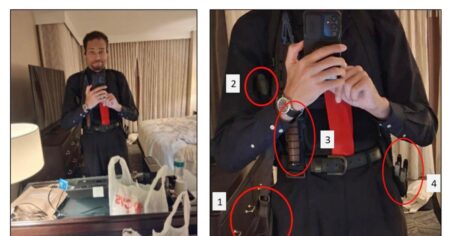
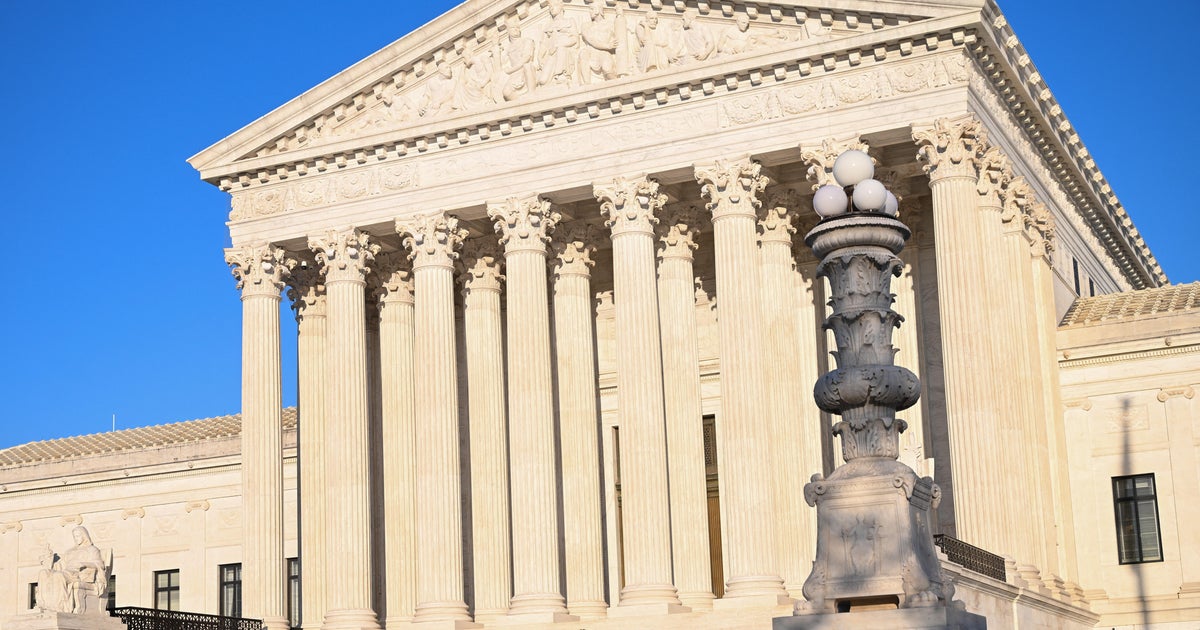
The United States Supreme Court found itself navigating unfamiliar political territory this week as justices from across the ideological spectrum expressed doubts about a federal law prohibiting marijuana users from owning firearms. During oral arguments on Monday, the nation’s highest court considered a case that has created unusual alliances and highlighted the growing tension between evolving state marijuana laws and federal firearms regulations. At the heart of the matter is Ali Danial Hemani, a Texas man who was charged under a federal statute that categorically bans anyone who uses illegal drugs from possessing guns. What makes this case particularly intriguing is how it has scrambled the typical partisan divisions that usually characterize gun rights cases, with both conservative and liberal justices questioning whether the government’s blanket prohibition can withstand constitutional scrutiny in an era when marijuana use has become increasingly normalized and legalized across much of the country.
Justices Question the Government’s Rationale
The courtroom discussion revealed significant skepticism from justices regarding the government’s position that all marijuana users pose an inherent danger when combined with firearm ownership. Conservative Justice Amy Coney Barrett posed a particularly pointed question that seemed to capture the court’s overall concern: “What is the government’s evidence that using marijuana a couple of times a week makes someone dangerous?” This question went to the heart of the government’s case and exposed what many justices appeared to view as a fundamental weakness in the blanket prohibition. The Trump administration, represented by Principal Deputy Solicitor General Sarah Harris, defended the law as a reasonable public safety measure designed to keep guns away from potentially dangerous individuals. However, Harris faced an uphill battle convincing the court that occasional marijuana use automatically renders someone unfit for gun ownership. The government’s challenge was further complicated by the fact that this administration has previously urged the court to strike down various gun control measures, creating an apparent inconsistency in their approach to Second Amendment issues. The justices’ questions suggested they were struggling to understand why someone who uses marijuana recreationally a few times per week should be placed in the same category as someone with a serious substance abuse problem that genuinely impairs judgment and decision-making.
The Historical Test and Its Complications
A critical element of the case revolves around the legal standard established in the Supreme Court’s 2022 landmark decision in New York State Rifle and Pistol Association v. Bruen. That case, decided by the court’s conservative majority, fundamentally reshaped how gun laws are evaluated by requiring that any firearm restrictions must be firmly rooted in the nation’s historical traditions of gun regulation. This standard has proven difficult for many modern gun control laws to satisfy, and the marijuana user prohibition appears to be no exception. Justice Ketanji Brown Jackson, who typically aligns with the court’s liberal wing, pointed out that the government’s argument seemed to crumble when measured against the Bruen test, stating, “I think your argument sort of falls apart under the Bruen test.” The government attempted to meet this historical requirement by pointing to old laws that prohibited “habitual drunkards” from possessing firearms, arguing these provided clear historical precedent for restricting gun rights based on substance use. However, Hemani’s attorney, Erin Murphy, effectively countered that those historical laws targeted extreme cases of individuals who were nearly continuously intoxicated and posed obvious dangers, not people who used substances occasionally in controlled settings. Murphy illustrated the disconnect with modern reality by noting that many contemporary cannabis users regularly take gummies as sleep aids and are perfectly capable of making responsible decisions about firearms. Justice Neil Gorsuch further complicated matters for the government by highlighting the legal limbo in which marijuana currently exists, asking, “What do we do with the fact that marijuana is sort of illegal and sort of isn’t, and that the federal government itself is conflicted on this?” This question acknowledged the awkward reality that while marijuana remains illegal under federal law, a growing number of states have legalized it for medical or recreational use, creating a patchwork of conflicting regulations.
Unlikely Political Alliances Emerge
One of the most fascinating aspects of this case is how it has created partnerships that would have seemed impossible just a few years ago. The American Civil Liberties Union and the National Rifle Association—organizations that typically find themselves on opposite sides of constitutional debates—both filed briefs supporting Hemani’s position. Cannabis legalization advocacy groups like NORML also joined in supporting the challenge to the federal prohibition. On the other side of the case stood gun-safety organizations like Everytown for Gun Safety, which has built its reputation fighting for stronger firearms restrictions and typically opposes the Trump administration on Second Amendment matters. This role reversal, with the Trump administration defending a gun restriction against challenges from civil liberties groups and gun rights advocates, underscores just how much this case defies conventional political categorization. The unusual alliances reflect a broader cultural shift in attitudes toward marijuana, which has moved from being viewed primarily as a dangerous drug to being accepted as a relatively benign substance for medical and recreational use in many parts of the country. The case also highlights tensions within conservative legal thought between a commitment to expansive gun rights and support for law enforcement authority to restrict firearms access based on behavior the government deems risky.
Concerns About Broader Implications
Despite the apparent skepticism toward the government’s position, some justices expressed concern about the potential consequences of ruling in favor of Hemani. Chief Justice John Roberts worried that the court’s decision might inadvertently open the door to firearm possession by users of more dangerous substances or force courts to become arbitrarily involved in making scientific determinations about drug dangerousness. “It just seems to me that this takes a fairly cavalier approach to the necessary consideration of expertise and the judgments we leave to Congress and the executive branch,” Roberts observed. This concern reflects a legitimate question about institutional competence—whether courts are the appropriate bodies to make nuanced distinctions about which substances impair judgment enough to justify restricting gun rights and which do not. Several justices appeared troubled by the prospect of courts having to regularly evaluate the relative dangers of various drugs on a case-by-case basis, a task that might require scientific and medical expertise beyond what judges typically possess. The justices seemed to be grappling with how to craft a ruling that addresses the specific facts of Hemani’s case—occasional marijuana use that the record suggests didn’t impair his functioning—without creating a precedent that would require complex judicial assessments of pharmacology and neuroscience in future cases. This challenge may push the court toward a narrow ruling that resolves Hemani’s situation without establishing broad principles about drug use and gun ownership.
What Comes Next and Broader Significance
The Supreme Court is expected to issue its decision in this case by the end of June, and based on the oral arguments, a majority appears inclined to rule at least partially in favor of Hemani, though the scope and reasoning of that ruling remain uncertain. The most likely outcome seems to be a narrow decision that finds the blanket prohibition on gun ownership by marijuana users unconstitutional without necessarily establishing a comprehensive framework for evaluating substance use and firearms rights. Such a ruling would be consistent with the court’s recent tendency to decide cases on the narrowest grounds possible when facing complex questions that intersect multiple areas of law and policy. Regardless of how the court ultimately rules, this case highlights the mounting tensions created by the federal government’s continued prohibition of marijuana while states increasingly move toward legalization. The disconnection between federal and state law on cannabis creates numerous legal complications beyond gun ownership, affecting everything from banking to employment to immigration status. This case may push Congress to finally address marijuana’s federal legal status, though partisan divisions and competing priorities make comprehensive reform challenging. The decision will also provide further guidance on how the Bruen historical test applies to modern regulations that don’t have clear historical analogues, potentially affecting the constitutionality of other gun control measures. For the millions of Americans who use marijuana legally under state law, the court’s ruling could determine whether they must choose between exercising their Second Amendment rights and using a substance their state has deemed legal. The case thus represents far more than a technical legal dispute—it reflects fundamental questions about how constitutional rights, federalism, public safety, and evolving social norms interact in a rapidly changing America.