


Historic Discovery: First Shark Filmed in Antarctic Waters Challenges Scientific Assumptions
An Unexpected Encounter in the Deep
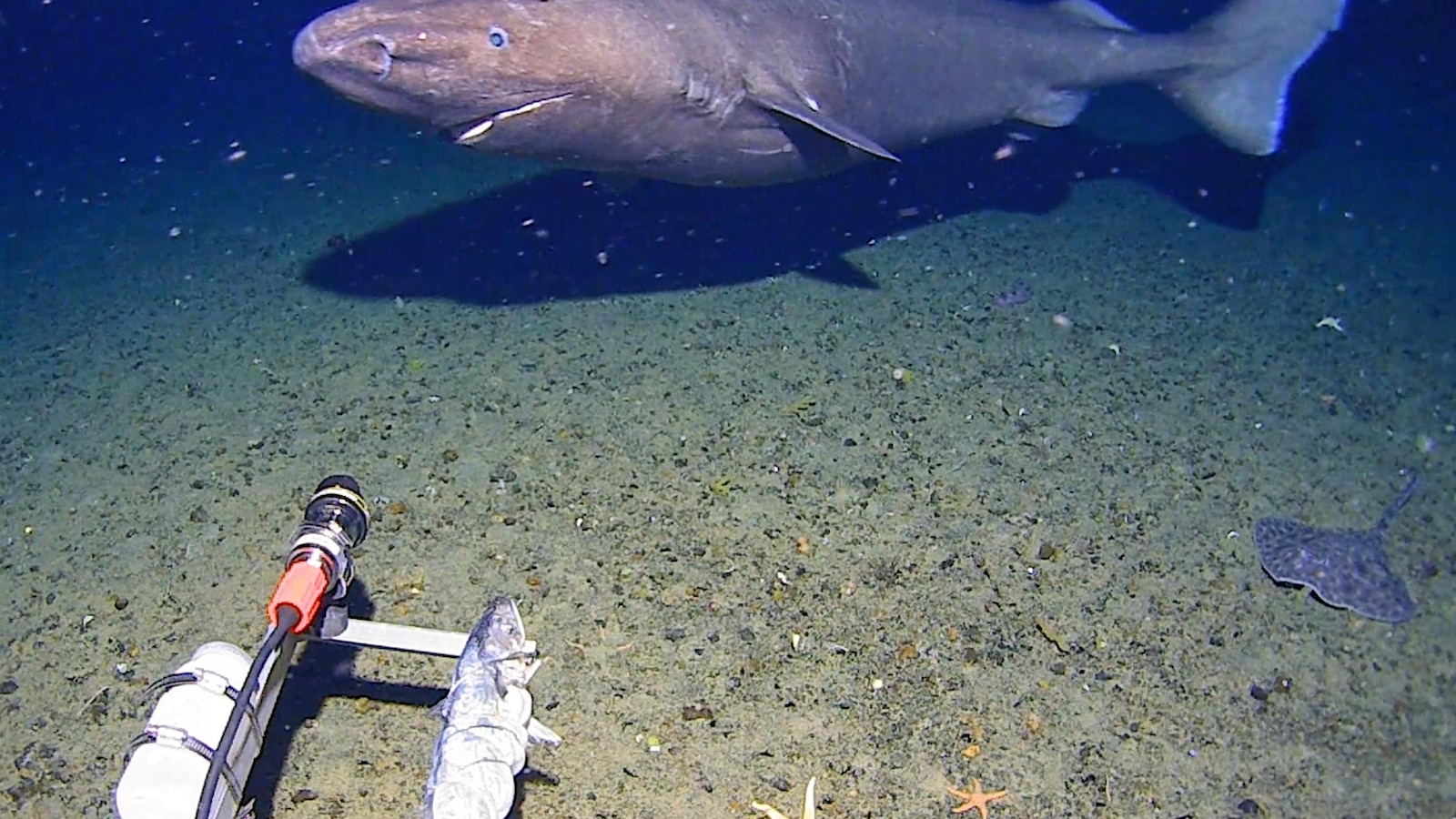
In a groundbreaking discovery that has stunned marine biologists worldwide, researchers have captured the first-ever footage of a shark swimming in the frigid waters of Antarctica. The remarkable encounter occurred in January 2025 when a sleeper shark, measuring an impressive 3 to 4 meters (10 to 13 feet) in length, wandered into view of a deep-sea camera positioned off the South Shetland Islands near the Antarctic Peninsula. Alan Jamieson, the founding director of the Minderoo-UWA Deep-Sea Research Centre at the University of Western Australia, described the moment as completely unexpected, noting that the scientific community had long operated under the assumption that sharks simply didn’t inhabit Antarctic waters. The massive creature appeared ungainly yet purposeful as it cruised through the pitch-black depths at 490 meters (1,608 feet) below the surface, where sunlight cannot penetrate and water temperatures hover at a bone-chilling 1.27 degrees Celsius (34.29 degrees Fahrenheit). Jamieson’s candid reaction captured the significance of the moment perfectly: “We went down there not expecting to see sharks because there’s a general rule of thumb that you don’t get sharks in Antarctica. And it’s not even a little one either. It’s a hunk of a shark. These things are tanks.”
Breaking Scientific Conventions
This discovery challenges decades of marine biology understanding and raises fascinating questions about what else might be lurking in the unexplored depths of our planet’s most remote ocean. The footage, which the research center shared with The Associated Press, clearly shows the barrel-shaped sleeper shark moving slowly and deliberately across a barren seabed, well within the boundaries of the Antarctic Ocean (also known as the Southern Ocean), which is defined as waters below the 60-degree south latitude line. Jamieson, whose research center specializes in investigating life in the deepest parts of the world’s oceans, emphasized that after extensive searching, he could find no previous record of any shark being documented in Antarctic waters. Peter Kyne, a conservation biologist at Charles Darwin University who was not involved with the research, confirmed the historic nature of the finding, agreeing that no shark had ever been recorded so far south before. The discovery has immediately prompted scientists to reconsider their understanding of shark distribution patterns and the limits of where these ancient predators can survive and thrive.
A Perfectly Adapted Predator
The sleeper shark captured on camera appeared remarkably well-suited to its extreme environment, moving with a slow, deliberate grace that suggested energy conservation in the resource-scarce Antarctic ecosystem. These sharks are built like tanks—robust, powerful, and seemingly unbothered by conditions that would be fatal to most other large marine predators. Interestingly, the footage also captured a skate resting motionless on the seafloor, apparently unconcerned by the passing shark. Skates, which are shark relatives that resemble stingrays, were already known to inhabit these southern waters, making their appearance less surprising to researchers. The contrast between the expected and unexpected marine life in the same frame made the moment even more remarkable. Jamieson explained that the shark was maintaining its position at around 500 meters depth along a seabed that sloped into much deeper water, and this wasn’t random behavior—the shark was strategically positioning itself in the warmest available water layer in this extremely stratified ocean environment. The Antarctic Ocean features heavily layered water masses down to about 1,000 meters (3,280 feet), with colder, denser water from below struggling to mix with fresher water running off from melting ice above, creating distinct thermal zones that marine life can exploit.
Climate Change Connections and Long-Hidden Populations
The discovery raises intriguing questions about whether climate change might be driving sharks into previously uninhabitable waters or whether these creatures have been Antarctic residents all along, simply hidden from human observation. Kyne suggested that while warming oceans could potentially be pushing sharks toward the Southern Hemisphere’s colder regions, the extreme remoteness of Antarctica means there’s very limited data on range changes in marine species around the continent. He expressed enthusiasm about the discovery, noting that it represented a perfect convergence of the right animal being in the right place at the right time with camera equipment positioned to capture it. The slow-moving nature of sleeper sharks, combined with the vastness of Antarctic waters and the technical challenges of deep-sea observation in such an extreme environment, means these sharks could have been present for generations without humans ever knowing. Jamieson believes the Antarctic sleeper shark population is likely sparse and extraordinarily difficult for researchers to detect, distributed across an enormous area in very specific depth zones that are rarely monitored.
Understanding the Antarctic Ecosystem
The presence of this apex predator suggests a more complex Antarctic food web than previously understood. Jamieson theorizes that these Antarctic sleeper sharks are likely scavengers, feeding on the carcasses of whales, giant squids, and other large marine creatures that die in the upper water column and sink to the ocean floor. This scavenging lifestyle would be perfectly suited to the energy-poor environment of the deep Antarctic, where active hunting would require more calories than might be available from living prey. The shark’s preferred depth of around 500 meters appears to be a sweet spot where the water is warmest within the stratified layers while still providing access to a steady supply of falling organic matter from above. The barren appearance of the seafloor in the footage suggests that visible life is scarce at these depths, making the shark’s presence all the more remarkable. These Antarctic sleeper sharks may represent an entire hidden ecosystem of deep-dwelling predators and scavengers that have adapted to exploit resources in ways scientists are only beginning to understand.
The Challenge of Antarctic Exploration and Future Discoveries
This historic footage highlights the enormous gaps that still exist in our understanding of life in Earth’s most extreme environments. The research cameras capable of operating at these depths in Antarctic waters are few and far between, and even those that exist can only function during the Southern Hemisphere summer months of December through February, when conditions are marginally less hostile and research vessels can safely navigate the region. As Jamieson pointed out, “The other 75% of the year, no one’s looking at all. And so this is why, I think, we occasionally come across these surprises.” The discovery serves as a humbling reminder that despite our technological advances, vast portions of our planet remain essentially unexplored, particularly in the ocean depths and polar regions. The Antarctic sleeper shark may be just one of many species that have adapted to thrive in conditions we assumed were too extreme for their kind. As climate change continues to alter ocean temperatures and currents, monitoring these remote ecosystems becomes increasingly important, not just for cataloging biodiversity but for understanding how marine life responds to environmental pressures. This single shark, captured on camera for mere moments before disappearing back into the darkness, has opened a new chapter in Antarctic marine biology and reminds us that our oceans still hold countless secrets waiting to be discovered.