



The Revival of Tailoring: How a Centuries-Old Craft is Finding New Life in Modern America
A Thrift Store Find Meets Old-World Craftsmanship
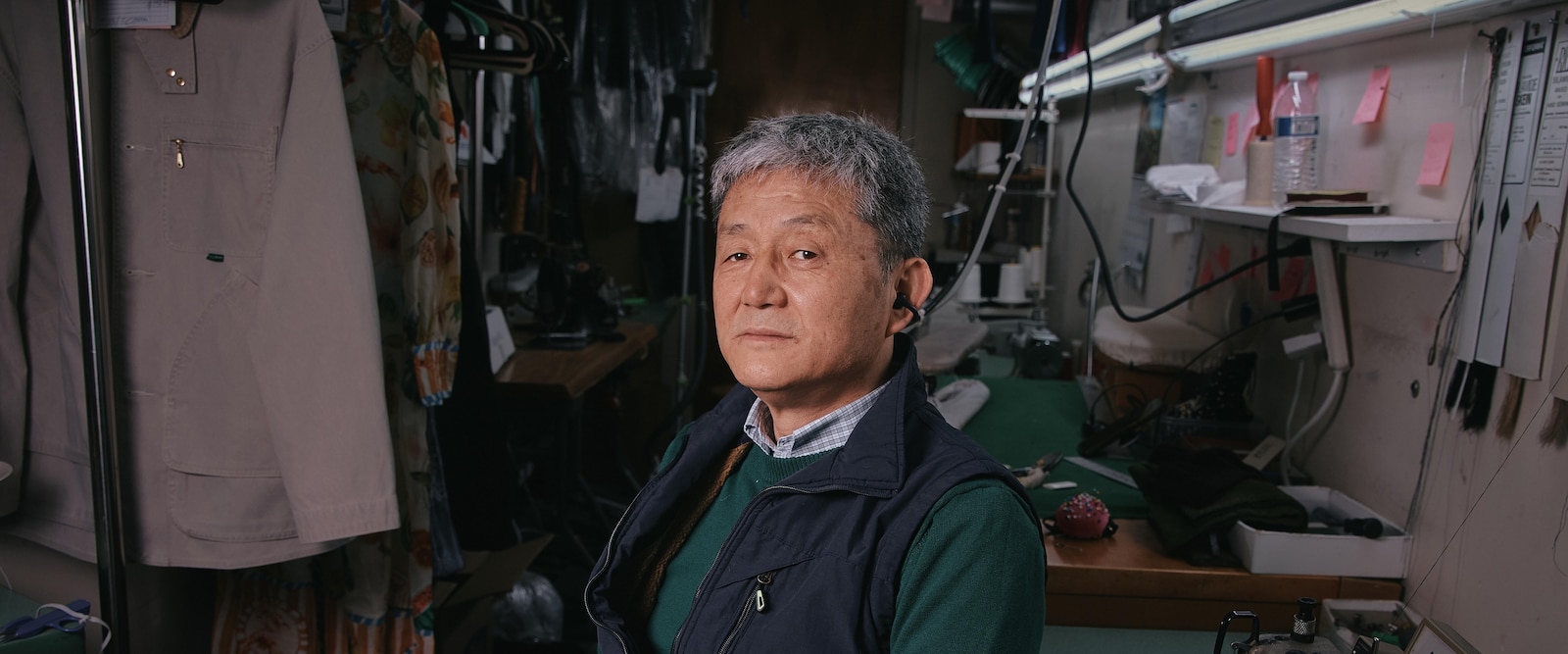
In a small Manhattan tailor shop, a scene plays out that perfectly captures the unexpected renaissance of a fading profession. Kil Bae, a 63-year-old master tailor, examines a vintage Tommy Hilfiger jacket with the careful attention of an artist approaching a blank canvas. The jacket’s owner, a modeling agent named Jonathan Reiss, purchased it for just $20 at a thrift store. Now he’s prepared to invest $280 to have it tailored to perfection—a price disparity that would have raised eyebrows just a few years ago. But Bae has seen this transformation firsthand. What once seemed unusual has become the norm at his one-man operation, 85 Custom Tailor. As he circles his customer with pins in hand, comparing himself to a sculptor with a chisel, Bae represents something increasingly rare in America: a craftsperson whose skills cannot be replicated by machines or artificial intelligence. He began his journey as a tailor at age 17 in South Korea, and now, after more than four decades in the profession, he finds himself more relevant than ever in an era that seemed destined to make his trade obsolete.
The Perfect Storm: Aging Craftspeople and Surging Demand
The tailoring profession in America faces a peculiar paradox. Just as demand for these services reaches unprecedented heights, the workforce capable of meeting that demand continues to shrink dramatically. According to the U.S. Bureau of Labor Statistics, there were fewer than 17,000 tailors, custom sewers, and dressmakers working in business establishments nationwide as of two years ago—a staggering 30% decline from just a decade earlier. The numbers tell an even more concerning story when looking at the broader picture. When including self-employed tailors and those working in private households, the median age for all sewers, dressmakers, and tailors was 54 last year, a full twelve years older than the median age for the entire employed population. This aging workforce, combined with insufficient numbers of young people entering the trade, has created a crisis in slow motion. Skilled professionals like Bae are aging out of the workforce, retiring their pincushions after decades of dedicated service, and there simply aren’t enough newcomers learning the craft to replace them. The situation mirrors challenges facing many skilled trades, from musical instrument repair to engraving, where the combination of specialized knowledge, physical demands, and modest financial rewards has failed to attract enough young practitioners to sustain these professions into the future.
Why Young People Aren’t Picking Up the Needle
Despite Bae’s enthusiastic recommendation that young people consider tailoring—noting that “this one cannot be AI’d”—the reality is that several significant barriers prevent entry into the profession. The most obvious is compensation. According to Bureau of Labor Statistics calculations from May 2024, the mean annual wage for tailors, dressmakers, and custom sewers was $44,050 per year, compared to $68,000 for all workers across all industries. For young people facing student loan debt, rising housing costs, and the financial pressures of establishing independent lives, the appeal of a skilled trade that pays substantially below the national average is understandably limited. Beyond the paycheck, the physical demands of the work present another obstacle. Spending hours bent over detailed stitching, maintaining the precision required for custom work, and developing the physical stamina for repetitive motions takes its toll on the body. Scott Carnz, provost of LIM College, points out another structural issue: “Most of fashion training is really aimed at mass production, not spending time in a shop handmaking a garment. The work is also tedious.” Educational institutions have largely oriented themselves toward preparing students for corporate fashion roles in design, marketing, and production management rather than the hands-on craft of individual garment creation. Bae’s own son exemplifies this generational shift. Despite his father’s attempts to persuade him to learn tailoring, the younger Bae first pursued computer work before opening a bagel shop—anything but following in his father’s footsteps. “Young people. They just want to find a job in computers,” Bae observes with resigned understanding. “I think that’s too boring. I think this is very interesting. Every time, I am drawing in my head. I am like an artist.”
The Changing Customer: From Fast Fashion to Conscious Consumption
What’s driving the renewed demand for tailoring services represents a significant cultural shift in how Americans think about clothing. Shoppers who grew up during the heyday of fast fashion—when cheaply made garments were designed to be worn briefly and discarded—are now enlisting tailors and seamstresses for entirely different reasons. They’re seeking to give off-the-rack purchases a custom fit that makes affordable pieces look luxurious. They’re adding personal flair to mass-produced items to create unique statements. They’re reviving secondhand finds from thrift stores and estate sales, breathing new life into vintage pieces that would otherwise gather dust. And perhaps most significantly, they’re working to extend the lives of their existing wardrobes rather than constantly replacing worn items with new purchases. Jonathan Reiss, the modeling agent with the $20 thrift store jacket, embodies this transformation perfectly. At 33, he represents a generation rethinking their relationship with clothing. “I think I fell victim to buying cheap stuff, and then you realize it just falls apart or shrinks or it just doesn’t last long,” he explains. His willingness to spend fourteen times what he paid for the jacket on alterations reflects a new calculation: quality tailoring on a well-made vintage piece represents better value than constantly replacing poorly constructed new items. Bae has also noticed another driver of business: weight-loss drugs like Zepbound and Wegovy have brought more customers seeking adjusted waistbands, tapered sleeves, and comprehensive resizing as their bodies change. This pharmaceutical revolution has created an entire category of alteration work that didn’t exist before, adding to the already-growing demand for tailoring services.
Industry Response: Creating a New Generation of Master Tailors
Recognizing that the shortage of skilled tailors threatens both customer service and a valuable cultural tradition, major players in the fashion industry have begun taking action. Nordstrom, North America’s largest employer of tailors and alteration specialists with 1,500 people providing these services, partnered with New York’s Fashion Institute of Technology to launch a comprehensive solution. The result is a nine-week program in advanced sewing and alteration techniques designed to create a new generation of professionals who can perform everything from hemming jeans and repairing rips to fitting suits and reworking evening gowns. The program’s popularity exceeded all expectations. The fashion institute received 200 applications for the inaugural cohort of just 15 students who began in October and completed their training in February. The success rate has been impressive as well: ten members of the first class were either hired or in the process of being hired by Nordstrom, according to Marco Esquivel, the company’s director of alterations. “We owe it to the broader industry to ensure that this is an art form that exists for years and years to come and continues to serve customers both within our walls as well as outside,” Esquivel explained. Michael Harrell, the FIT instructor who teaches the course and works as a Broadway costume builder, emphasizes that this represents a departure from tradition: “Customarily, tailoring has never been part of the American skill set.” Other retailers are also expanding rather than contracting their tailoring services in response to customer demand. Brooks Brothers, a luxury brand with a custom clothing heritage stretching back to the 1800s, tested bespoke tailoring services for women at five stores last year. The response was strong enough that the company expanded the service to forty additional stores this year, with prices starting at $165 for shirts and $1,398 for suits—premium pricing that customers are apparently willing to pay for personalized service.
The Immigrant Thread in America’s Fabric
The story of tailoring in America cannot be told without acknowledging the central role immigrants have played in sustaining this craft. For well over a century, immigrants with and without permanent legal status, refugees, and naturalized citizens have powered America’s garment industry. Kil Bae himself represents this tradition—trained in South Korea, he immigrated to the New York area where he worked as a pattern maker for iconic American designers including Ralph Lauren and Donna Karan before establishing his own business. The numbers confirm this pattern extends far beyond individual stories. An analysis of recent census data by the Migration Policy Institute found that approximately 40 percent of tailors, dressmakers, and sewers working in America today were born in other countries. According to Julia Gelatt, associate director of the nonpartisan think tank’s U.S. Immigration Policy Program, the largest shares of these foreign-born workers came from Mexico, South Korea, Vietnam, and China. This reliance on immigrant labor adds another layer of complexity to the workforce challenges facing the industry, as immigration policies and patterns directly impact the availability of skilled workers. Bae’s journey illustrates the typical path for many immigrant tailors. After training under his older sister and brother at their custom apparel shop about 93 miles from Seoul for five years, he moved to South Korea’s capital to work on custom orders and samples for various companies before making the leap to America. He opened his own shop in Connecticut in 2011, but the COVID-19 pandemic forced closure after a successful decade. Demonstrating the resilience typical of skilled craftspeople, he reopened in his current Manhattan location a year later. His shop contains three specialized sewing machines—a basic one, another for heavy materials like denim and leather, and an overlock machine that simultaneously cuts, trims, and finishes fabric edges—tools of a trade he intends to practice as long as his hands remain steady. “I’m always learning,” Bae says, capturing the mindset that has sustained craftspeople throughout history: the understanding that mastery is not a destination but a continuous journey. As artificial intelligence and automation transform industry after industry, the tailoring profession stands as a reminder that some forms of human skill, creativity, and craftsmanship remain irreplaceable—provided we can find ways to pass them on to the next generation.