



A Curler’s Olympic Pride Amid Hometown Turmoil
Representing America While Minnesota Faces Constitutional Concerns
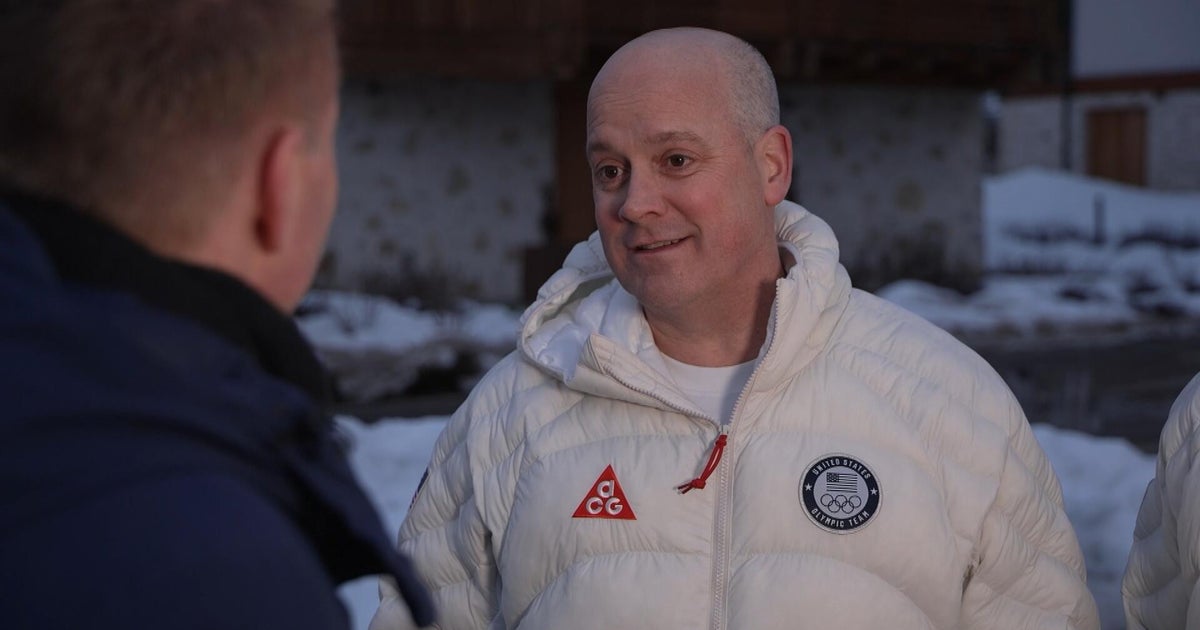
Rich Ruohonen stands as a remarkable figure in American curling—a two-time national champion who, at 54 years old, has made history as the oldest American ever to compete in a Winter Olympics. As he represents the United States at the 2026 Winter Games in Italy, Ruohonen carries not just the hopes of his sport, but also the weight of serious concerns about what’s happening back home in Minnesota. The veteran athlete and lawyer of 28 years finds himself in the unique position of celebrating American values on the world stage while publicly expressing dismay about constitutional violations he sees occurring in his home state. His words reflect a deep patriotism that doesn’t shy away from calling out injustice—a reminder that loving one’s country sometimes means demanding it live up to its highest ideals.
The situation Ruohonen references stems from recent troubling events in Minneapolis, where federal immigration operations have resulted in two high-profile fatal shootings. For someone who has spent nearly three decades practicing law in Minnesota, these incidents represent more than just news headlines—they strike at the core of what he believes America should stand for. “We have inalienable rights in our constitution: Freedom of press, freedom of speech, the right to not have unreasonable searches and seizures and not be pulled over without probable cause,” Ruohonen explained to CBS News. “And those rights aren’t being followed in Minnesota.” His willingness to speak out demonstrates the kind of courage that extends beyond athletic competition, showing that representing your country doesn’t mean turning a blind eye to its failures. Instead, it can mean using your platform to advocate for the principles that make the nation worth representing in the first place.
The Olympic Spirit as a Reflection of Minnesota Values
Despite the darkness of recent events back home, Ruohonen sees his Olympic participation as an opportunity to showcase the better angels of both Minnesota and American character. For him, the Games represent something essential about the values his community holds dear—values that stand in stark contrast to the constitutional violations he’s witnessed. “The Olympics brings this unity, this respect and this compassion, and Minnesota has shown out and used that,” he told reporters. “Respect, compassion, empathy for people that is sometimes lacking in our country.” His words capture a beautiful contradiction: while criticizing failures at home, he simultaneously celebrates what makes his state and nation special when they live up to their potential. This nuanced patriotism—acknowledging both flaws and virtues—represents a mature approach to national identity that seems increasingly rare in our polarized times.
Ruohonen wants to be crystal clear about one thing: despite his criticisms, his commitment to representing the United States remains absolute. “I want to make no mistake about it, we’re playing for the U.S. We love the U.S. We love what the flag is and what it represents,” he emphasized. “And we’re here to support our families and our friends that gave up so much for us to be here today.” This statement reveals the complexity of his position—he can simultaneously love his country deeply while demanding it do better. His teammate Luc Violette echoed this sentiment, noting the strong American presence at the Italian venue: “USA is everywhere. We felt really welcome here and continue to feel welcome.” The support from traveling fans demonstrates that many Americans share this spirit of national pride mixed with a desire for the country to embody its stated values. The team’s success has already yielded historic results, with Corey Thiesse becoming the first U.S. female curler to ever win an Olympic medal, taking silver in the mixed doubles event alongside Korey Dropkin.
Demystifying the Peculiar Sport of Curling
For many Americans tuning in to the Winter Olympics, curling remains something of an enigma—a sport that looks simultaneously simple and baffling, combining elements that seem plucked from different activities entirely. Violette doesn’t sugarcoat this perception: “I mean, I’ll be frank. It’s weird. How anyone came up with this sport is insane.” His candid assessment acknowledges what many viewers are thinking as they watch athletes slide stones across ice while teammates frantically sweep in front of them. Even the athletes themselves haven’t unlocked all the mysteries: “There’s still parts of the physics that we don’t understand,” Violette admits. Yet this strangeness shouldn’t obscure the skill, strategy, and athleticism the sport demands. As he explains, curling “really brings a lot of skill sets together. Our coach always says that the best curler is a well-rounded person.” The team hopes that Olympic exposure will help share their love for this unique competition with viewers who might otherwise never give it a chance.
To help the uninitiated understand what they’re watching, Violette offers a helpful comparison: “I usually relate it to bocce ball. It’s about what you score at the end of the end, after all the rocks are thrown. You want more [curling stones] closer to the middle than the closest of the opposing team.” The sweeping that looks so frantic serves a purpose—it makes the stone travel farther and affects its directional curl. “We can make it curl more, curl less. It’s called curling because the rock curls or curves,” he explains, before issuing a challenge to skeptics: “It’s hard. Come try it out.” This invitation reflects the team’s broader mission of growing their sport in America, where it remains far less popular than in countries like Canada and Scotland. By competing at the highest level and engaging with media to explain their sport, these athletes are serving as ambassadors for curling, hoping to inspire a new generation of American participants.
The Physical Evolution of Curling
Those who dismiss curling as a leisurely activity for folks who aren’t “real athletes” might be surprised to learn how dramatically the sport has evolved, particularly in its physical demands. Ruohonen, whose career spans three decades, has witnessed this transformation firsthand. Thirty years ago, he recalls, “it wasn’t as physical of a sport. You could win and be way overweight, or smoking a cigarette on the ice.” That image—of casual competitors puffing away between throws—seems almost comical compared to today’s elite curlers, who maintain rigorous training regimens that would impress athletes in any sport. The game, according to Ruohonen, “has developed to an unbelievable level over the course of my lifetime,” requiring skills and conditioning that simply weren’t necessary in earlier eras.
The physical demands of modern competitive curling surprise most people who haven’t tried it. “When you’re sweeping, you’re leaning a large majority of your weight on your broom and moving it back and forth. And you’re on your tippy toes a lot. So you have to be strong,” Ruohonen explains. “You have to have a strong upper body. You have the legs. You’re constantly sliding out in a lunging position. That alone is hard.” But perhaps the most underappreciated challenge is simply the duration of competition. “I don’t know if you’ve ever tried just standing on ice for, let’s say six, eight hours a day,” he poses to skeptics. “Just stand there, don’t do anything one time and see how your back feels and your muscles feel, because when we play two games in a day, we are out on the ice for six to eight hours sometimes.” This grueling schedule, combined with the precision required for every throw and sweep, makes competitive curling far more demanding than casual observers might imagine. At 54, Ruohonen’s ability to compete at this level speaks not just to his talent but to his dedication to physical conditioning.
Patriotism, Protest, and the Olympic Ideal
Rich Ruohonen’s position—celebrating his country on the Olympic stage while publicly criticizing its failures—embodies a form of patriotism that deserves recognition and respect. In an era when criticism of America is often conflated with hatred of it, and when love of country is sometimes used to excuse any wrongdoing, Ruohonen offers a third way. He demonstrates that you can wear the USA uniform with pride while simultaneously calling out constitutional violations at home. This isn’t contradiction; it’s consistency. The same values that make him proud to represent America—freedom, rights, justice—are the ones he sees being violated in Minnesota, and his love for those principles compels him to speak out about both the triumphs and the failures.
The Olympics have always represented something larger than athletic competition. They showcase what humanity can achieve when we put aside differences and compete according to agreed-upon rules, respecting both opponents and ideals larger than ourselves. Ruohonen and his teammates embody this spirit—bringing “unity, respect, and compassion” to their competition while representing a nation still striving to fully realize these values at home. Their success on the ice, including historic medal wins, demonstrates American excellence. Their willingness to speak honestly about problems back home demonstrates American character. Together, they remind us that patriotism doesn’t require blind allegiance, but rather demands we hold our country accountable to the principles it claims to cherish. As these curlers slide stones across Italian ice, they’re not just competing for medals—they’re modeling what it means to love your country enough to demand it be better, while celebrating what makes it worth fighting for in the first place.