
Texas Republican Senate Primary Heads to Runoff: Cornyn and Paxton Battle for GOP Nomination
A Bitter Primary Race Forces a May Runoff
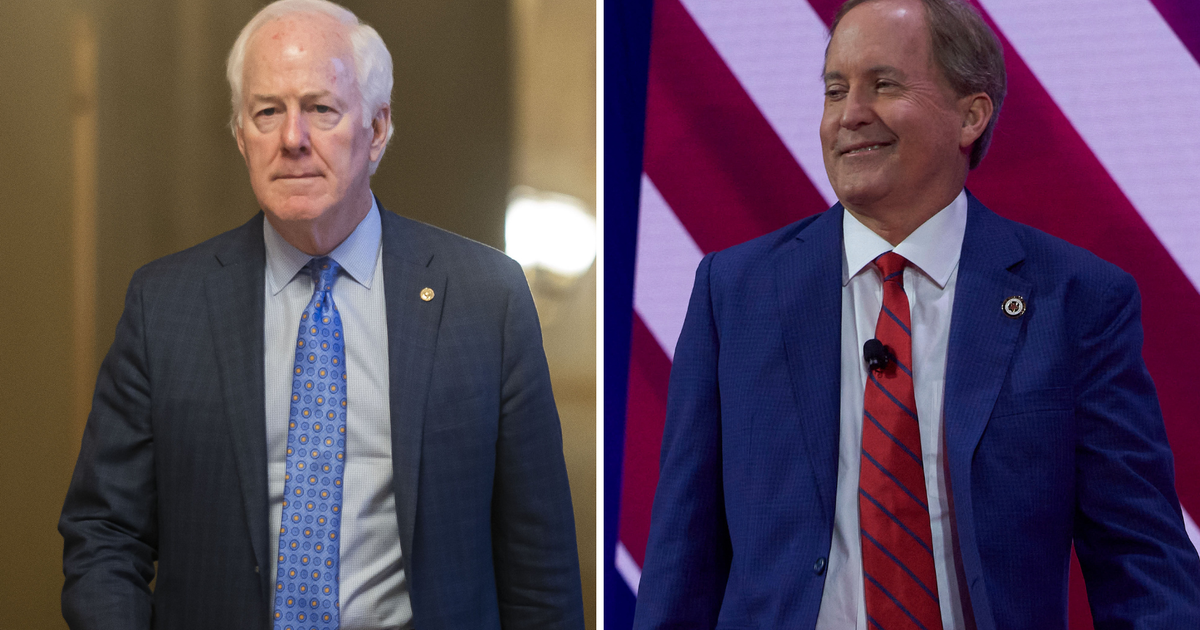
The Texas Republican Senate primary has set the stage for what promises to be an intense showdown between two heavyweight GOP figures. CBS News has projected that incumbent Senator John Cornyn and Texas Attorney General Ken Paxton will face each other in a runoff election scheduled for May 26, after neither candidate managed to secure the required 50% of votes needed to win outright. This development transforms what was already a contentious primary into an extended battle that will test the loyalties and priorities of Texas Republican voters. The third candidate in the race, GOP Representative Wesley Hunt, was eliminated in the initial voting. What makes this race particularly noteworthy is the extraordinary amount of money being poured into it – more than $110 million had been spent on television advertising alone by late February, making it a record-breaking Senate primary race in terms of campaign expenditures. The Republican Party’s Senate campaign organization has invested millions specifically into supporting Cornyn’s campaign, viewing his experience and establishment credentials as valuable assets worth protecting.
The Candidates Exchange Sharp Attacks
The tension between Cornyn and Paxton was on full display in their remarks following the primary results. Senator Cornyn, who is currently serving his fourth term and has held various Republican leadership positions over the years, didn’t mince words when addressing his opponent’s character and fitness for office. “I refuse to allow a flawed, self-centered and shameless candidate like Ken Paxton risk everything we’ve worked so hard to build over these many years,” Cornyn declared, adding ominously that “Judgment Day is coming for Ken Paxton.” This direct attack reflects Cornyn’s strategy of highlighting Paxton’s numerous personal and legal controversies as disqualifying factors for voters to consider. Meanwhile, Paxton fired back with his own accusations, claiming that Cornyn was attempting to “steal the election with another $100 million going into this Senate race.” However, Paxton framed the primary results as a moral victory of sorts, arguing that “while the money may be on their side, the people are on our side.” This populist messaging positions Paxton as the grassroots favorite fighting against the establishment’s financial advantages, a narrative that resonates with many Republican voters who feel disconnected from traditional party leadership.
Trump’s Influence and the Candidates’ Competing Claims
President Donald Trump’s endorsement has emerged as a crucial wildcard in this race, though he has notably refrained from backing any candidate in the Senate primary thus far. All three original candidates – Cornyn, Paxton, and Hunt – appeared alongside Trump at a rally in Corpus Christi in late February, each hoping to secure his valuable endorsement. Trump stated that he liked all three candidates, leaving the endorsement question unresolved even as the race narrows to two contenders. The importance of Trump’s potential endorsement cannot be overstated; a February survey conducted by Houston’s Hobby School of Public Affairs found that 55% of Republican primary voters said they would be more likely to support a candidate if that candidate had Trump’s backing. This puts both Cornyn and Paxton in the position of competing to demonstrate their loyalty to Trump and his agenda. Cornyn has emphasized his legislative record in advancing Trump’s priorities during the former president’s first term, when Cornyn served as majority whip. However, both Paxton and Hunt attacked Cornyn during the campaign for critical comments he made about Trump during the 2016 election and after the 2020 election, questioning the authenticity of Cornyn’s current support. Paxton has gone so far as to claim that Cornyn’s support for Trump is “all fake to win a primary,” attempting to paint the senator as an opportunistic establishment figure rather than a true believer in the Trump movement.
Paxton’s Legal Troubles and Controversies
Ken Paxton’s candidacy carries significant baggage in the form of multiple legal controversies and scandals that have dogged him throughout his time as attorney general. In 2023, Paxton faced impeachment by the Republican-controlled Texas Legislature in a stunning 121-23 vote on 20 different counts, including serious allegations of bribery and abuse of public trust. The charges centered on accusations that he used public funds to pay a $3.3 million settlement in a lawsuit brought by four whistleblowers who claimed they were fired in retaliation for reporting Paxton’s alleged misconduct. During the subsequent state Senate trial on 16 of these counts, conviction required a two-thirds majority, meaning at least nine Republicans would have needed to cross party lines. Ultimately, only two Republicans voted for conviction on any count, leaving Paxton far short of removal and allowing him to remain in office. Trump, who was not in office at the time, congratulated Paxton on his acquittal. The trial nevertheless revealed damaging details about Paxton’s conduct, including allegations that he pressured an associate to hire a woman with whom he was accused of having an affair. Perhaps most personally devastating, Paxton’s wife Angela, who was a state senator at the time and sat through the trial (though barred from voting), filed for divorce in 2025 citing what she described as “Biblical grounds” and referencing “recent discoveries” that made continuing the marriage untenable. Additionally, Paxton faced separate criminal charges dating back to 2015, when he was indicted on two first-degree felony charges of securities fraud and a third-degree felony charge of failure to register, potentially carrying up to 99 years in prison. After nine years, these charges were dismissed in a deal requiring Paxton to pay restitution and perform community service, though he maintained his innocence throughout.
Cornyn’s Establishment Record and Vulnerabilities
John Cornyn, at 74 years old, brings decades of experience to the race but also faces questions about whether his establishment credentials and age make him the right fit for today’s Republican Party. Cornyn has never faced a serious primary challenger before, and in 2020, he actually won more votes in Texas than Trump himself, demonstrating his historical strength with Republican voters. His resume includes serving as majority whip during Trump’s first term, as well as previous positions as GOP conference vice chair and chairman of the National Republican Senatorial Committee. Cornyn has attempted to emphasize his conservative credentials and his record of pushing Trump’s agenda through legislation. However, his opponents have successfully highlighted moments when Cornyn appeared to distance himself from Trump, particularly comments made during the 2016 election cycle and after the 2020 election. Hunt specifically attacked Cornyn’s age as a liability, suggesting that the party needs younger leadership. Cornyn has responded to these challenges by taking what observers describe as a “hard-right turn,” particularly on issues involving anti-Muslim sentiment, apparently in an effort to shore up support among the party’s base. He has also made Paxton’s personal scandals a central focus of his campaign, warning that Republicans would face an “Election Day massacre” if Paxton won the primary and became the general election nominee, arguing that Democrats would exploit Paxton’s controversies to win a seat that should be safely Republican.
What the Runoff Means for Texas Republicans
As Texas Republicans head toward the May 26 runoff, they face a choice between two very different visions of their party’s future. Cornyn represents the institutional Republican Party – experienced, connected to leadership, and focused on legislative effectiveness and electability in a general election. He warns that nominating Paxton would be reckless, potentially handing Democrats an opportunity they shouldn’t have in a conservative state like Texas. Paxton, despite his legal troubles, represents the populist, combative approach that has energized many Republican voters in recent years. As attorney general, he has been one of the most aggressive state officials in filing lawsuits – celebrating his 100th lawsuit against the Biden administration in November 2024. He led the 2020 lawsuit attempting to contest election results in four states won by Joe Biden (though the Supreme Court dismissed it), and he spoke at Trump’s January 6, 2021, rally at the Ellipse before the Capitol riot, where he falsely blamed antifa for the subsequent violence. Paxton’s supporters see him as a fighter willing to use every tool available to advance conservative causes, while his detractors see a scandal-plagued official whose personal conduct and legal vulnerabilities make him a liability. The outcome of this runoff will signal which faction of the Republican Party holds sway in Texas – the establishment wing that prioritizes experience and electability, or the populist wing that values aggressive conservative activism even when accompanied by controversy. With both candidates having significant strengths and weaknesses, and with Trump’s endorsement still potentially in play, the next few months will determine not just who represents Republicans in the Senate race, but what kind of Republican Party Texas voters want to build for the future.