
Tragic Death of Congressional Aide Sparks Political Firestorm Over Alleged Inappropriate Relationship
Disturbing Text Messages Come to Light
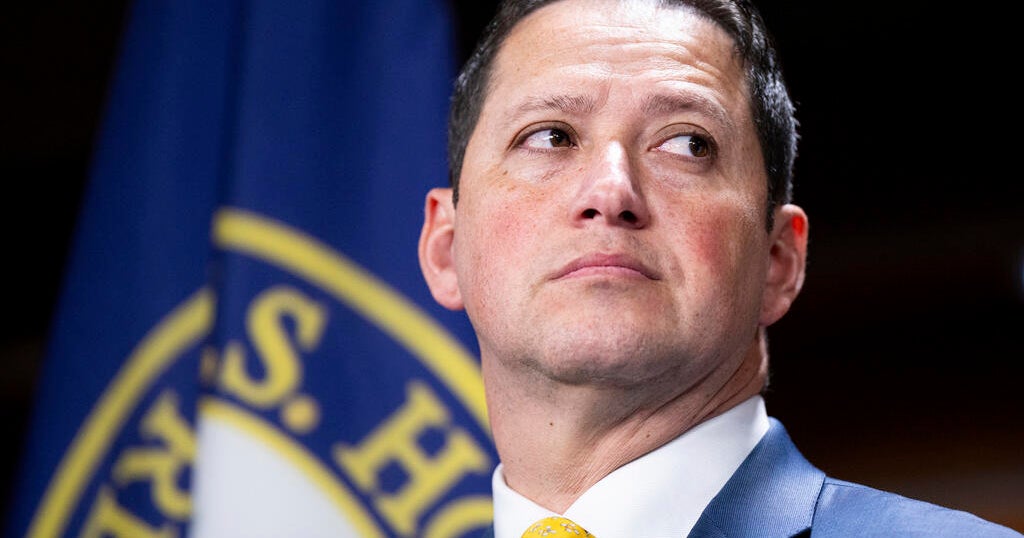
A controversy that has shaken both political circles and the public conscience centers around newly revealed text messages from 2024 between Texas Representative Tony Gonzales and his former aide, Regina Santos-Aviles. The messages, which have been extracted from Santos-Aviles’ phone and obtained by CBS News, paint a troubling picture of what appears to be an inappropriate workplace relationship. In the early morning hours of May 2024, the congressman allegedly requested a “sexy pic” from his employee, initiating an exchange that would become increasingly uncomfortable. When Santos-Aviles expressed hesitation about taking photos of herself, Gonzales reportedly explained he was “just such a visual person” before apologizing. The conversation then escalated when he asked about her “favorite position,” prompting Santos-Aviles to push back twice, stating “This is going too far boss” and later repeating “This is too far, Tony.” Perhaps most heartbreakingly, she asked if he had only hired her because he found her attractive, to which he denied. These messages have now become central evidence in allegations that would ultimately contribute to a tragedy that claimed Santos-Aviles’ life just over a year later.
A Family Destroyed and a Life Lost
The situation took a devastating turn in the months following those text exchanges. Adrian Aviles, Regina’s husband, discovered what he believed to be an ongoing affair between his wife and her boss several weeks after the May 2024 text conversation, according to his account to the San Antonio Express-News. In June 2024, Aviles apparently took matters into his own hands by using his wife’s phone to send a message to Gonzales and other staffers, explicitly stating that he had discovered “she’s been having an affair on me with your boss Tony Gonzales for some time now.” According to Bobby Barrera, the attorney representing Adrian Aviles, Regina’s mental health deteriorated rapidly following the end of her alleged relationship with the congressman. The lawyer has placed blame squarely on Gonzales’ conduct for this decline. Tragically, in September 2025, Regina Santos-Aviles was found critically burned near her home in Uvalde, Texas. She later died from her injuries, and the Bexar County Medical Examiner officially ruled her death a suicide. The circumstances that immediately preceded this heartbreaking decision remain unclear, but Adrian Aviles, now a widower raising their 8-year-old son alone, has made it his mission to ensure that what he views as his wife’s exploitation doesn’t go unacknowledged. In a poignant statement, he addressed Gonzales directly: “You ended a family because of your predatorial instincts.”
Political Fallout and Denials
Representative Gonzales has consistently denied having an affair with Santos-Aviles, maintaining his innocence even as evidence continues to emerge. As early as November at the Texas Tribune Festival in Austin, he characterized the “rumors” as “completely untruthful.” More recently, when confronted by reporters about the allegations on Tuesday, Gonzales refused to resign and suggested that the full story has yet to be told, saying, “There will be an opportunity for all the details and the facts to come out. What you’ve seen are not all the facts.” The congressman has also claimed he is being victimized by extortion attempts. He publicly shared a screenshot on X (formerly Twitter) of a letter from Barrera that appeared to propose a $300,000 legal settlement with a non-disclosure agreement attached. Gonzales characterized this as a disgusting attempt to “profit politically and financially off a tragic death.” However, Barrera has pushed back against this characterization, insisting to CBS News that the letter was simply a standard confidential settlement proposal sent to the congressman’s attorney, not an extortion attempt. Adrian Aviles has similarly rejected any suggestion that his pursuit of accountability is financially motivated, stating clearly, “This is not a ploy for money.” Instead, he says his goal is to demonstrate that the alleged relationship “is not something that’s been fabricated” and to rebut Gonzales’ continued denials.
Bipartisan Criticism Mounts
The revelations have triggered an unusual moment of bipartisan agreement, with lawmakers from both sides of the aisle expressing concern about the allegations and their implications. Several Republican representatives have been particularly vocal in their criticism of their colleague. Representative Lauren Boebert of Colorado directly called for Gonzales to resign and suggested that the National Republican Congressional Committee should redirect its financial support to his primary challenger. Representative Nancy Mace of South Carolina echoed these sentiments, describing the allegations as “deeply disturbing” and characterizing the situation as an “abuse of power.” Even former Representative Marjorie Taylor Greene of Georgia weighed in, calling the story “shocking and disgusting.” The criticism extends beyond just words, as Gonzales’ primary challenger, Brandon Herrera, received new endorsements on Monday from Representative Chip Roy of Texas and the Freedom Caucus Fund, a political action committee associated with the conservative House Freedom Caucus. While these endorsements didn’t explicitly mention the controversy surrounding Gonzales, their timing speaks volumes. House Speaker Mike Johnson has taken a more measured approach, acknowledging to reporters that the allegations are “very serious” while cautioning that “you have to allow investigations to play out.” This stance reflects the difficult position Republican leadership finds themselves in as they navigate the controversy surrounding one of their members.
Electoral Implications and Political Context
The timing of these revelations could hardly be worse for Gonzales, who is currently fighting to retain his seat in a competitive primary election scheduled for next week. His district, which stretches along the U.S.-Mexico border, is generally considered safe Republican territory, meaning the primary contest will likely determine who represents the area. Gonzales is facing a challenge from gun rights activist Brandon Herrera, who came remarkably close to defeating him in the 2024 primary, losing by fewer than 400 votes. Herrera has seized upon the controversy, calling for Gonzales to step down from office last week. Despite the mounting criticism and calls for his resignation, Gonzales does have significant political support. President Trump has endorsed his reelection bid, lending him considerable credibility among Republican primary voters who remain loyal to the former president. However, the disturbing nature of the allegations and the tragic outcome may prove powerful enough to overcome even that advantage. The situation has become a test case for how allegations of workplace misconduct, abuse of power, and their tragic consequences are handled in the political arena, particularly within a party that has sometimes struggled with how to respond to such accusations against its own members.
Questions of Power, Accountability, and Justice
At its core, this tragedy raises fundamental questions about power dynamics in professional relationships, accountability for those in positions of authority, and the lasting consequences of workplace misconduct. The text messages suggest a supervisor making sexual advances toward a subordinate employee, creating an inherently unequal dynamic where genuine consent becomes questionable. Regina Santos-Aviles’ repeated statements that things had “gone too far” and her question about whether she was hired for her appearance rather than her qualifications speak to a woman who recognized something improper was happening but may have felt powerless to fully stop it without jeopardizing her career. Whether formal investigations will be launched, what they might uncover, and how Gonzales’ political future will ultimately be affected remains to be seen. What is already clear, however, is that a family has been shattered, an 8-year-old child has lost his mother, and serious questions have been raised about what happened in the offices of an elected representative. Adrian Aviles’ pursuit of answers and accountability reflects not just personal grief but a broader demand that those in power be held responsible for their actions and their consequences. As investigations potentially move forward and as voters in Texas prepare to cast their ballots, the memory of Regina Santos-Aviles and the circumstances of her death will continue to demand attention and answers. This case serves as a somber reminder that behind political scandals are real people, real families, and real suffering that extends far beyond election cycles and partisan considerations.