
Supreme Court to Decide Fate of Birthright Citizenship in Historic Case
The Constitutional Battle Taking Center Stage
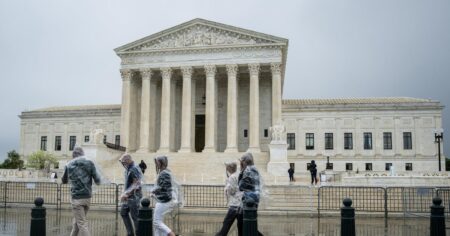
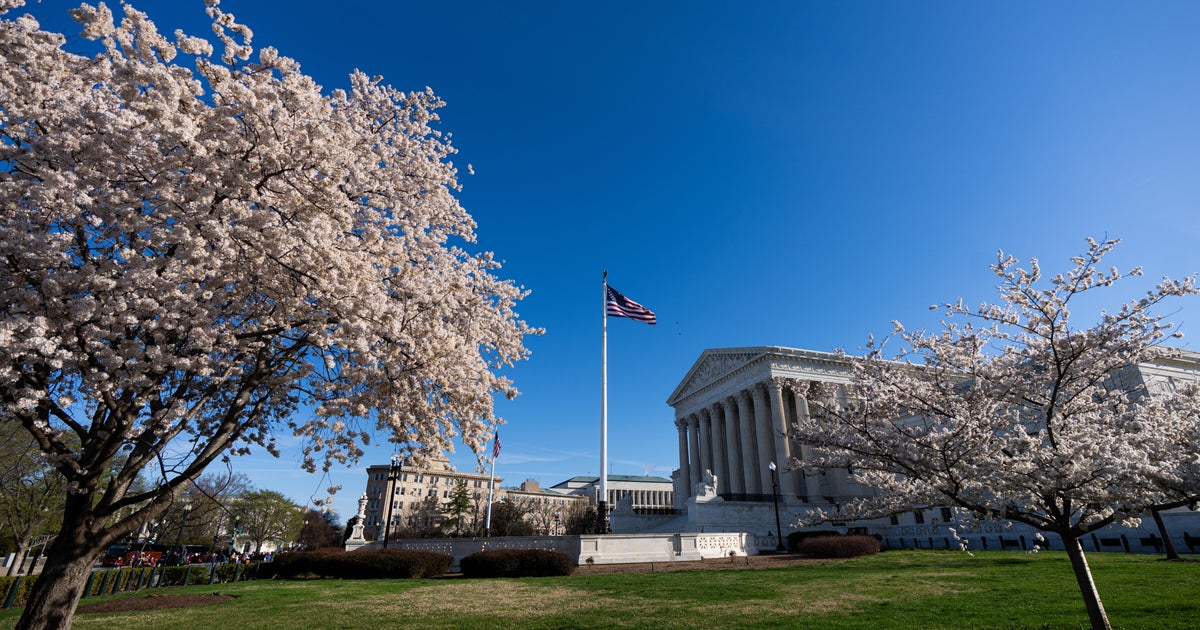
The Supreme Court is preparing to hear one of the most significant immigration cases in modern American history this Wednesday, examining whether President Trump has the constitutional authority to end birthright citizenship through executive order. This landmark case represents the first time the high court will evaluate the legal substance of Trump’s immigration policies during his second term, focusing on whether his directive violates the 14th Amendment’s Citizenship Clause and related federal immigration statutes. The Citizenship Clause, ratified after the Civil War, clearly states that “all persons born or naturalized in the United States and subject to the jurisdiction thereof, are citizens of the United States and of the state wherein they reside.” At the heart of this legal battle lies a fundamental question about American identity: Does the Constitution guarantee citizenship to every child born on U.S. soil, or can the president restrict this right based on their parents’ immigration status? A decision is expected by late June or early July, and if the Court rules against the administration, it would mark Trump’s second major legal defeat this term, following a February ruling that struck down many of his emergency tariffs in a 6-3 decision. The president has already begun criticizing the judiciary in anticipation of a possible unfavorable ruling, posting on Truth Social that other countries are “selling citizenships” to America and calling the federal court system “stupid,” adding that “Dumb Judges and Justices will not a great Country make!”
What the Executive Order Actually Does
On the first day of his second term, President Trump signed an executive order that fundamentally reinterprets who qualifies for American citizenship at birth. The directive specifically targets two categories of newborns: children born to mothers who are in the country unlawfully and fathers who aren’t citizens or lawful permanent residents, and children born to mothers with temporary legal status (like student or work visas) and fathers who similarly lack citizenship or permanent residency. According to Trump’s order, the 14th Amendment “has never been interpreted to extend citizenship universally to everyone born within the United States,” arguing that the phrase “subject to the jurisdiction thereof” has always excluded certain people from automatic citizenship. The order instructs all federal agencies to refuse issuing or accepting documents that recognize U.S. citizenship for children whose parents are in the country temporarily or illegally, applying to babies born more than thirty days after the policy takes effect. However, this directive hasn’t actually gone into effect yet because it was immediately challenged in court and has been blocked by multiple judges at lower court levels. The administration’s position essentially argues that birthright citizenship should depend not just on where you’re born, but on your parents’ immigration status and their demonstrated allegiance to the United States—a dramatic departure from how citizenship has been understood for over a century.
The Journey Through the Courts
This isn’t actually the first time Trump’s birthright citizenship order has reached the Supreme Court, though previously the justices only addressed procedural questions rather than the substance of the policy itself. Last term, three consolidated cases challenged the directive, but the issue before the Court was whether lower court judges had the authority to issue nationwide injunctions blocking the policy everywhere in the country. The Trump administration argued that individual judges shouldn’t have such sweeping power, and the Supreme Court agreed, directing lower courts to narrow their injunctions to only provide relief to the specific plaintiffs who sued. Following that decision last June, the American Civil Liberties Union and other advocacy groups filed a new class-action lawsuit on behalf of three families who had children at risk of being denied citizenship under Trump’s plan. U.S. District Judge Joseph Laplante in New Hampshire provisionally certified a class covering all children who would be affected by the executive order and issued an injunction preventing the administration from enforcing it against them. Rather than wait for the usual appeals process through the 1st Circuit Court of Appeals, the Trump administration asked the Supreme Court to “leapfrog” the intermediate appellate court and take the case directly—an unusual request the justices granted in December. Notably, not a single lower court that has examined the birthright citizenship order has agreed with the Trump administration’s interpretation of the 14th Amendment, with judges across the political spectrum expressing skepticism about the executive branch’s authority to redefine constitutional citizenship through unilateral action.
Historical Precedent and the Wong Kim Ark Case
The Supreme Court actually settled the question of birthright citizenship more than 125 years ago in a landmark 1898 case that remains the foundation of citizenship law today. United States v. Wong Kim Ark involved a man born in San Francisco in 1873 to Chinese immigrant parents who had established permanent residence in California but were not U.S. citizens themselves due to racist naturalization laws that prohibited Chinese immigrants from becoming citizens. When Wong Kim Ark traveled to China to visit relatives in 1894 and attempted to return home to California the following year, immigration officials denied him entry, claiming he wasn’t actually an American citizen and therefore was barred under the discriminatory Chinese Exclusion Acts that prohibited Chinese immigration. The case reached the Supreme Court with a straightforward question: Does the 14th Amendment grant citizenship to children born in the United States to foreign parents who have permanent residence here? In a 6-2 decision authored by Justice Horace Gray, the Court ruled that yes, the 14th Amendment absolutely granted Wong Kim Ark citizenship because he was born on American soil, regardless of his parents’ nationality or their inability to naturalize. The Court recognized only three narrow exceptions to birthright citizenship: children of foreign diplomats, children of occupying enemy forces, and members of Native American tribes (who were later granted citizenship through separate legislation). This precedent has stood unchallenged for over a century and has been understood as establishing a clear, bright-line rule: if you’re born in the United States, with very limited exceptions, you’re an American citizen, period.
The Arguments: Trump Administration vs. Civil Rights Advocates
Solicitor General D. John Sauer, arguing for the Trump administration, claims that everyone has misunderstood the 14th Amendment for decades and that the Citizenship Clause only guarantees citizenship to those who are “completely subject” to America’s political jurisdiction, meaning they owe “direct and immediate allegiance” to the United States. According to this theory, children of parents with temporary status don’t have sufficient ties to America and are unlikely to develop them since their parents will presumably return to their home countries, while children of undocumented immigrants can’t claim proper allegiance because their parents are by definition violating U.S. law. Sauer argues that the executive branch has “misread” the Constitution since the mid-20th century, and this misinterpretation has “powerfully incentivized illegal entry into the United States and encouraged ‘birth tourists’ to travel to the United States solely to acquire citizenship for their children.” The administration contends that birthright citizenship for these children “degrades the meaning and value of American citizenship” because it allows people to obtain this “priceless gift” by breaking immigration laws and “jumping in line ahead of others who are complying with the law.” On the other side, the ACLU and plaintiffs argue that the government is seeking “nothing less than a remaking of our Nation’s constitutional foundations” by overturning the clear meaning of the 14th Amendment and 128 years of settled law. They point out that under English common law—which the Framers of the Constitution understood and incorporated—citizenship was determined by birth location, with no requirement that parents have permanent domicile or particular immigration status. The phrase “subject to the jurisdiction thereof” simply means subject to U.S. law (as opposed to diplomats with immunity or enemy soldiers), not some complex test of allegiance and immigration status that Trump’s order would impose. The civil rights advocates cite an 1844 New York court decision in Lynch v. Clarke, which recognized the U.S. citizenship of a child born to Irish parents “during their temporary sojourn” in New York, establishing that even temporary presence was sufficient for birthright citizenship. They argue forcefully that if the Trump administration believes birthright citizenship should be changed, the proper remedy is proposing a constitutional amendment through the democratic process, not having the president unilaterally rewrite the Constitution’s plain language through executive fiat.
The Stakes and Potential Consequences
The Supreme Court has several options in deciding this case, ranging from upholding the executive order completely to striking it down on either constitutional or statutory grounds, or potentially finding it violates federal immigration law without reaching the broader constitutional question. If the administration prevails, the immediate impact would be denying citizenship documents to tens of thousands of babies born each month to parents who are in the country illegally or on temporary visas—more than thirty days after the policy takes effect. But the broader implications are far more profound and potentially devastating. While the Trump administration insists the order is merely prospective and won’t retroactively strip citizenship from people already born, civil rights advocates and over 200 Democratic members of Congress warn that the legal reasoning would logically extend backward, casting doubt on the citizenship of millions of Americans going back generations whose parents or grandparents were immigrants without permanent residency at the time of birth. As the ACLU put it, “The Order may be prospective, but the interpretation the government advances would be the beginning, not the end, of a constitutional revolution rippling out in innumerable ways—some of which can be anticipated, others perhaps not.” People who suddenly find their citizenship questioned would lose the right to vote, obtain passports, access federal benefits, and face potential deportation despite having lived their entire lives as Americans. The case fundamentally asks whether American citizenship is a birthright guaranteed by the Constitution to virtually everyone born on our soil—as it has been understood since 1898—or whether it’s a privilege the executive branch can grant or withhold based on assessments of parents’ immigration status and allegiance, opening the door to a future where citizenship becomes contingent, conditional, and far less certain for millions of families who thought their American identity was constitutionally secure.