
Understanding America’s Energy Crisis and Middle East Tensions: An Expert’s Perspective
The Immediate Threat of Rising Gas Prices
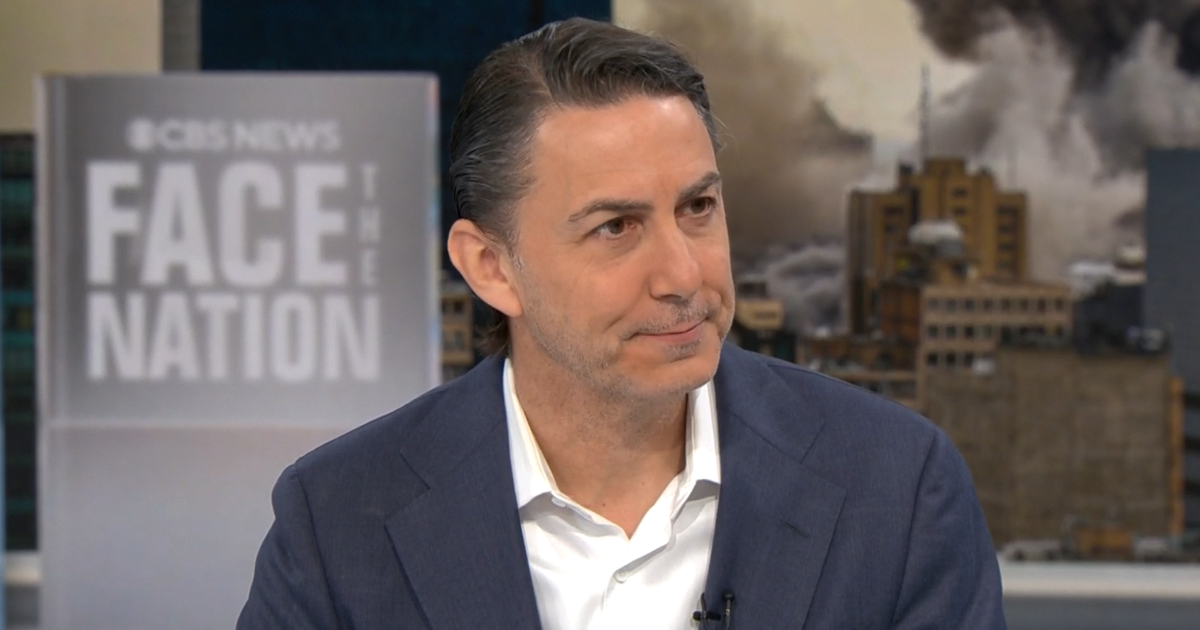
Americans are feeling the pain at the pump once again, with regular gas prices averaging around $4.05 per gallon—levels not seen since Russia’s invasion of Ukraine during the Biden administration. Amos Hochstein, former senior energy adviser to President Biden and Middle East negotiator who now works as managing partner at investment firm TWG Global, recently appeared on “Face the Nation” to discuss the current crisis and what it means for everyday Americans. According to Hochstein, the situation is far more serious than many realize, and the window for preventing a catastrophic economic impact is rapidly closing.
The current spike differs significantly from previous crises because we’re facing an actual disruption rather than just the fear of one. The closure of the Straits of Hormuz—a critical waterway through which much of the world’s oil passes—has created a genuine supply emergency. Hochstein explained that energy crises like this one have a deceptive quality: they appear to move slowly at first, then suddenly become catastrophic, like “falling off a cliff.” The reason is simple but alarming: when the strait first closed, the world still had oil tankers that were already on the water, making their 25-to-30-day journeys to their destinations. But now, with no new tankers departing, countries are beginning to run completely dry. What started as a problem for poorer nations is now affecting middle-income countries, and within weeks, the United States will feel the full impact. President Trump has only a narrow window—perhaps just a couple of weeks—to negotiate a deal before prices spike even higher and the economic consequences become severe.
The Global Domino Effect: When One Country’s Problem Becomes Everyone’s
The ripple effects of this crisis are already being felt around the world in ways that will soon hit American consumers hard. Europe is particularly vulnerable, with estimates suggesting they have only about six weeks of jet fuel remaining. Treasury Secretary Bessent has tried to calm markets by suggesting prices might drop sometime between June and September, but Hochstein believes this is wishful thinking—or more accurately, an attempt to “talk the markets down” by pushing the problem further into the future. The strategy seems to be hoping that if they can get to June, they’ll tell people to wait until August, and so on.
The situation is even more dire in parts of Asia, where some countries are already canceling flights because they’ve completely run out of jet fuel. Within two to three weeks at most, large portions of Asia will face similar shortages. This might seem like a distant problem for Americans, but Hochstein points out a critical reality that many people don’t consider: when a plane leaves the United States, it can’t carry enough fuel for a round trip. The administration has been reassuring Americans that we have plenty of fuel domestically, which may be true, but if there’s no jet fuel available at the destination, flights become impossible. The result? Fuel surcharges are already starting to appear, and as Memorial Day and summer travel season approach, ticket prices are set to skyrocket. When jet fuel is expensive or unavailable in the rest of the world, it becomes expensive here too. Airlines like Spirit, already struggling with bankruptcy issues, are particularly vulnerable to these kinds of shocks.
The Nuclear Question: Was Trump Just in the Wrong Place at the Wrong Time?
Beyond the immediate energy crisis, the interview delved into the complex nuclear situation with Iran. Back in July 2024, Secretary of State Blinken warned that Iran was just one or two weeks away from having enough fissile material to eventually produce a nuclear weapon if they chose to do so. The Biden administration attempted indirect negotiations, but those talks went nowhere. This raises an important question: when President Trump argues that he took action that no other president would take, is he really taking credit for something that was inevitable, or did the bill simply come due on his watch?
Hochstein’s answer is nuanced and revealing. He believes there’s definitely an element of inevitability to what happened—in fact, the Biden administration had been preparing for the possibility that they might need to take military action if they had won a second term. They conducted war games and practice runs, anticipating that the spring or summer of 2025 might force their hand. So when Trump decided to join in strikes in June, Hochstein was supportive because it was action that might have been necessary regardless of who was president. Trump claimed to have “obliterated” Iran’s nuclear program, but here’s the critical point: the current war did not target those nuclear facilities again. This isn’t about the nuclear issue anymore. The real question now is whether the Trump administration can successfully negotiate a deal with the Iranians, and right now, both sides are taking maximalist positions that are “very far apart,” despite all the rhetoric suggesting they’re close to an agreement or threatening more bombing.
The Danger of Informal Diplomacy: Why Details Matter in Life-or-Death Negotiations
One of Hochstein’s most pointed criticisms of the current administration’s approach concerns the informal, loose nature of the negotiations taking place. When you conduct diplomacy through phone calls without any real documentation or formal agreements, you create opportunities for dangerous misunderstandings. Iran says Lebanon was included in discussions; the U.S. says it wasn’t. The Iranians claim they’re opening the straits completely; the Americans insist the blockade is staying in place. Without paper, without serious, documented negotiations, these kinds of contradictions are inevitable, and they leave both sides in a worse position than when they started.
Hochstein emphasized that trying to resolve something as complex and consequential as a nuclear deal in just three days to calm markets is not only unrealistic but potentially catastrophic. These are “really, really critical” issues that require time, precision, and formal diplomatic processes. If the straits aren’t opened soon, Iran gains leverage it never had before. In theory, everyone knew Iran could close the Straits of Hormuz, but they had never actually done it—until now. For the foreseeable future, Iran has a powerful card to play against the United States and its neighbors, regardless of how the current conflict ends. This represents a fundamental shift in the regional power dynamic that will have lasting consequences.
There’s also the mystery of why Secretary of State Marco Rubio, who also serves as National Security Advisor, isn’t leading these negotiations. Hochstein noted that many people both in the region and in the United States are asking this same question. Perhaps Rubio doesn’t believe the current approach is the right one, but without hearing from him directly, it’s impossible to know. What is clear is that when Vice President Vance goes to negotiate, it matters who else has been at the table before. The last two times special envoys Steve Witkoff and Jared Kushner showed up to meet with Iranian delegations, the talks fell apart and ended in bombing. You need someone who wasn’t there for those failures, and you need someone senior enough that the Iranians believe truly speaks for the President. Ideally, you would have preparatory talks led by experienced diplomats, with the Vice President arriving at the end of the process to break through any remaining obstacles.
Lebanon: When a Ceasefire Becomes a Political Problem
The situation in Lebanon adds another layer of complexity to the regional crisis. Hochstein had brokered a ceasefire in Lebanon in 2024, and this past week, President Trump announced a 10-day pause to halt fighting between Hezbollah and Israel—a pause that’s linked to the larger deal the administration wants to reach with Iran. While Hochstein is glad to see the fighting halted, even temporarily, he finds it deeply worrisome that this ceasefire was essentially brokered by Iran. Iran insisted on a Lebanese ceasefire as a condition before they would show up to talks in Pakistan, which Hochstein calls “a disaster.”
The reason this matters so much is that for years, American policy has emphasized that Iran does not control Lebanon and has no business dictating what happens there. But Hezbollah has been “unmasked” during this recent conflict, revealing themselves not as a Lebanese fighting organization (or terrorist organization, as they claim to be) but rather as a group openly doing Iran’s bidding. Allowing Iran to dictate terms in Lebanon undermines Lebanese sovereignty and strengthens Iran’s regional position. That said, direct talks between Israel and Lebanese officials, even at the ambassador level, represents a positive development. Most Lebanese people desperately want a lasting ceasefire and an end to the conflict, even if a formal peace agreement remains out of reach.
However, there’s a significant obstacle to lasting peace: Israel’s stated intention to occupy parts of southern Lebanon to create a buffer zone. Hochstein warns that this won’t work and will ultimately backfire. If Israel maintains a significant occupation of Lebanese territory, it will actually help Hezbollah reestablish its political footing and reinforce its narrative as a resistance movement. The only path forward is to get all parties to the table, ensure Israel withdraws from Lebanon, stop the fighting, and provide real help to the Lebanese government to disarm Hezbollah—something Lebanon cannot accomplish on its own. Making matters more complicated, Israel has also indicated it intends to keep some territory it seized in Syria after Assad fell, which means serious, difficult negotiations lie ahead. What might look like a tactical victory for Israel could represent an overreach that causes them to “lose more ground” politically and strategically in the long run.
The Democratic Party’s Painful Reckoning with Israel
Perhaps the most politically charged moment of the interview came when discussing an extraordinary vote that took place in the Senate, where forty Senate Democrats tried to block a U.S. weapons sale to Israel. This represents a growing rift between the Democratic Party and Israeli Prime Minister Benjamin Netanyahu, raising the question of whether Democrats will come to regret this break in what has historically been a rock-solid bipartisan alliance.
Hochstein’s response reveals the depth of frustration many Democrats feel, not with Israel itself, but with Netanyahu personally. He hopes this doesn’t represent a permanent break in the alliance, but he argues that Netanyahu has “sacrificed Israel’s interest in the United States” over the last several years. Israel’s most important asset, according to Hochstein, isn’t its military might or intelligence capabilities—it’s the special relationship with the United States that has been bipartisan for decades. Netanyahu has “destroyed that” by deciding not just to align with the Republican Party, but to become “just an appendage of Donald Trump.” The result is that Democrats now see support for Netanyahu as synonymous with support for Trump, and if they’re anti-Trump, they become by default opposed to Netanyahu.
Hochstein emphasized that this crisis has more to do with Netanyahu and his “extremist right-wing government” than with Israel itself. After all, roughly half of Israelis are voting against Netanyahu, so Democrats should be aligning with Israel’s people and its democratic values, not with one particular leader. Nevertheless, the Senate vote represents a significant wake-up call that cannot be ignored. The bipartisan consensus that has protected and strengthened the U.S.-Israel relationship for generations is fracturing in real-time, and the long-term consequences of that fracture remain uncertain. What’s clear is that the political landscape around Middle East policy is shifting in ways that would have been unthinkable just a few years ago, and leaders on all sides will need to navigate these changes carefully to prevent permanent damage to relationships that have served both nations well for decades.