


Growing Concerns Over Federal Interference in State Elections
Constitutional Authority Under Scrutiny
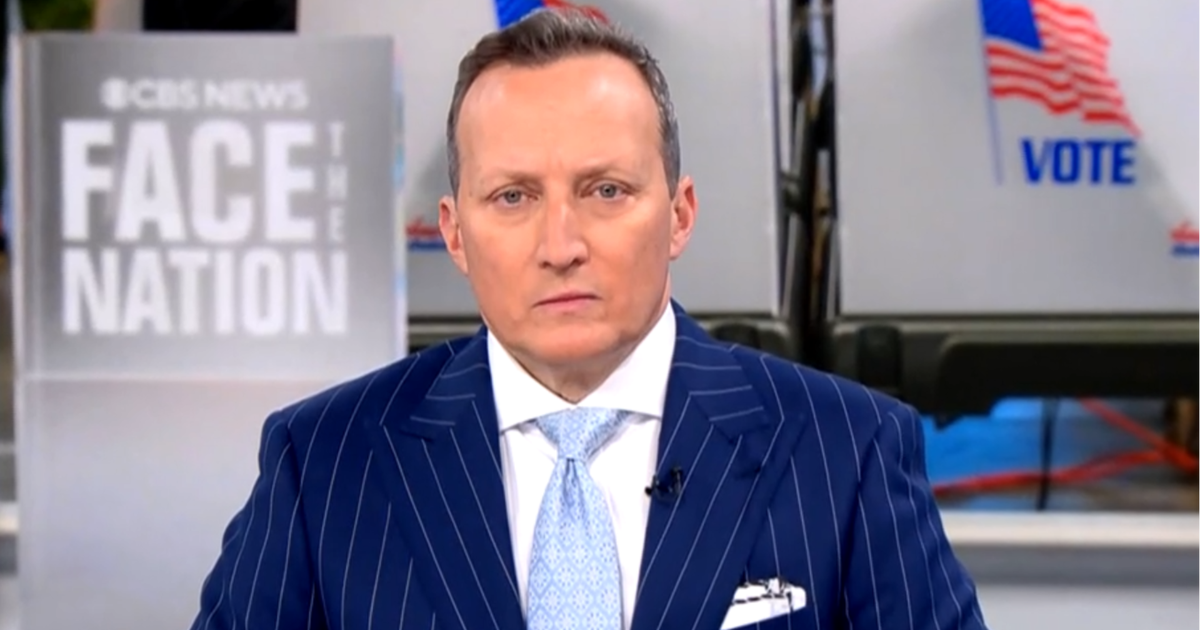
In a revealing interview on CBS News’s “Face the Nation,” election law expert David Becker raised serious concerns about unprecedented federal overreach into state election systems. As Executive Director of the Center for Election Innovation and Research, Becker highlighted a troubling pattern: President Trump’s administration has been actively attempting to seize control over state-run elections through executive orders, Department of Justice lawsuits against 24 states and the District of Columbia, and demands for sensitive voter data on hundreds of millions of Americans. What makes this particularly alarming is that the Constitution explicitly grants states the authority to conduct elections under Article 1, Section 4. Federal courts have recognized this constitutional boundary, blocking the administration’s efforts in multiple cases. A recent Oregon court decision went so far as to emphasize that the founders deliberately excluded executive authority over elections, specifically because they feared a president consolidating too much power by controlling the election machinery itself. This represents uncharted territory in American democracy – never before has a president attempted to exert such direct executive control over state election processes, creating legitimate anxiety among election officials nationwide who find themselves caught between constitutional duty and federal pressure.
The Contradiction of Claiming Rigged Elections After Winning
One of the most perplexing aspects of the current situation is the logical inconsistency at its heart. President Trump won the 2024 election under the same system he now claims is fundamentally broken, rigged, and a “laughing stock” around the world. As Becker and interviewer Margaret Brennan discussed, the system apparently worked perfectly fine when it elected Trump and Republicans to power, yet the same system is portrayed as hopelessly corrupt when discussing the 2020 election that Trump lost. This contradiction raises obvious questions about whether concerns about election integrity are genuine or politically motivated. The reality, according to Becker and supported by extensive documentation, is that American elections are more transparent, verifiable, and secure than ever before. Approximately 98% of American voters now use paper ballots that can be independently verified against machine tallies, with Louisiana being the sole exception as it transitions to paper ballots. These paper records provide an audit trail that has been tested repeatedly, most notably in Georgia where 2020 ballots were counted three times using three different methods, including one entirely manual recount that processed over five million ballots in just five days under observation from both campaigns and independent monitors. The results remained consistent across all counts.
Dismantling Cybersecurity Infrastructure
Beyond the constitutional concerns, Becker highlighted another worrying development: the Trump administration has dismantled the cybersecurity apparatus that was originally built during Trump’s first term to protect election systems from foreign interference and cyberattacks. This infrastructure was created in response to Russian interference in the 2016 election and represented a bipartisan recognition that America’s election systems needed robust protection from sophisticated cyber threats. Election officials across the country had come to depend on this federal support to identify vulnerabilities, respond to threats, and ensure the integrity of voting systems and voter databases. The decision to dismantle these protections comes at a time when cyber threats to democratic processes are more sophisticated than ever, and it leaves state and local election officials without crucial resources they had been counting on. This move seems particularly contradictory given the administration’s stated concerns about election security. If elections truly face the threats the President claims, removing cybersecurity protections would seem counterproductive. The timing and nature of this decision have left election officials feeling vulnerable and uncertain about their ability to protect their systems, adding another layer of concern to an already tense situation.
Spreading Disinformation About Election Systems
A particularly troubling element discussed in the interview involved a White House video that spread false information about American election systems. While the video was eventually taken down due to its racist content, the earlier portions that some defended contained demonstrable falsehoods about election technology and security. The video employed what Becker described as a common disinformation tactic: throwing everything against the wall to see what sticks, making numerous false claims in rapid succession that are difficult for average viewers to fact-check in real time. These claims included misrepresentations about voting machines, ignoring the paper ballot backups that exist nearly everywhere, and suggesting anomalies in vote counting that have been thoroughly investigated and explained. What’s particularly concerning is that this disinformation is being spread by the President of the United States himself, often targeting his own supporters and others who might be dissatisfied with election outcomes. As Becker noted, the 2020 election became the most scrutinized in American history, with countless court cases, audits, and investigations. Every single time these reviews were conducted, the work of election officials withstood scrutiny. Courts consistently found no evidence of the widespread fraud claimed, and in several notable cases, those who spread lies about the election faced legal consequences, including defamation judgments running into hundreds of millions of dollars.
The Mysterious Fulton County Ballot Seizure
One of the most bizarre incidents discussed involved FBI agents, accompanied by the Director of National Intelligence, seizing ballots from Fulton County, Georgia – ballots from the 2020 election that had already been counted and verified multiple times. Body camera footage showed FBI agents executing a search warrant that had to be corrected on-site due to errors in the address, raising questions about the thoroughness of the process. Becker emphasized that there was no crime committed in Fulton County in 2020, and the results have been verified exhaustively. Joe Biden won Georgia by 11,779 votes in 2020, while Donald Trump won the state in 2024. The idea that Democrats had some magical ability to steal an election while out of power in 2020 but forgot to use that same power when they controlled the White House in 2024 defies basic logic. Furthermore, there’s a significant legal problem with the search warrant: there’s a five-year statute of limitations for the federal crimes mentioned in the warrant, and that period has expired by any measure. This raises serious questions about why a federal magistrate approved the warrant in the first place. Perhaps most troubling is the presence of a high-level political appointee – the Director of National Intelligence – during what should have been a routine law enforcement operation. There’s no legitimate reason for such a political figure to be present during a search warrant execution. The explanations for her presence have shifted repeatedly, from claims that she “happened to be in Atlanta” to statements that the President or Attorney General directed her presence, leaving observers confused about what actually happened and why.
The Broader Implications for Democracy
The cumulative effect of these actions represents an unprecedented challenge to American democratic norms and constitutional principles. Both political parties have attempted to pass comprehensive election reform legislation in recent years, but both efforts failed to gain sufficient support, leaving election policy largely where the Constitution places it: in the hands of individual states. What election officials across the country are experiencing now goes beyond normal political disagreement about election procedures. They face lawsuits from their own federal government, demands for sensitive data they’re legally obligated to protect, the loss of cybersecurity support they’d been relying on, and a constant stream of public accusations from the nation’s highest office that undermine confidence in the work they do. At least nine top Trump administration officials have raised doubts about the validity or integrity of the 2020 election, not counting the President himself, creating an environment where election workers face harassment and threats simply for doing their constitutional duty. The courts have so far held the line, blocking federal overreach and affirming state authority over elections, but the situation remains fluid and unpredictable. What’s clear is that we’re in uncharted territory, with fundamental questions about who controls American elections and whether constitutional limits on executive power will hold against a president determined to test those boundaries in ways never before attempted in American history.