
Energy Secretary Defends Iran Military Campaign Amid Rising Gas Prices and Public Opposition
A Controversial Conflict with Deep Historical Roots
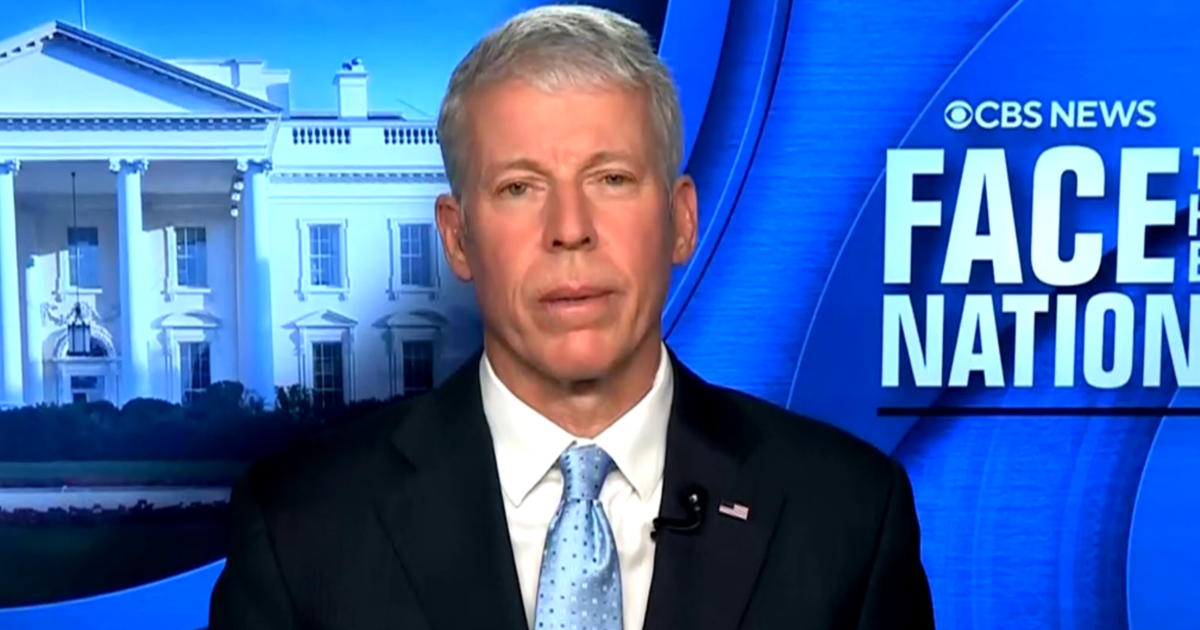
In a revealing interview on “Face the Nation,” Energy Secretary Chris Wright mounted a spirited defense of the Trump administration’s military engagement with Iran, even as polling shows a majority of Americans oppose the conflict. With 50,000 U.S. troops deployed and at least six American service members killed, Wright framed the operation not as a new war but as the culmination of a 47-year struggle that began with the 1979 Iranian Revolution. He argued that previous administrations had exhausted diplomatic options, attempting to “beg, barter and bribe” the Iranian government into better behavior without success. According to Wright, Iran’s expanding missile and drone programs, combined with their pursuit of nuclear weapons capabilities, have brought the situation to a critical threshold where inaction poses greater risks than military intervention. The Secretary insisted that allowing Iran to continue threatening its neighbors, American forces, and global energy infrastructure would only postpone an inevitable confrontation while the adversary grows stronger.
Wright’s comments reveal an administration committed to what they view as a decisive resolution to decades of Iranian hostility, despite the immediate costs in lives, treasure, and political capital. The Secretary repeatedly characterized the conflict as temporary—a matter of weeks, not months—though he provided few concrete benchmarks for when Americans might expect the mission to conclude. His framing presents the current military action as preventative rather than reactive, aimed at “defanging” Iran’s capabilities before they develop nuclear weapons that would fundamentally alter regional power dynamics. This represents a significant departure from the containment and diplomacy-focused approaches of previous administrations, embracing instead a more forceful strategy that accepts short-term pain for what Wright describes as long-term security and economic gains.
Energy Markets in Turmoil: Supply Versus Logistics
The most immediate consequence Americans are experiencing is at the gas pump, where prices have surged 14% in just one week to a national average of $3.45 per gallon. However, Wright was quick to clarify that the world is not facing an oil shortage—a crucial distinction that shapes the administration’s response strategy. The United States remains a net exporter of both oil and natural gas, and the Western Hemisphere has ample supplies. The problem, as both Wright and the International Energy Agency have identified, is logistical dislocation. Refineries in Asia and Europe that normally receive crude oil from Middle Eastern sources through the Strait of Hormuz are experiencing supply interruptions, even though massive energy stores exist elsewhere in the world. This creates a mismatch between where oil is located and where it’s needed for refining and consumption.
The Strait of Hormuz, through which approximately 20 million barrels of oil typically pass daily, has become a chokepoint in global energy flows. Wright indicated that only one vessel had successfully transited the strait recently, a dramatic reduction that has sent shockwaves through energy markets. The Secretary attributed the price spikes to “emotional reactions and fear” rather than fundamental supply constraints, arguing that market participants are overestimating the duration of the conflict. He expressed confidence that oil and gas prices shouldn’t rise much higher than current levels, though he acknowledged the administration is considering Navy escorts for tankers attempting to navigate the Persian Gulf. The military’s focus on degrading Iran’s offensive capabilities—Wright claimed missile launches are down 90% and drone launches down 80%—is intended to create conditions for normal shipping to resume relatively soon.
The Strategic Petroleum Reserve Debate and Russian Oil Exception
When asked about tapping America’s Strategic Petroleum Reserve, Wright offered a nuanced response that revealed both the administration’s options and its constraints. While the U.S. maintains over 400 million barrels in strategic reserves, Wright characterized the stockpile as “depleted” compared to historical levels and questioned whether releasing American oil would address the core problem. Since the shortage is centered at refineries in Europe and Asia rather than in North America, simply releasing oil from U.S. reserves doesn’t efficiently solve the logistical challenge. This geographic mismatch between available supplies and refining capacity has led the administration to pursue an unconventional and politically controversial solution: temporarily suspending sanctions to allow Russian crude oil into global markets.
Wright revealed that over 100 million barrels of Russian crude oil are currently floating offshore, waiting for delivery to China. Rather than seize these vessels or maintain sanctions that would keep this oil out of circulation, the administration has encouraged India to draw down these Russian stocks for their refineries. This pragmatic approach has drawn criticism for potentially benefiting Russia financially, particularly given well-documented Russian support for Iran, including intelligence sharing that has targeted American forces. Wright defended the decision by emphasizing the immediate priority of stabilizing energy markets for American consumers while acknowledging that Russia “is expert at causing trouble around the world.” He insisted that accelerating the sale of oil already destined for market doesn’t constitute helping Russia, but rather represents a tactical decision to address a short-term crisis. This utilitarian calculation—using adversary resources to mitigate consumer pain during a conflict with a different adversary—illustrates the complex trade-offs the administration faces.
Military Progress and Timeline Uncertainties
Throughout the interview, Wright maintained an optimistic assessment of military progress against Iranian capabilities, though he provided few concrete details about timelines or exit strategies. His claim that Iran’s missile and drone launch capabilities have been degraded by 80-90% suggests significant tactical success in the early phases of the operation. However, when pressed repeatedly about duration, Wright offered only vague assurances that the conflict would be measured in weeks rather than months or years. This imprecision stands in notable contrast to the definitiveness with which he described the mission’s objectives: permanently reducing Iran’s ability to threaten neighbors, attack American forces, disrupt shipping, and develop nuclear weapons. The gap between specific goals and ambiguous timelines may fuel the public skepticism reflected in polling that shows 56% of Americans disapproving of the war.
The Secretary’s comments about Navy escorts for tankers revealed that operational planning is still evolving in real-time. Wright indicated that “early tankers probably will involve some direct protection by the U.S. military,” suggesting that decisions about the scope of American involvement continue to be made on the fly rather than according to a predetermined strategy. This reactive posture raises questions about whether the administration fully anticipated the logistical challenges and market disruptions that would follow military action. Wright’s assertion that “most important is to defang their ability to threaten these ships” prioritizes the military campaign over immediate economic relief, indicating that the administration is prepared to accept ongoing market volatility until Iranian capabilities are sufficiently degraded—whenever that might be.
Energy Price Projections and Political Calculations
When confronted with predictions from Qatari officials that oil could reach $150 per barrel, Wright did not dismiss the possibility but instead reframed it within the administration’s broader strategic narrative. He argued that the real risk to energy prices would have been inaction—allowing Iran to continue developing nuclear weapons and threatening regional stability would have created conditions for even more severe and prolonged energy market disruptions. This represents a high-stakes gamble that American consumers and the global economy can absorb a short, sharp shock in exchange for what Wright describes as an “era of even lower energy prices” once Iran is neutralized as a regional threat. The political sustainability of this position depends entirely on whether the conflict actually concludes as quickly as Wright predicts and whether energy prices return to acceptable levels before public patience runs out.
The Secretary’s confidence that President Trump will “stay focused on ending a 47-year conflict” regardless of political pressure suggests an administration committed to seeing the operation through despite polling showing majority opposition. Wright criticized previous presidents for “kicking the can down the road” and praised Trump’s “bold leadership” in confronting the Iran challenge directly. However, this determination could face severe tests if casualties mount, costs escalate, or energy prices remain elevated longer than the “weeks” Wright has projected. The comparison to Venezuela—where the administration deposed Maduro but is now working with his former associates—hints at the potentially messy realities of regime change operations, even as Wright insisted that whatever government emerges in Iran will be disarmed and less threatening.
Broader Implications and Unanswered Questions
The interview revealed an administration navigating multiple simultaneous challenges: prosecuting a military campaign, managing energy markets, maintaining alliances, and handling complex relationships with adversaries like Russia. Wright’s willingness to temporarily ease sanctions on Russian oil while fighting a war against Iran—despite Russian support for Iranian forces—demonstrates the kind of compartmentalized thinking that characterizes realist foreign policy but may strike many Americans as inconsistent or hypocritical. The Secretary’s acknowledgment that Russian components are found in Iranian drones and that Russia has provided intelligence used to target Americans makes the decision to facilitate Russian oil sales particularly difficult to defend on moral grounds, even if it makes sense from a narrow economic perspective.
Perhaps most significantly, the interview highlighted fundamental uncertainties about what success looks like and how it will be measured. Wright spoke confidently about “defanging” Iran and creating conditions for regional stability and lower energy prices, but offered little detail about governance structures, political transitions, or long-term security arrangements. The Venezuela comparison is instructive but not necessarily reassuring—while Wright touted reduced crime in Trinidad and Tobago as evidence of success, the fact that American officials are negotiating with figures from the very regime they recently deposed suggests that transformational change is more aspirational than actual. Whether the Iran operation will follow a similar pattern—tactical military success followed by pragmatic accommodation with whatever power structure emerges—remains an open question that will determine both the conflict’s ultimate costs and its historical legacy.