


The Limits of Military Force: IAEA Chief on Iran’s Nuclear Future
Military Strikes Cannot Erase Nuclear Knowledge
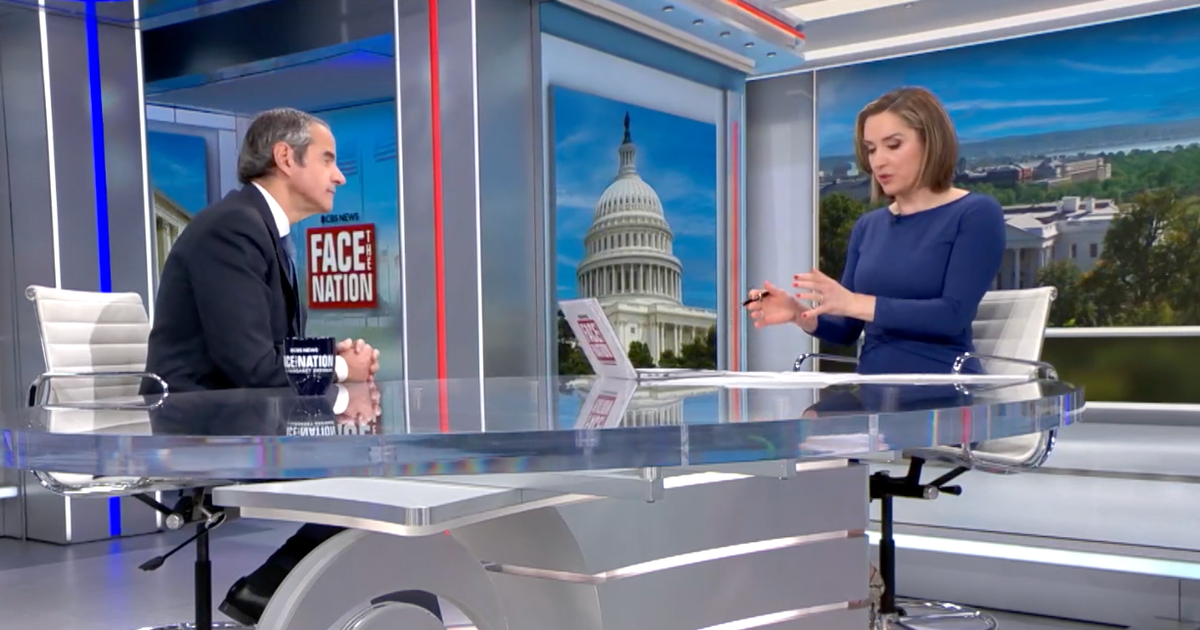
In a sobering assessment of the ongoing conflict with Iran, International Atomic Energy Agency Director-General Rafael Grossi has delivered a stark message to policymakers and the public: military action alone cannot eliminate Iran’s nuclear capabilities. Speaking with Margaret Brennan on “Face the Nation,” Grossi explained that while recent military campaigns have caused significant physical damage to Iran’s nuclear facilities—including major sites at Fordow, Natanz, and Isfahan—the fundamental problem remains unsolved. The challenge facing the international community is not simply about destroying buildings or equipment, but about addressing the accumulated knowledge, expertise, and remaining nuclear material that will persist long after the bombing stops. As Grossi pointedly noted, “you cannot unlearn what you’ve learned.” Iran has developed sophisticated centrifuge technology and the metallurgical expertise to produce advanced nuclear equipment. This technical capability cannot be destroyed by conventional weapons, making diplomatic engagement essential for any lasting solution to the nuclear standoff.
The Dangerous Inventory Under the Rubble
One of Grossi’s most alarming revelations concerns Iran’s existing stockpile of highly enriched uranium. The country had accumulated significant quantities of uranium enriched to 60%—dangeringly close to the 90% concentration needed for nuclear weapons. This material, along with various equipment and infrastructure, likely survived the military strikes and now sits somewhere under the rubble of bombed facilities or in protected locations. The enriched uranium exists in the form of uranium hexafluoride gas stored in cylinders, which Grossi described as “very difficult to handle” due to its highly contaminated nature. This technical reality complicates any potential military operation to secure or remove the material, even by special forces. While acknowledging the impressive capabilities of U.S. military operations, Grossi suggested that extracting these cylinders would be “a very challenging operation” involving highly radioactive materials in uncertain conditions, possibly surrounded by decoy cylinders and other distractions. The persistence of this enriched uranium stockpile means that Iran retains a crucial component for nuclear weapons development, regardless of how much physical infrastructure has been destroyed.
The Unanswered Questions That Preceded War
The current crisis didn’t emerge in a vacuum. Grossi revealed that the IAEA had been raising concerns about Iran’s nuclear activities for years before the conflict escalated. While the agency never found evidence of a systematic, organized nuclear weapons program like the Amad Plan that existed in the early 2000s, inspectors repeatedly encountered “many, many concerning things” and “many unanswered questions.” The problems intensified around 2019-2020, when IAEA inspectors began finding uranium particles in locations where they shouldn’t exist, and Iran increasingly restricted inspector access to facilities. This pattern of behavior led Grossi to make a critical declaration: he could no longer assure the international community that everything was in order with Iran’s nuclear program. The lack of transparency became particularly troubling when senior Iranian officials made statements suggesting they possessed “all the elements of the puzzle” for nuclear weapons—comments that Iranian authorities never adequately explained. Throughout this period, Grossi made repeated trips to Tehran seeking clarifications and commitments, achieving temporary agreements that ultimately proved insufficient. The fundamental issue wasn’t necessarily proof of an active weapons program, but Iran’s unwillingness or inability to provide the transparency needed to verify the peaceful nature of its nuclear activities.
The Elusive Peace Deal That Almost Was
Perhaps the most tragic aspect of the current situation is how close diplomatic efforts came to preventing military action. In the final days before U.S. bombing began, intensive negotiations were underway, with Oman playing a key mediating role. According to Oman’s Foreign Minister, Iran had agreed to “zero stockpiling” and was willing to downblend its enriched uranium and ship it out of the country. However, Grossi’s account reveals a more complicated picture. While acknowledging that serious discussions were taking place and praising the “nobility of the effort,” he made clear that no actual agreement had been reached when the bombs started falling. In fact, significant disagreements remained, which is why a technical meeting had been scheduled for the Monday following the weekend when military operations commenced. The failure to finalize this diplomatic solution has had profound consequences, transforming what might have been a negotiated resolution into a military conflict. Yet even amid the destruction, Grossi has maintained contact with both sides, believing that his “obligation” was to keep talking and prevent further escalation. The question now is whether those diplomatic threads can be picked up again, and whether the credibility needed for successful negotiations can be restored after two rounds of U.S. bombing campaigns within nine months.
Technical Capabilities and Troubling Ambiguities
A significant point of contention involved Iran’s Tehran Research Reactor, which produces medical isotopes supposedly for cancer detection and treatment. This facility became a flashpoint when Trump administration officials suggested that Iran was using it as “a complete and false pretense” to hide nuclear fuel stockpiling. The controversy illustrates the challenges facing nuclear inspectors and the ambiguities inherent in monitoring dual-use technology. The reactor requires uranium enriched to 20%—substantially higher than the 3.6% level permitted under the previous JCPOA nuclear agreement, though far below weapons-grade. Grossi carefully explained that while such reactors can legitimately produce medical isotopes, the IAEA had observed only “very, very limited” actual production of these materials. This raised questions about Iran’s true intentions, though Grossi emphasized that his agency deals with “technical capabilities” rather than making judgments about honesty or intentions. The distinction matters: the IAEA can determine what a particular technology or material could potentially be used for, but assessing whether a country intends to pursue weapons development involves intelligence analysis beyond the agency’s mandate. This technical precision sometimes frustrates policymakers seeking clear yes-or-no answers, but it reflects the scientific rigor required for the IAEA to maintain credibility with all parties.
The Path Forward: Inspection, Verification, and Renewed Diplomacy
Looking ahead, Grossi outlined the essential elements of any sustainable solution to the Iran nuclear crisis. First, IAEA inspectors must return to Iran once combat operations cease, as the country remains bound by its obligations under the Treaty on the Non-Proliferation of Nuclear Weapons. These inspections will determine what survived the bombing campaign, where nuclear materials are located, and what capabilities Iran retains. Second, a new diplomatic framework must be established that provides the international community with adequate “visibility” into Iran’s nuclear activities and a “clear idea of where they are, where they want to go.” Grossi acknowledged that satellite imagery provides limited information and that physical inspections of facilities—including undeclared sites that Trump has highlighted—remain necessary. Third, and perhaps most fundamentally, the parties must return to negotiations. While Grossi acknowledged the damage to diplomatic credibility caused by bombing during negotiation processes, he insisted that even Washington would agree that “for a durable, long-standing solution, we will have to see each other again around the table.” Regional conferences might play a supporting role, but the core negotiations must involve the United States and Iran directly. Throughout the interview, Grossi maintained that “in the bleakest hour, we should never lose hope”—a sentiment that may seem optimistic given the circumstances, but one that reflects the practical reality that military action alone cannot resolve the fundamental issues at stake. The knowledge Iran has acquired, the expertise its scientists possess, and the industrial capabilities it has developed will remain regardless of how many facilities are destroyed. Only through renewed diplomatic engagement, backed by robust inspection and verification mechanisms, can the international community achieve lasting confidence that Iran’s nuclear program will remain peaceful.