



America’s Measles Crisis: An Expert’s Warning About the Return of a Preventable Disease
A Troubling Prediction Comes True
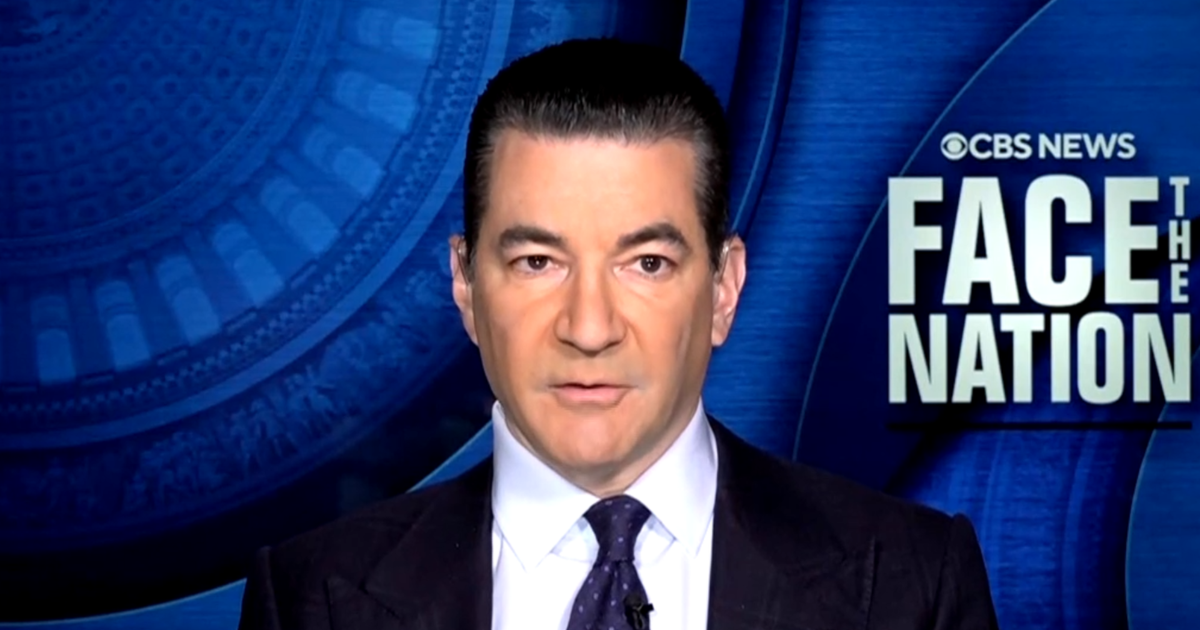
Dr. Scott Gottlieb, former FDA commissioner and current board member of both Pfizer and United Healthcare, appeared on “Face the Nation” in February 2026 to discuss a public health crisis that he had accurately predicted a year earlier. His warning about a potential measles outbreak has unfortunately materialized into one of the most significant public health challenges in recent American history. South Carolina is experiencing the largest outbreak since measles was declared eliminated in the United States, with approximately 900 reported cases. Additional cases have emerged at Disneyland in California and here in Washington, D.C., signaling that this highly contagious disease is making an unwelcome comeback across the nation. While Dr. Gottlieb assured viewers that mass gatherings don’t need to be avoided at this point, his overall message was sobering: this situation is going to get considerably worse before it gets better.
The Scope of the Problem and What’s Driving It
The statistics paint a concerning picture of where we’re headed. Last year saw 2,000 measles cases nationwide, and we’re already at 750 cases early in 2026, with projections pointing to much higher numbers by year’s end. What makes this particularly alarming is that the majority of those getting infected are children between ages five and seventeen – not toddlers, as one might expect. This demographic trend reveals the heart of the problem: vaccination rates among toddlers have been declining as part of a broader movement away from pediatric vaccines in America. As these unvaccinated toddlers grow into school-age children and enter classroom settings where diseases spread easily, the outbreaks will likely escalate further. Dr. Gottlieb drew a parallel to the early 1990s, when declining vaccination rates led to approximately 25,000 measles cases in 1991 and 10,000 in 1992, when only about 88% of American children were vaccinated for measles, mumps, and rubella. Currently, the national vaccination rate sits at about 90%, but some states experiencing outbreaks have rates as low as 81% in Alaska and 88% in several other affected areas. These percentages fall dangerously below the 95% threshold needed for herd immunity, creating vulnerable pockets where the virus can spread rapidly.
A Global Phenomenon Rooted in Recent History
This isn’t just an American problem – it’s a global anti-vaccine movement that has stripped multiple countries of their measles elimination status, including Britain, Canada, Spain, and several European and Central Asian nations. Dr. Gottlieb believes much of this backlash stems from the COVID-19 pandemic, when people felt compelled by government mandates to take vaccines they had reservations about. He acknowledges that he considered this approach a mistake at the time and still does, having discussed on the show previously how such mandates would likely breed an anti-vaccine backlash. That prediction has also come true. The pandemic experience gave voice and political legitimacy to people who were anti-vaccine from the beginning, and now these voices are gaining significant political resonance and even influencing policy decisions at the Department of Health and Human Services. The problem extends beyond just the MMR vaccine; declining vaccination rates for diphtheria, tetanus, and pertussis are also leading to growing outbreaks of whooping cough across the country. This represents what Dr. Gottlieb characterizes as “a long cycle” and possibly “a generational change” in public attitudes toward childhood vaccinations, now embedded in the political psyche of the nation.
The Political Complications of Public Health Messaging
The confusion and mixed messaging from government health officials became evident during a congressional hearing with Dr. Jay Bhattacharya, the NIH director. When Senator Bernie Sanders pressed him under oath about whether vaccines cause autism, Dr. Bhattacharya carefully avoided giving a straightforward answer, responding that he hadn’t seen a study suggesting “any single vaccine” causes autism, rather than clearly stating that vaccines don’t cause autism. The next day, he posted on social media claiming he’d been mischaracterized and that he was “fully aligned with Secretary Kennedy on finding the root cause of autism” – a statement that only added to the confusion. Dr. Gottlieb explained that many appointed officials working under Secretary Kennedy are reluctant to contradict him on vaccine issues because Kennedy has been a prominent anti-vaccine advocate for two decades. Now in a position of significant authority, Kennedy is able to embed anti-vaccine perspectives into official policy, making it politically difficult for professionals beneath him to provide clear, science-based messaging. Dr. Gottlieb noted that the only vaccine extensively studied in relation to autism is the MMR vaccine, and those studies have found no connection. He praised other officials like Dr. Mehmet Oz, who clearly stated the importance of the MMR vaccine, and called for more officials to step forward with similarly unambiguous messages about vaccine safety and importance.
The Long-Term Consequences of Viral Infections
One of the most dangerous aspects of anti-vaccine ideology, according to Dr. Gottlieb, is the belief that these childhood infections aren’t serious enough to justify any theoretical or actual risks from vaccines. This fundamentally misunderstands the long-term health consequences that viral infections can trigger, sometimes years or even decades after the initial illness. Dr. Gottlieb shared his own personal experience to illustrate this point: he had Epstein-Barr Virus, which led to the development of a B cell lymphoma. Scientific research has established connections between various viruses and serious long-term health conditions. HSV-1, the virus that causes cold sores, has been associated with Alzheimer’s disease. Enterovirus has links to type 1 diabetes. The Epstein-Barr virus is now believed to be associated with multiple sclerosis and may be a causative factor in lupus. These examples demonstrate that viruses can have serious long-term consequences that manifest long after the acute infection has resolved. The notion that childhood diseases are merely temporary inconveniences with no lasting effects is not supported by medical science, yet this misconception continues to fuel vaccine hesitancy among parents who believe they’re making the safer choice by avoiding vaccination.
Looking Ahead: The Challenge of Reversing Course
The measles outbreaks currently spreading across states like South Carolina, Texas, Florida, Utah, and Arizona – which have each seen hundreds of cases – represent just the beginning of what could be a prolonged public health crisis. Certain communities have vaccination rates as low as 70%, creating ideal conditions for measles to spread, given that it’s one of the most contagious diseases known to medicine. The challenge ahead isn’t simply medical or scientific; it’s fundamentally about communication, trust, and political will. Reversing declining vaccination rates requires consistent, clear messaging from trusted health authorities, but that messaging is being undermined by political considerations and the influence of anti-vaccine advocacy in government positions. It requires rebuilding public trust that was damaged during the pandemic, acknowledging people’s concerns while firmly grounding public health policy in scientific evidence. Education about vaccine safety and the serious nature of preventable diseases will be crucial, as will addressing the underlying reasons why parents are choosing not to vaccinate their children. As Dr. Gottlieb emphasized, this appears to be a generational shift in attitudes, which means the solution won’t come quickly or easily. The medical community’s responsibility is to continue speaking clearly about the science, sharing real-world examples of how these diseases cause lasting harm, and making the case that the proven benefits of vaccination far outweigh the risks. For parents facing these decisions, the key is understanding that vaccines aren’t perfect – no medical intervention is – but they represent one of the most successful public health achievements in human history, having saved countless lives and prevented immeasurable suffering for over a century.