
Growing Concerns Over Intelligence Activities and Election Security
Questions Arise About DNI’s Domestic Involvement
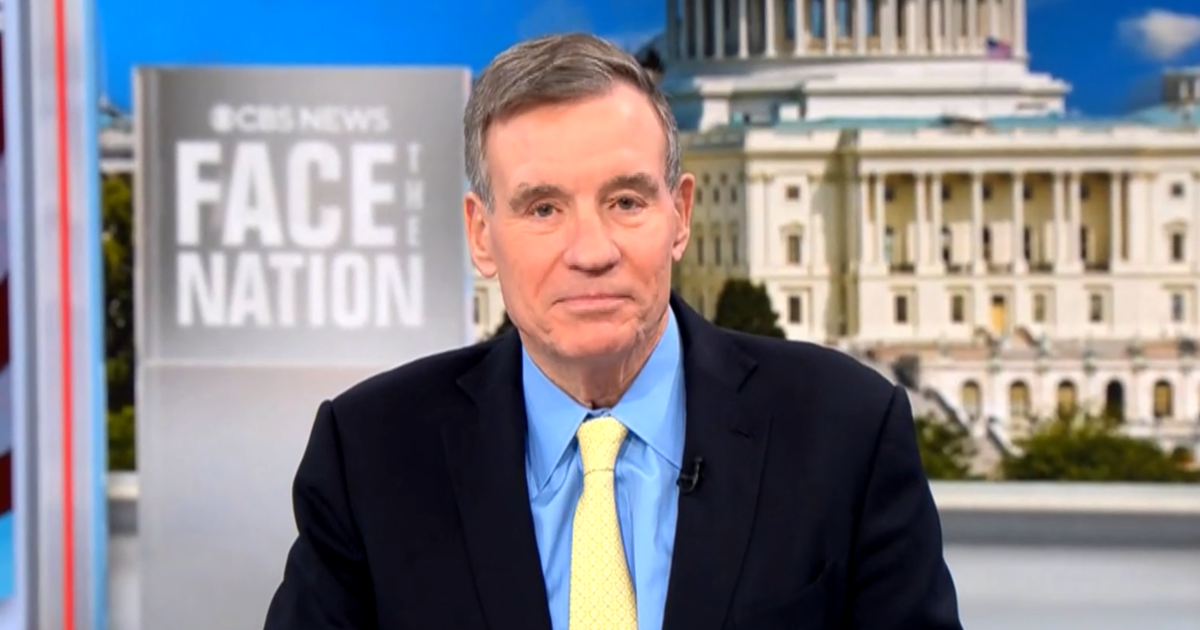
Senator Mark Warner of Virginia, the top Democrat on the Senate Intelligence Committee, raised serious concerns during a recent “Face the Nation” interview about what he sees as inappropriate domestic activities by Director of National Intelligence Tulsi Gabbard. The controversy centers around two incidents: Gabbard’s presence at a January 28, 2026 FBI operation in Fulton County, Georgia, where agents seized ballots and voting records from the 2020 presidential election, and an earlier unreported trip to Puerto Rico where she allegedly seized voting machines. Warner emphasized that the DNI’s role is traditionally “outward facing” – focused on foreign threats rather than domestic matters involving American citizens. He drew parallels to the Watergate scandal, calling the situation “almost Nixonian,” particularly questioning how President Trump would have known about the search warrant before it was executed and why he would have requested Gabbard’s presence at what should have been a routine law enforcement operation. The lack of any identified foreign nexus to justify the intelligence community’s involvement has left Warner and other oversight officials deeply troubled, especially since the Intelligence Committee claims it received no advance notification or briefing about either incident.
Inconsistent Explanations and Lack of Congressional Oversight
What makes this situation particularly concerning, according to Senator Warner, is the constantly shifting narrative about Gabbard’s involvement in Georgia. Initially, Gabbard stated that the president personally requested her presence, citing her statutory authority to coordinate intelligence related to election security. However, the story changed multiple times – the president later denied making the request, then suggested it came from Attorney General Pam Bondi instead. Warner told interviewer Margaret Brennan, “We don’t have the slightest idea other than the fact that the whole thing stinks to high heaven.” The senator revealed that Congress first learned about the Puerto Rico voting machine seizure not from official channels but from Reuters reporting in the press. This breakdown in the normal oversight process represents a fundamental violation of the relationship between the intelligence community and its congressional overseers. The White House has defended Gabbard’s actions by citing federal law that assigns the DNI responsibility for counterintelligence matters related to election security, including voting system risk and voter registration databases. However, Warner argues this authority only applies when there’s a foreign threat component, which has not been demonstrated in either the Georgia or Puerto Rico cases.
Dismantling of Election Security Infrastructure
Beyond the specific incidents involving Director Gabbard, Senator Warner expressed alarm about what he describes as the systematic dismantling of election security measures that were established during President Trump’s first administration. He pointed to three key organizations that have been significantly weakened or eliminated: CISA (the Cybersecurity and Infrastructure Security Agency), which has been cut by a third; an FBI center focused on foreign malign influence; and the Foreign Malign Influence Center at the Office of the Director of National Intelligence. Warner noted the irony that many of these protections were put in place with bipartisan support during Trump’s first term specifically to guard against foreign interference in American elections. “All of those entities have been basically disbanded,” Warner stated, adding that in the case of the ODNI center, he believes the cutbacks are “frankly, counter to the law.” These institutions were created in response to documented foreign interference attempts, particularly the Russian influence operations during the 2016 election. With artificial intelligence making such interference “almost child’s play” according to Warner, the timing of these cuts raises questions about whether the administration is adequately prioritizing election security. The senator warned that countries like China, Russia, and Iran now have even more sophisticated tools at their disposal, yet the United States has reduced its defensive capabilities at precisely the moment when threats are evolving and multiplying.
Fears About 2026 Election Interference
Perhaps Senator Warner’s most explosive claim was his concern that President Trump might attempt to interfere in the 2026 midterm elections. “My fear is now he sees the political winds turning against him, and he’s going to try to interfere in the 2026 election, something a year ago I didn’t think would be possible,” Warner stated. When pressed by Brennan about what evidence he had for such a serious allegation, Warner pointed to the president’s own comments about nationalizing elections and “putting Republicans in charge, counter to the constitution.” He also raised concerns about potential ICE (Immigration and Customs Enforcement) presence at polling stations, which could have a chilling effect on voter turnout, particularly in Latino communities. Warner explained that even in families where members are legal citizens, the presence of ICE agents could discourage voting if there’s fear that other family members might be undocumented. He cited a specific case in Minnesota where someone was denied a Global Entry card for faster TSA screening because they had appeared at a protest rally, suggesting that ICE is gathering information about Americans’ activities that goes beyond its immigration enforcement mission. “Do we really want ICE having that information?” Warner asked, noting that something as minor as an unpaid parking ticket could deter someone from voting if they feared encountering ICE at a polling place. The senator acknowledged this is “uncharted territory” but insisted the president’s own words have raised legitimate concerns about potential federal interference in what has traditionally been state-administered election processes.
The Whistleblower Complaint Controversy
Adding another layer to the controversy surrounding Director Gabbard is a classified whistleblower complaint that has been the subject of conflicting assessments by different inspectors general. According to Warner, a long-term professional inspector general from the previous administration deemed the complaint credible and urgent. However, a Trump-appointed inspector general later concluded it was non-credible, creating a bureaucratic stalemate that has prevented Congress from getting to the bottom of the allegations. What particularly troubles Warner is the timeline: the whistleblower came forward in May 2025, but the Gang of Eight (the congressional leaders with access to the most sensitive intelligence) didn’t hear about it until November, and only saw a heavily redacted version in February 2026. Warner stated that Gabbard’s own general counsel testified that he informed her of her legal obligation to share the complaint with Congress back in June, though Gabbard later claimed she was unaware of this responsibility. “Ignorance of the law is not an excuse if you’re the Director of National Intelligence,” Warner said pointedly. While Warner refused to discuss the classified contents of the complaint, CBS News reported that according to a senior intelligence official, it involved an intelligence intercept between two foreign nationals who mentioned someone close to President Trump, though it remained unclear whether this was substantive intelligence or merely gossip. The whistleblower has reportedly been waiting for legal guidance on how to approach the committee, and Warner’s team is working to see both the underlying intelligence and to have redactions removed from the complaint they’ve already reviewed.
A Crisis of Confidence in Intelligence Leadership
The personal animosity between Senator Warner and Director Gabbard has now spilled into public view, with Gabbard issuing what Brennan described as a “long blistering statement” accusing Warner of repeatedly lying to the American people. Gabbard claimed she never had the whistleblower complaint in her possession and only saw it for the first time two weeks prior. When given the opportunity to respond, Warner didn’t mince words: “I do not believe that Director Gabbard is competent for her position. I don’t believe that she is making America safer.” He outlined multiple reasons for this assessment: her failure to follow proper procedures for getting whistleblower complaints to Congress in a timely manner, her inappropriate appearance at a domestic criminal investigation in Georgia, and her decision to significantly cut back the Foreign Malign Influence Center that operates under her authority. Warner concluded by saying, “We are going to agree to disagree about who’s telling the truth,” but noted that her own general counsel testified she was informed of her legal obligations in June. The interview also touched on Iran’s apparent efforts to reconstitute its nuclear program after U.S. strikes eight months earlier, with Warner expressing concern that American military resources are being stretched too thin by simultaneous operations around the world, including a blockade off Venezuela that pulled an aircraft carrier from the Mediterranean when it might have been needed to pressure Iran. He emphasized that America is stronger when working with allies and when military capabilities are properly positioned, suggesting that President Trump’s “Greenland play” disrupted NATO unity at precisely the moment when European pressure on Iran would have been most valuable. Throughout the wide-ranging interview, a central theme emerged: concerns about whether traditional oversight mechanisms, institutional norms, and the careful separation between intelligence activities and domestic politics are being eroded in ways that could have long-lasting consequences for American democracy and national security.