
Border Czar Tom Homan Defends Trump Immigration Policies Amid Funding Standoff
Negotiations and Democratic Demands Create Washington Impasse
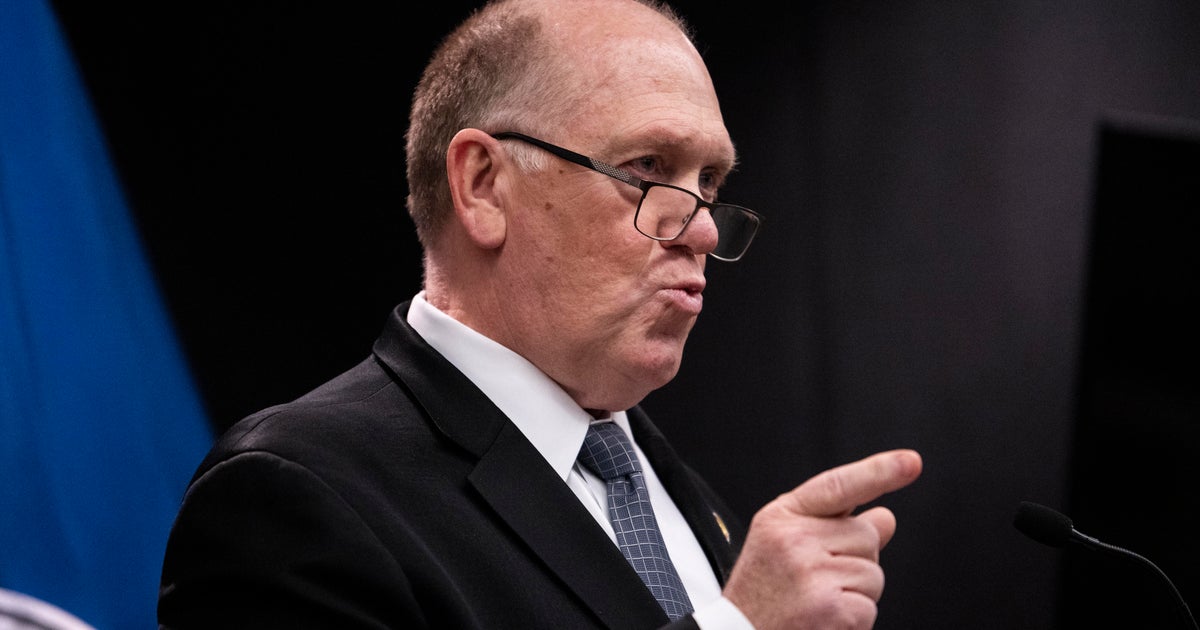
Washington finds itself in another political standoff as Congress remains on recess while negotiations over Department of Homeland Security funding hang in the balance. The controversy centers on how immigration enforcement is conducted across the country. In a recent “Face the Nation” interview, Tom Homan, the Trump administration’s border czar, addressed Democratic demands for sweeping changes to immigration enforcement tactics. Democrats are pushing for requirements that would fundamentally alter how ICE agents operate, including mandates that agents display identification showing their names, wear body cameras during operations, remove facial masks that currently conceal their identities, eliminate what they describe as racial profiling, and obtain judicial warrants before entering private property. While Homan emphasized he’s not directly involved in these congressional negotiations, he made clear his skepticism about several of these demands, arguing that some are based on misconceptions about how ICE currently operates and others would unnecessarily endanger agents who are already facing unprecedented threats.
Defending Agent Safety and Current Practices
Homan strongly pushed back against the characterization that ICE engages in racial profiling, stating flatly that “that’s just not occurring.” He explained that ICE detains and questions individuals based on reasonable suspicion, a legal standard that has nothing to do with race. On the contentious issue of masked agents, which has become a lightning rod for criticism, Homan acknowledged his own discomfort with the practice but defended it as a necessary safety measure. He cited alarming statistics showing threats against ICE officers have increased by 1,500 percent, while actual assaults and threats have surged by an astonishing 8,000 percent. To illustrate the severity of the situation, he pointed to a recent incident where the ICE director’s wife was filmed walking to work, and the director’s home address and children’s information were publicly exposed online—a practice known as “doxing.” Regarding identification, Homan noted that agents already wear placards identifying their agency affiliation, such as ICE, ERO, HSI, DEA, or FBI. When pressed on why immigration agents shouldn’t be held to the same standards as local police officers who display their names, Homan questioned whether any other law enforcement agency in America faces an 8,000 percent increase in threats, suggesting the circumstances justify different protocols.
The Warrant Debate and Legal Framework
A significant point of contention involves the type of warrants ICE uses to enter private property. When questioned about using judicial warrants instead of administrative warrants, Homan defended current practices by citing the legal framework established by Congress itself. He explained that the Immigration Nationality Act, passed by Congress and signed by a president, specifically grants ICE the authority to use administrative warrants for arrests. These administrative warrants are issued by ICE personnel rather than judges, a practice Democrats argue lacks sufficient oversight. When confronted with his own previous statements suggesting judicial warrants were necessary, Homan clarified that the Department of Justice has interpreted the law to allow administrative warrants in certain circumstances, particularly when dealing with individuals who already have final removal orders and have already been through due process before an immigration judge. His position essentially boils down to a simple argument: ICE is operating within the legal framework that Congress itself created, and if Congress wants different procedures, they should pass new legislation rather than attempting to change enforcement practices through funding negotiations.
Minnesota Operation Winds Down After Unprecedented Deployment
The massive immigration enforcement operation in Minnesota, known as Metro Surge, represents the largest deployment of federal immigration agents in department history and serves as a potential template for future operations. After months of intensive activity, Homan announced the operation is winding down, though ICE will maintain a presence in the state at reduced levels. By the time the surge concludes, ICE will have removed well over 1,000 individuals from Minnesota, with several hundred more scheduled for removal in the following week. However, certain specialized units will remain to complete their work, including agents investigating fraud and those looking into an incident involving people who sought sanctuary in a church. A small security force will also stay temporarily to respond to situations where ICE agents encounter hostile crowds or agitators, ensuring coordination with local and state law enforcement continues smoothly. Homan expressed optimism that this security presence can be withdrawn fairly quickly, saying he has faith things are moving in the right direction. The operation’s scope depended on specific ground conditions, particularly the number of known criminal targets in the area, a calculation made necessary because sanctuary city policies force ICE to conduct more resource-intensive street operations rather than simply arresting individuals in the controlled environment of jails.
Controversial Incidents Raise Accountability Questions
The Minnesota operation wasn’t without serious controversy that now threatens to undermine public trust in ICE operations. Two ICE agents have been placed on administrative leave pending an internal investigation after video evidence appeared to contradict their sworn testimony about a shooting incident. Initially, just hours after the incident occurred, DHS claimed an ICE officer who shot a migrant was being ambushed and feared for his life—a claim that now appears to be false based on video evidence. This incident is part of a troubling pattern that includes two deadly shootings in Minneapolis and a Chicago incident where evidence contradicted the government’s claim that a woman had rammed an agent’s vehicle. When asked whether these incidents undermine trust in ICE across the country, Homan pointed to his decision to bring additional internal affairs agents to Minnesota specifically to ensure officers were conducting themselves properly. He emphasized that every questionable incident has been turned over to internal affairs, with the FBI also investigating some cases. The ICE Director has publicly stated that people will be held accountable following thorough investigations, with disciplinary action or prosecutions to follow depending on what investigators find. While Homan’s commitment to accountability is clear, the pattern of initial government claims being contradicted by evidence raises serious questions about ICE’s institutional credibility.
Leadership Tensions and Moving Forward
Behind the scenes, tensions have reportedly emerged in the administration’s immigration leadership structure. A Wall Street Journal investigation detailed widespread concerns about Department of Homeland Security Secretary Kristi Noem and her chief advisor Corey Lewandowski, including reports that Homan rarely communicates with either of them despite his central role overseeing immigration policy from the White House. The report also suggested Homan has repeatedly complained to the White House about their leadership. When confronted with these claims, Homan deflected, characterizing the reporting as media attempts to divide the administration. He acknowledged that he and Secretary Noem don’t agree on everything but framed their disagreements as normal policy discussions that occur during daily multi-agency conference calls and meetings. According to Homan, these different opinions get worked out, and the team moves forward together. He emphasized what he considers the bottom line: record-breaking results that include what he claims is “the most secure border in history of this nation” and unprecedented numbers of criminal aliens arrested and deported. Homan didn’t dispute having disagreements with Noem and Lewandowski but characterized them as productive discussions where people with decades of experience bring different ideas to the table before settling on a unified mission. His repeated emphasis on results—border security and criminal deportations—suggests his view that whatever internal tensions exist, they haven’t prevented the administration from achieving its immigration enforcement goals, at least by the metrics the administration considers most important.