


Greece’s Deadliest Train Disaster Goes to Trial: A Nation Seeks Justice
A Tragedy That Shook an Entire Country
The quiet halls of a converted campus in Larissa, Greece, became the somber setting for one of the nation’s most anticipated trials as proceedings opened Monday in the case of a catastrophic train collision that claimed 57 lives in February 2023. The disaster, which occurred in the northern Greek town of Tempe, sent shockwaves throughout the country when a passenger train, filled with college students returning from a long holiday weekend, collided head-on with a freight train, creating a massive fireball upon impact. The force of the collision was so severe that passengers became trapped in twisted, mangled rail cars, their screams echoing through the night as emergency responders rushed to the scene. Many of the victims were young people with their entire lives ahead of them, students traveling back to their universities in Thessaloniki, making the tragedy even more heartbreaking for a nation that watched in horror as the full scale of the disaster unfolded. The crash exposed years of negligence, overlooked safety protocols, and a rail system that had been allowed to deteriorate despite repeated warnings from safety experts and rail workers themselves.
The Defendants and Charges That Could Define Greece’s Rail Safety Future
Thirty-six defendants now face serious criminal charges related to endangering public transport, a roster that reads like a who’s who of Greece’s rail and transport infrastructure. The accused include station masters who were on duty the night of the crash, their direct supervisor, former rail officials who had oversight responsibilities, senior transport ministry staff members who were supposed to ensure safety standards were met, and former executives from Hellenic Train, the Italian-owned operator that managed the passenger service. The charges they face are grave, reflecting the magnitude of the disaster and the systemic failures that investigators say contributed to it. What makes this case particularly compelling is that it’s not just about one person’s mistake or a single moment of human error—it’s about a pattern of negligence that allegedly stretched across multiple levels of Greece’s rail infrastructure. The trial is expected to last approximately two years, with hundreds of witnesses scheduled to testify, each potentially adding another piece to the puzzle of how such a preventable disaster was allowed to happen. The converted campus venue was specifically chosen to accommodate the unprecedented scale of these proceedings, reflecting both the complexity of the case and the public interest it has generated across Greece.
A Fatal Error on a Failing System
The investigation into the crash revealed a series of failures so fundamental that they left many Greeks questioning how their rail system had been allowed to deteriorate to such a dangerous state. The primary cause was shockingly simple yet devastating: the passenger train was placed on the wrong track, sending it directly into the path of an oncoming freight train. This type of error should have been impossible on a modern rail network with proper safety systems in place. However, investigators discovered that the catastrophic mistake was compounded by signal systems that weren’t functioning properly, creating a blind spot in a system that should have had multiple layers of protection to prevent exactly this type of collision. Further investigation revealed inadequate staffing levels, insufficient oversight from supervisory personnel, and maintenance that had been deferred or neglected for years. These failures didn’t happen overnight—they were the result of prolonged delays in implementing crucial safety upgrades that rail workers and safety advocates had been demanding for years. The Tempe crash exposed what many had long suspected: that Greece’s rail network, particularly in more rural areas, was operating with outdated equipment and inadequate safety protocols that put passengers at risk every time they boarded a train.
Families’ Long Wait for Justice and Accountability
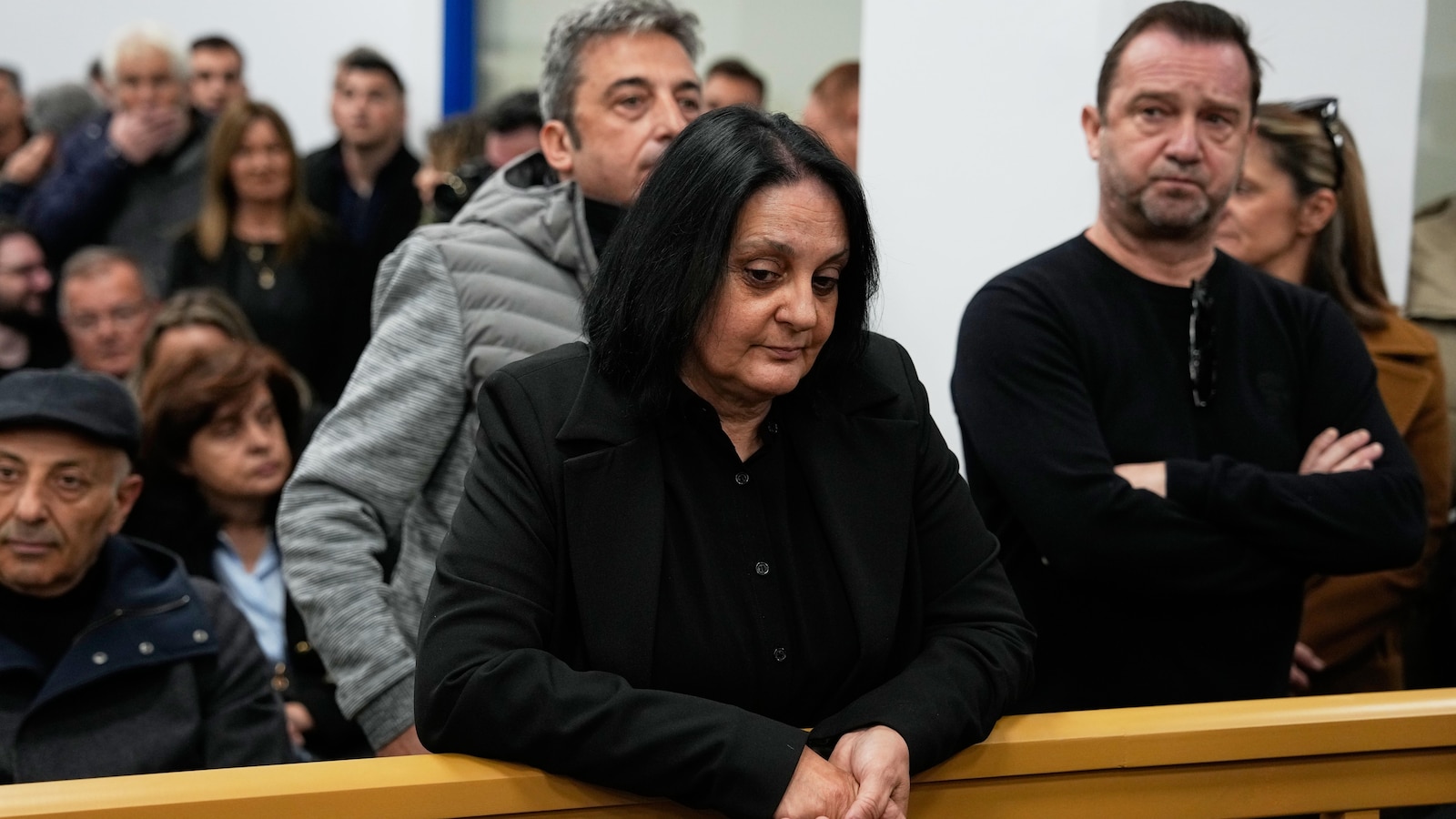
Outside the courthouse, riot police formed a protective cordon as several hundred demonstrators gathered, their presence a reminder that this trial represents more than just a legal proceeding—it’s a referendum on accountability in Greece’s public infrastructure. Victims’ relatives, many dressed in somber black clothing, arrived to attend the hearings, their faces etched with grief and determination. Among them was Pavlos Aslanidis, whose 27-year-old son Dimitris perished in the flames and twisted metal that night. His words captured the impossible position these families find themselves in: “Real justice would be to get our kids back. But what we are asking for now is the exemplary punishment of those responsible.” The pain in his voice reflected a sentiment shared by dozens of other parents, siblings, and friends who lost loved ones in the disaster. Adding to their frustration is the fact that three years have passed since the crash, yet not a single defendant has spent time in jail. Eleni Vasara, whose 23-year-old daughter Agapi was killed in the collision, expressed bitterness at the inadequate seating arrangements inside the courtroom that couldn’t accommodate all the relatives who wanted to attend. “It’s not right that all the relatives cannot attend. They have a right to have their day in court,” she said, her frustration evident. Yet despite these setbacks, she remained resolute: “But no matter what they do, there will be justice.” These families have become nationally recognized figures in Greece, their persistent advocacy keeping the disaster in the public consciousness and pressuring authorities to follow through with accountability measures.
A Nation Still Mourning and Demanding Change
The Tempe disaster has remained one of the most emotionally charged and politically sensitive issues in modern Greek history, sparking waves of public protests, strikes, and demonstrations that have periodically paralyzed the country. Critics have accused the conservative government of attempting to deflect responsibility away from systemic policy failures and onto individual rail officials, a charge that has fueled public anger and mistrust. In Athens, outside the parliament building, a makeshift memorial serves as a constant reminder of the lives lost. The victims’ names are painted in stark red letters, surrounded by flickering candles and fresh flowers that mourners continue to leave years after the tragedy. The memorial has become a pilgrimage site for Greeks who want to pay their respects and a rallying point for those demanding comprehensive reform of the country’s rail system. The disaster has forced Greece to confront uncomfortable questions about infrastructure investment, public safety standards, and the consequences of years of austerity measures that critics say hollowed out essential services. Several separate legal cases linked to the disaster remain in progress, including a parliament-sanctioned probe specifically examining political accountability—a recognition that responsibility for the crash may extend far beyond the 36 defendants currently in the dock.
The Long Road Ahead: Will Justice Bring Closure?
As the trial unfolds over the next two years, Greece will be watching closely, hoping that the judicial system can provide some measure of justice for the 57 lives lost on that terrible February night. The families of the victims, holding photographs of their loved ones as they entered the courtroom on that first day, represent both the human cost of systemic failure and the determination to ensure such a tragedy never happens again. Their presence throughout the proceedings serves as a powerful reminder that behind every safety regulation, every maintenance schedule, and every staffing decision are real people whose lives depend on those systems working properly. The trial’s outcome could have far-reaching implications for Greece’s approach to public infrastructure and safety standards, potentially serving as a watershed moment that forces genuine reform. However, for the parents who lost their children, the siblings who lost their brothers and sisters, and the friends who lost their companions, no verdict can truly restore what was taken from them. Their hope now rests in seeing those responsible held accountable and in knowing that their advocacy might prevent other families from experiencing the same devastating loss. As Greece watches this legal drama unfold, the nation collectively holds its breath, wondering if justice delayed will ultimately prove to be justice delivered, or if the wheels of accountability will turn too slowly to satisfy a country still grieving its dead.