
Trump Administration Seeks Supreme Court Intervention to End Haitian Deportation Protections
A Battle Over Temporary Protected Status Reaches America’s Highest Court
The Trump administration has taken its fight to terminate deportation protections for Haitian immigrants to the Supreme Court, filing an emergency request on Wednesday that could affect the lives of more than 350,000 people. This legal maneuver represents the latest chapter in the administration’s broader effort to dismantle Temporary Protected Status (TPS) programs that have shielded immigrants from numerous countries from being forced to return to dangerous or unstable homelands. The Justice Department’s appeal comes after lower courts blocked the administration’s attempts to end these protections, with judges raising serious concerns about the motivations behind the policy changes. The Supreme Court has already sided with the administration in allowing the rollback of protections for Venezuelan migrants, and a similar case involving Syrian immigrants remains pending before the justices, suggesting that this Haiti case could be part of a pattern that reshapes America’s approach to humanitarian immigration protections.
The Origins and Evolution of Haiti’s Protected Status
Haiti’s journey into the Temporary Protected Status program began in 2010 following one of the most devastating natural disasters in modern history. A catastrophic earthquake struck the impoverished Caribbean nation, claiming more than 300,000 lives and leaving the country’s infrastructure in ruins. The Obama administration responded by granting Haitians in the United States TPS, recognizing the “extraordinary and temporary conditions” that made it impossible and inhumane to force people to return to such chaos and destruction. This wasn’t the first time the Trump administration attempted to end Haiti’s protected status—during his first term in office, President Trump moved to rescind these protections, but that effort became entangled in legal challenges and ultimately didn’t take effect before he left office in 2021. However, with Trump’s return to the White House for a second term, the issue has been revived with renewed urgency. Homeland Security Secretary Kristi Noem took swift action to terminate Haiti’s TPS designation, setting an effective date of February 3rd for the end of protections that have allowed hundreds of thousands of Haitians to build lives, families, and careers in America over the past fifteen years.
The Administration’s Rationale and Judicial Pushback
Secretary Noem’s justification for ending Haiti’s protected status reflects a particular vision of foreign policy and national sovereignty. She framed the decision as “a necessary and strategic vote of confidence in the new chapter Haiti is turning” and aligned it with the president’s “foreign policy vision of a secure, sovereign and self-reliant Haiti.” While acknowledging that certain conditions in Haiti remained “concerning,” Noem asserted that parts of the country were now “suitable” for returnees. However, this assessment faced immediate legal challenge from five Haitian nationals in December, who sought to block the termination of their protections. The case took a dramatic turn when U.S. District Judge Ana Reyes granted their request for an injunction, delivering a scathing opinion that questioned the true motivations behind the policy change. Judge Reyes found that Noem’s decision to unwind the protections was likely motivated by racial animus rather than a genuine assessment of conditions in Haiti. In a particularly pointed passage, the judge wrote: “Kristi Noem has a First Amendment right to call immigrants killers, leeches, entitlement junkies, and any other inapt name she wants. Secretary Noem, however, is constrained by both our Constitution and the [Administrative Procedure Act] to apply faithfully the facts to the law in implementing the TPS program. The record to-date shows she has yet to do that.”
The Legal Battle Escalates Through the Courts
Following Judge Reyes’s decision blocking the termination of Haiti’s TPS, the Justice Department moved quickly to appeal, seeking to overturn the injunction and allow the administration to proceed with ending the protections. The case next went before a three-judge panel of the U.S. Court of Appeals for the District of Columbia Circuit, where the administration hoped to find a more favorable reception. However, the appeals court, in a divided decision, declined to freeze the lower court’s ruling, meaning the protections would remain in place for the time being. This setback prompted the administration to take the extraordinary step of appealing directly to the Supreme Court, asking the nation’s highest judicial body to intervene on an emergency basis. Solicitor General D. John Sauer, arguing on behalf of the administration, warned that the legal theory embraced by the lower courts posed a fundamental threat to executive authority over immigration policy. He contended that if allowed to stand, the ruling would “invalidate virtually every immigration policy of the current administration.” Sauer further argued that lower courts were “again attempting to block major executive-branch policy initiatives in ways that inflict specific harms to the national interest and foreign relations,” while giving too much weight to harms claimed by the immigrants that he said were inherent in the temporary nature of TPS itself.
Understanding Temporary Protected Status and Its Broader Implications
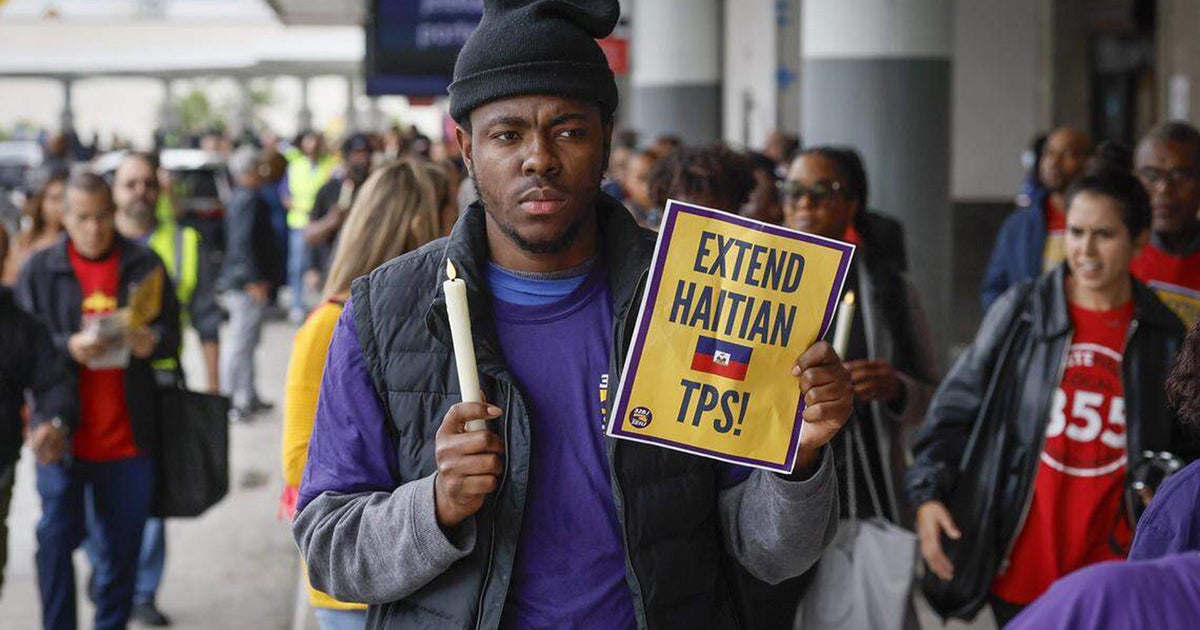
To fully grasp what’s at stake in this legal battle, it’s important to understand the Temporary Protected Status program itself. Created by Congress in 1990, TPS was designed as a humanitarian response to situations where people could not safely return to their home countries due to armed conflicts, natural disasters, or other “extraordinary and temporary” conditions. The program provides temporary immigration protections that shield recipients from deportation and authorize them to work legally in the United States for the duration of their country’s designation. These designations typically last up to 18 months but can be extended repeatedly based on ongoing conditions in the affected country. For the more than 350,000 Haitian immigrants currently protected under TPS, many of whom have lived in the United States for over a decade, the program has allowed them to work legally, pay taxes, raise families, buy homes, and contribute to their communities without the constant fear of deportation. The Haiti case is particularly significant because it’s part of a much larger pattern in the Trump administration’s immigration agenda. The administration has moved to terminate TPS protections for immigrants from at least a dozen countries, including Afghanistan, Haiti, Nicaragua, Somalia, and Yemen—nations that continue to face severe instability, violence, or humanitarian crises.
What Happens Next and the Human Stakes Involved
As the case now sits before the Supreme Court, the justices will decide whether to grant the administration’s emergency request and allow the termination of Haiti’s TPS to proceed, or whether to keep the lower court’s injunction in place while the legal challenges continue. The Court’s decision could come quickly, given the emergency nature of the request, and will have immediate and profound consequences for hundreds of thousands of people. If the Supreme Court sides with the administration, Haitian TPS holders would lose their work authorization and protection from deportation, potentially forcing them to choose between self-deporting to a country many haven’t lived in for years or remaining in the United States without legal status. The broader implications extend beyond just the Haitian community—the Court’s reasoning could set precedents that affect TPS holders from other countries and shape the boundaries of executive power over immigration policy for years to come. For the families affected, the uncertainty is agonizing. Many TPS holders have children who were born in the United States and are American citizens, creating the possibility of family separation. Others have built businesses, established careers, and put down roots in communities across America. The case thus represents a collision between the administration’s vision of immigration enforcement and foreign policy on one hand, and questions of racial justice, humanitarian obligation, and the rule of law on the other—a collision that the Supreme Court will now be asked to resolve.