
The Turbulent Tenure of Dr. Vinay Prasad at the FDA: A Story of Controversy and Departure
A Second Exit from America’s Drug Watchdog
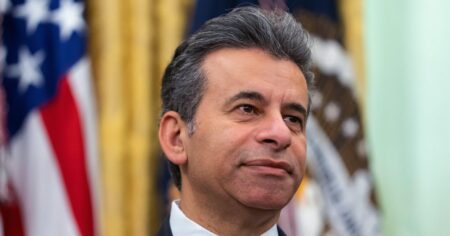
The Food and Drug Administration is once again saying goodbye to Dr. Vinay Prasad, its controversial vaccine chief, marking an extraordinary second departure in less than twelve months. FDA Commissioner Marty Makary broke the news to agency staff through a late Friday email, announcing that Prasad would be leaving his post at the end of April to return to his academic position at the University of California, San Francisco. This isn’t just an ordinary personnel change—it’s the culmination of a tumultuous period that has seen the FDA caught between scientific rigor, political pressure, and the complex needs of patients desperately seeking treatments for rare diseases. Prasad’s rocky journey at the agency has been anything but smooth, with his first departure occurring last July after clashing with biotech executives, patient advocacy groups, and even conservative allies of President Donald Trump. At that time, he was reinstated in less than two weeks, backed by both Health Secretary Robert F. Kennedy Jr. and Commissioner Makary. However, this second exit appears to signal the end of an exceptionally contentious chapter in FDA leadership, one that has left pharmaceutical companies, investors, lawmakers, and patients questioning the agency’s direction and consistency.
The Moderna Flu Vaccine Fiasco
One of the most high-profile controversies that contributed to Prasad’s downfall involved his handling of Moderna’s groundbreaking mRNA flu vaccine application. In what pharmaceutical industry observers described as a highly unusual move, Prasad initially refused to even allow the FDA to review the eagerly anticipated vaccine. This wasn’t just any rejection—it was a blockade at the gate, preventing the standard review process from beginning for a product that many in the medical community viewed as potentially revolutionary. Moderna, a company that had gained international recognition for its successful COVID-19 vaccine, was blindsided by the decision and chose to take the extraordinary step of making Prasad’s rejection public. The company didn’t just accept the decision quietly; they vowed to formally challenge it through official channels. The pushback worked—at least partially. Just one week after the rejection became public knowledge and generated significant backlash, the FDA performed an about-face, announcing it would accept the vaccine for review after all, though with the condition that Moderna conduct an additional study. This flip-flop raised serious questions about the consistency and predictability of the FDA’s decision-making process, leaving many to wonder whether scientific considerations or outside pressure had driven the reversal.
The Huntington’s Disease Treatment Battle
Perhaps even more disturbing was the very public fight between Prasad’s FDA and UniQure, a small pharmaceutical company developing an experimental gene therapy for Huntington’s Disease, a devastating and fatal neurological condition affecting approximately 40,000 Americans. The controversy erupted when UniQure revealed that the FDA was demanding a new clinical trial with a shocking twist—some patients would undergo what’s known as a “sham surgery,” essentially a fake surgical procedure. This requirement was particularly troubling because UniQure’s gene therapy must be injected directly into the patient’s brain during an actual surgical procedure. Company executives were outraged, arguing that the FDA’s demand not only contradicted previous agency guidance but also raised profound ethical questions. How could they justify putting desperately ill patients through brain surgery that served no therapeutic purpose, simply to create a placebo control group? The situation escalated when the FDA took the unprecedented step of holding a public press conference specifically to criticize UniQure’s therapy and defend their request for additional studies. A senior FDA official, speaking anonymously to reporters, didn’t mince words, calling the company’s original study “stone cold negative” and declaring bluntly, “We have a failed product here.” This was remarkable because the FDA typically communicates through carefully vetted written statements, especially regarding experimental drugs still under review, making this public confrontation all the more extraordinary and concerning for those who value the agency’s traditional scientific neutrality.
A Pattern of Pharmaceutical Conflicts
Prasad’s relatively brief tenure at the FDA was characterized by an unprecedented series of conflicts with the very companies the agency is supposed to regulate. More than half a dozen pharmaceutical manufacturers working on therapies for rare or particularly challenging diseases received rejection letters or demands to conduct additional studies during his time in office. These requirements weren’t minor inconveniences—they meant adding years to development timelines and potentially tens or even hundreds of millions of dollars to already expensive research programs. For small biotech companies working on treatments for rare diseases, such setbacks can be financially devastating, sometimes forcing them to abandon promising therapies altogether. What made Prasad’s approach particularly confusing to FDA watchers and industry insiders was its apparent contradiction. On multiple occasions, he joined Commissioner Makary in publicly announcing initiatives designed to streamline FDA drug reviews and make the process faster and easier for pharmaceutical companies. Yet simultaneously, he was imposing new warnings, study requirements, and obstacles for biotech drugs and vaccines. His particular focus on COVID-19 vaccines—long a target of criticism from Health Secretary Robert F. Kennedy Jr., who was a prominent anti-vaccine activist before joining the Trump administration—added a political dimension to what many believed should be purely scientific decisions.
The Academic Turned Regulator
To understand Prasad’s controversial approach, it’s important to consider his background. Before joining the FDA in May of the previous year, Prasad was a longtime academic with a reputation as a vocal critic of what he viewed as insufficiently rigorous FDA drug review standards. From his position in academia, he had frequently argued that the agency was too lenient, approving medications based on inadequate evidence. This perspective shaped his regulatory philosophy once he moved from theorizing about FDA standards to actually implementing them. However, the transition from academic critic to government regulator proved far more complicated than perhaps he anticipated. In the academic world, Prasad could advocate for more stringent standards without facing the immediate human consequences of delayed treatments or the complex political and economic pressures that surround FDA decision-making. As a regulator, every decision had real-world implications for patients desperately seeking treatments, companies that had invested years and fortunes in drug development, and investors whose financial futures depended on FDA approvals. The gap between academic ideals and regulatory reality appeared to create a tension that Prasad never fully resolved during his time at the agency.
The Broader Implications and What Comes Next
Prasad’s departure raises fundamental questions about the FDA’s future direction and the delicate balance the agency must strike between scientific rigor and the urgent needs of patients with serious diseases. The inconsistency demonstrated during his tenure—the reversals, the public battles, the seemingly contradictory policies—has shaken confidence in the agency’s decision-making process at a time when trust in public health institutions is already fragile. Pharmaceutical companies need predictability to make the enormous investments required for drug development, and patients need to believe that FDA decisions are based on sound science rather than shifting political winds or individual regulatory philosophies. The fact that Prasad is returning to UCSF suggests that the academic world may suit his talents better than the complex political and regulatory environment of federal health agencies. As the FDA searches for new leadership in this critical area, the agency faces the challenge of restoring consistency and credibility to its vaccine and biotech drug review processes. The next person to fill this role will inherit not just a position but the responsibility to rebuild trust with industry partners, patient advocates, and the American public. Whether the FDA learned valuable lessons from this turbulent period or will simply move on to new controversies remains to be seen, but one thing is certain: the pharmaceutical industry, patients waiting for treatments, and health policy observers will be watching the agency’s next moves very carefully.