
President Trump’s 2026 State of the Union: A Comprehensive Overview
Understanding the Constitutional Tradition
The State of the Union address represents one of America’s most enduring constitutional traditions, serving as the president’s annual opportunity to speak directly to Congress and the American people. Rooted in Article II, Section 3 of the Constitution, which requires the president to “from time to time give to the Congress Information of the State of the Union,” this tradition dates back to 1790 when George Washington delivered the first such address. Interestingly, the format has evolved significantly over the centuries. President Thomas Jefferson actually discontinued the practice of oral presentations in 1801, believing written reports better served the purpose, and this remained the standard approach for over a century. It wasn’t until President Woodrow Wilson in 1913 that the in-person address was revived, transforming it into the grand political theater we recognize today. The tradition of the opposition party delivering a response is relatively recent, beginning in 1966 when Republican congressional leaders presented a 30-minute rebuttal to President Lyndon Johnson’s address. Today, the State of the Union serves multiple purposes: it allows the president to outline policy priorities, rally support for legislative initiatives, celebrate achievements, and speak directly to the American people about the nation’s direction.
The Setting and Ceremony of the 2026 Address
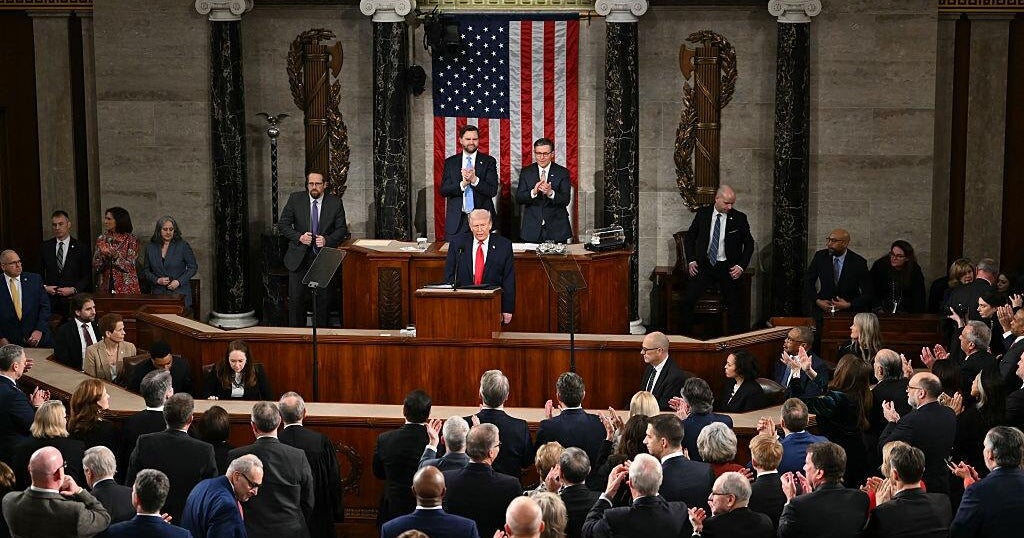
President Trump’s 2026 State of the Union took place in the House chamber of the U.S. Capitol in Washington, the traditional venue selected specifically because it’s large enough to accommodate not just the 435 House members and 100 senators, but also Cabinet officials, Supreme Court justices, Joint Chiefs of Staff, and distinguished guests. The visual arrangement itself communicates important aspects of American governance: behind the president, seated at the dais, sit the Speaker of the House and the Vice President—this year Mike Johnson and JD Vance—representing the legislative and executive branches side by side. The front rows are reserved for Cabinet members, Supreme Court justices, and military leadership, creating a symbolic gathering of all three branches of government. Lawmakers themselves follow a particular seating protocol, with Republicans positioned on the left side from the dais perspective and Democrats on the right. Beyond designated leadership seats, placement operates on a first-come, first-served basis, which explains why you’ll often see members arriving hours early to claim coveted aisle seats, hoping for that brief handshake or moment with the president captured by television cameras as he enters or exits. The galleries overlooking the chamber serve multiple purposes: one section is dedicated to the press, another to various officials, and the first lady traditionally has her own box where she hosts special guests whose stories the president often weaves into his speech to illustrate policy points or highlight American achievement.
A Record-Breaking Speech Amid Political Challenges
The 2026 State of the Union proved historic in terms of sheer length, beginning shortly after 9 p.m. Eastern Time and continuing for approximately one hour and 48 minutes—making it the longest such address in at least six decades. President Trump himself previewed this at the White House the day before, explaining, “It’s going to be a long speech because we have so much to talk about.” This marked a continuing trend in the length of Trump’s congressional addresses. His 2017 speech to a joint session of Congress lasted just one hour, but subsequent addresses have grown progressively longer: 1 hour and 21 minutes in 2018, 1 hour and 22 minutes in 2019, 1 hour and 18 minutes in 2020, and 1 hour and 40 minutes in 2025. The timing and context of this year’s address carried particular significance. Just days before taking the podium, President Trump suffered a significant setback when the Supreme Court ruled he lacked the authority to impose sweeping tariffs under emergency powers law, dealing a substantial blow to his trade agenda. However, rather than backing down, the president publicly vowed to circumvent the court’s decision by utilizing other legal authorities to place tariffs on imports. Additionally, the address came during a period of escalating tensions in the Middle East, particularly between the United States and Iran, with ongoing negotiations concerning Iran’s nuclear program and related matters. The president hasn’t ruled out military intervention should diplomatic talks fail, adding considerable weight to his foreign policy remarks during the speech.
The Democratic Response and Political Context
Virginia Governor Abigail Spanberger was selected to deliver the Democratic response to President Trump’s address, a choice laden with political symbolism. Spanberger made history by becoming Virginia’s first female governor following her election victory the previous November, a win that Democrats viewed as a positive sign heading into the midterm elections. Her background brings unique credibility to the political stage: before entering politics, she served in the CIA, and later represented Virginia in the House of Representatives. In her statement accepting the responsibility of delivering the Democratic response, Spanberger framed the current moment as pivotal, asserting that Americans find themselves “at a defining moment in our nation’s history.” She emphasized concerns that resonate with many constituents: rising costs that strain family budgets, chaos affecting communities across the nation, and a pervasive anxiety about what each new day might bring. Her selection represents the Democratic Party’s strategic effort to present an alternative vision to the president’s agenda while showcasing emerging leadership. The response, which began shortly after Trump’s lengthy address concluded, provided Democrats their opportunity to speak directly to the American people, countering the president’s narrative and offering their own perspective on the state of the nation and the path forward. This tradition of the opposition response has become an important feature of the State of the Union ritual, ensuring that political discourse includes multiple perspectives rather than allowing the president an unchallenged platform.
The President’s Agenda and Accomplishments
President Trump used his 2026 State of the Union to accomplish two primary objectives: highlighting what he considers significant achievements since returning to office and outlining an ambitious agenda for the year ahead. Despite the recent Supreme Court setback on tariffs, the president clearly intended to project confidence and determination in pursuing his policy goals. The extended length of the speech suggests he covered considerable ground across various policy areas, from economic initiatives to foreign policy challenges, from domestic security to healthcare, education, and infrastructure. State of the Union addresses traditionally serve as a presidential wish list, a comprehensive menu of legislative priorities the president hopes Congress will advance. For President Trump, facing legal constraints on some executive actions, congressional cooperation becomes even more essential for advancing certain aspects of his agenda. The speech likely emphasized areas where he believes he’s delivered results while making the case for why his approach deserves continued support. Presidents often use these addresses to go over Congress’s head directly to the American people, building public pressure for their initiatives. The inclusion of guests in the first lady’s box—individuals whose personal stories illustrate broader policy points—represents a time-honored rhetorical technique that transforms abstract policy debates into human terms that resonate emotionally with viewers.
Viewing and Understanding the Modern State of the Union
The modern State of the Union has evolved into a major media event, with networks providing comprehensive coverage and analysis. CBS News, like other major outlets, offered complete coverage across multiple platforms: traditional television, the CBS News app, CBSNews.com, YouTube, social media platforms, Paramount+, and Pluto TV. This multi-platform approach reflects how dramatically media consumption has changed, ensuring Americans can watch regardless of their preferred viewing method. Following the live broadcast, full replays and analysis became available on the CBS News 24/7 streaming network, allowing those who missed the live event to catch up at their convenience. The accessibility of State of the Union coverage represents a significant evolution from earlier eras when Americans had limited viewing options. Today’s saturation coverage includes not just the speech itself but extensive pre-speech analysis, real-time fact-checking during the address, post-speech commentary from political analysts, and discussions of body language, applause patterns, and other non-verbal elements. The tradition also includes important security considerations that viewers don’t see: the “designated survivor,” a Cabinet member in the presidential line of succession who deliberately absents themselves from the Capitol during the address, remaining at a secure location in case catastrophe strikes. This precaution, while hopefully never needed, underscores the gravity of having the entire leadership of the federal government assembled in one location, and represents the kind of serious contingency planning that continues even during ceremonial occasions.