
Trump Dismisses Iranian Threats as Middle East Conflict Intensifies
A War of Words Between Washington and Tehran
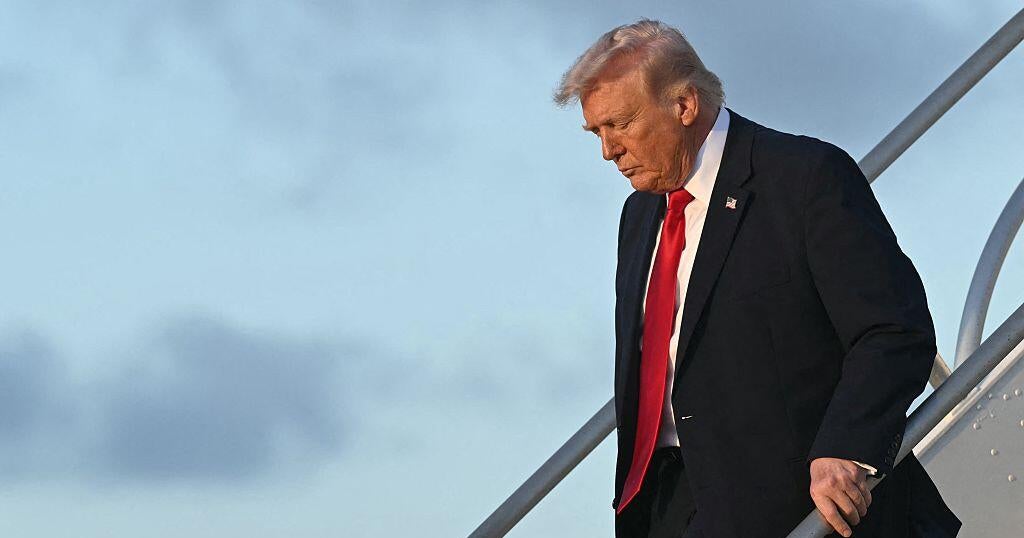
In the midst of escalating military operations in the Middle East, President Trump has brushed aside threatening rhetoric from one of Iran’s most powerful officials with characteristic bluntness. During a phone conversation with CBS News late Saturday night, the president responded to warnings from Ali Larijani, Iran’s top national-security official and secretary of the Supreme National Security Council, who had earlier posted on social media that Trump would need to “pay the price” for the ongoing U.S.-Israel military campaign against Iran. Trump’s response was dismissive and pointed: “I have no idea what he’s talking about, who he is. I couldn’t care less.” This exchange highlights the increasingly tense relationship between the two nations and underscores the personal nature that international conflicts can sometimes take. Larijani, a longtime confidant of Supreme Leader Ayatollah Ali Khamenei, has stepped into a more prominent leadership role following Khamenei’s death on February 28, the opening day of the conflict. However, Trump seemed unimpressed by Larijani’s threats, telling CBS News that the Iranian official has “already been defeated,” signaling his confidence in the American military campaign and his belief that Iran’s leadership is weakening under pressure.
The President’s Unwavering Stance on Military Operations
President Trump made it abundantly clear during his interview that he has no intention of backing down from his military strategy in the region, demanding nothing less than “unconditional surrender” from Iran. He characterized the Iranian leadership as increasingly weak and diminished, suggesting that their critical statements are evidence of desperation rather than strength. The president’s comments paint a picture of an administration fully committed to its current course of action, with no plans to reduce the intensity of strikes on Iranian targets. This hardline approach represents a significant escalation in U.S. policy toward Iran and demonstrates Trump’s willingness to use military force to achieve his objectives in the Middle East. The situation has created a complex diplomatic landscape, with questions arising about who the United States might eventually engage with as negotiations become necessary. Iran’s leadership structure is currently in flux, with Larijani representing one voice while an interim three-person council that includes President Masoud Pezeshkian manages much of the country’s day-to-day governance. This uncertainty about Iran’s power structure adds another layer of complexity to an already volatile situation.
Iranian Leadership Sends Mixed Messages
The confusion within Iran’s leadership became apparent when President Masoud Pezeshkian released a video earlier Saturday that initially appeared to be an apology to Iran’s neighbors for retaliatory strikes against Israel and U.S. bases in the Middle East. In the video, Pezeshkian suggested that Iran would cease strikes on other Persian Gulf states unless attacked first, a statement that seemed to indicate a potential de-escalation. However, in a remarkable reversal that underscores the internal tensions within Iran’s government, Pezeshkian later backtracked on his remarks. In a follow-up social media post, he clarified that Iran had not attacked friendly neighboring countries but had instead targeted only U.S. military bases, facilities, and installations throughout the region—and this time, there was no apology. President Trump seized on this apparent contradiction as evidence of Iran’s weakening position, telling CBS News, “He intended to take over the Middle East and he’s conceded and surrendered to all of those countries because of me.” Trump went further, claiming that Larijani had already surrendered to Middle Eastern countries and suggesting that Iran’s long-term strategy had been to dominate the entire region, pointing to previously deployed rockets aimed at neighboring countries as evidence of these alleged plans.
Overwhelming Military Success, According to the White House
In his Saturday evening interview, President Trump painted an extraordinarily confident picture of American military achievements, describing the campaign against Iran in sweeping terms that suggest near-total devastation of Iranian military capabilities. “It’s been incredible, the job we’ve done. The missiles are blown to smithereens,” Trump declared. “They’re down to very few. The drones are blown. The factories are being blown up as we speak. The navy is gone, it’s at the bottom of the sea. Forty-two ships, 42, in six days, 42 ships. The navy is gone. The air force is gone. Every single element of their military is gone. Their leadership is gone. There’s not a thing that’s not gone.” These statements, while dramatic, were partially corroborated by U.S. Central Command, which oversees American military operations in the Middle East. According to their Friday report, at least 43 Iranian ships had been damaged or destroyed in U.S. strikes, and more than 3,000 targets had been hit since the conflict began. The president characterized the campaign as “winning at levels never seen before and quickly,” suggesting that the military objectives are being achieved at an unprecedented pace. This level of destruction, if accurate, represents a catastrophic loss for Iran’s military infrastructure and would significantly diminish the country’s ability to project power in the region for years to come.
Tensions with Allies and Questions of Coalition Support
Despite the intensity of the military campaign, President Trump’s comments revealed some friction with traditional U.S. allies regarding their level of participation and support. When asked whether he would like to see allies contribute more to the military effort, Trump’s response was characteristically indifferent: “I couldn’t care less. They can do whatever they want. The loyal ones are already in.” This statement suggests a division in Trump’s mind between allies who supported the strikes from the beginning and those who have been more hesitant. The president’s comments came just hours after he posted on Truth Social about the United Kingdom readying two aircraft carriers for possible deployment to the Middle East—a gesture he ultimately dismissed as unnecessary and tardy. Trump has been particularly critical of British Prime Minister Keir Starmer, whom he has characterized as acting too slowly in granting permission for the United States to use British bases in the Middle East for launching strikes. In his interview with CBS News, Trump reiterated this criticism, calling the British offer to send aircraft carriers “a little bit late to be sending ships, right? A little bit late.” This tension highlights the challenges of maintaining coalition support during rapidly evolving military operations and suggests that Trump’s approach prioritizes speed and decisiveness over building broad international consensus.
The Uncertain Path Forward
As the conflict continues to develop, the international community faces significant uncertainty about what comes next. The back-and-forth between President Trump and Iranian leaders reveals not just military tensions but also the complex diplomatic challenges that lie ahead. With Iran’s leadership structure in transition following Khamenei’s death and internal disagreements apparent in the mixed messages from officials like Pezeshkian, it remains unclear who would represent Iran in any future negotiations. The interim governance structure, combined with Trump’s insistence on unconditional surrender, creates a situation where diplomatic off-ramps may be difficult to identify or pursue. Meanwhile, the president’s willingness to continue expanding targets inside Iran suggests that the military campaign may intensify further before any resolution is reached. The extensive damage to Iran’s military infrastructure—if Trump’s characterizations are accurate—would fundamentally alter the balance of power in the Middle East, potentially creating new regional dynamics and uncertainties. As allies like the United Kingdom consider their level of involvement and neighboring countries watch nervously, the conflict that began on February 28 appears far from resolution, with President Trump showing no signs of moderating his approach or his rhetoric toward the Iranian regime.