
Trump Refuses to Rule Out Ground Forces in Iran Conflict
President Takes Unconventional Stance on Military Deployment
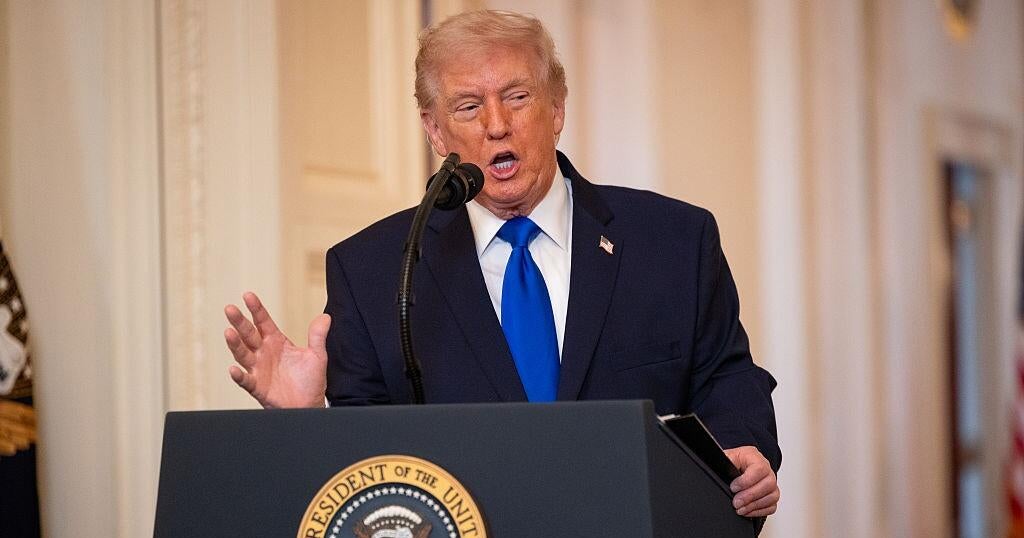
In a departure from typical presidential rhetoric during wartime, President Trump has explicitly refused to rule out deploying ground troops to Iran, marking a significant shift from the cautious language usually employed by American leaders when discussing military operations. Speaking with The New York Post on Monday, the president made clear that he won’t follow the traditional playbook of reassuring the public that no boots will be on the ground. “I don’t have the yips with respect to boots on the ground — like every president says, ‘There will be no boots on the ground.’ I don’t say it,” Trump stated bluntly. Instead, he’s opted for a more ambiguous approach, saying he would “probably” not need ground forces, but adding the crucial caveat: “if they were necessary.” This openness to all military options represents a stark contrast to previous administrations that often painted themselves into corners by making absolute promises about what they wouldn’t do militarily. Defense Secretary Pete Hegseth echoed this non-committal stance during a separate briefing, confirming that while no U.S. service members are currently operating on Iranian soil, the administration isn’t willing to discuss what they will or won’t do in the future.
First American Casualties Reported in Operation Epic Fury
The human cost of what the military has dubbed “Operation Epic Fury” has already begun to mount, with four U.S. service members confirmed killed in the early stages of the conflict. According to Secretary Hegseth, these troops lost their lives when a munition struck a tactical operations center in Kuwait, bringing the war’s dangers close to home for American families even before the president has fully addressed the nation in person about the military campaign. The deaths underscore the reality that this conflict, while primarily focused on air strikes against Iranian targets, carries risks that extend throughout the region where American forces are stationed. In a pre-recorded video message released Sunday night, President Trump acknowledged the grim reality that more American casualties are likely before the operation concludes. “We pray for the full recovery of the wounded and send our immense love and eternal gratitude to the families of the fallen,” the president said somberly. “And sadly, there will likely be more before it ends. That’s the way it is.” This frank acknowledgment of future losses represents the kind of straight talk that Trump’s supporters often praise, though critics might argue that such predictions should be accompanied by clearer justifications for continuing operations that will cost American lives.
The War’s Opening Strikes and Iran’s Response
The conflict erupted over the weekend with coordinated U.S.-Israeli strikes that delivered a devastating blow to Iran’s leadership structure, killing Supreme Leader Ayatollah Ali Khamenei along with dozens of other high-ranking officials in what appears to have been a carefully planned decapitation strike. The scope and intensity of the initial assault was massive by any measure, with more than 1,000 targets hit during just the first 24 hours of the bombing campaign, according to General Dan Caine, chairman of the Joint Chiefs of Staff. This represents one of the most intensive air operations launched by American forces in recent memory, suggesting months or even years of intelligence gathering and target preparation before the first bombs fell. The Iranian response has been swift and multifaceted, with the country launching barrages of missiles and drones not only at Israel but also at Gulf nations and U.S. facilities scattered throughout the Middle East. This regional dimension to Iran’s retaliation demonstrates that the conflict has the potential to destabilize the entire area, drawing in neighboring countries and threatening vital American interests including military bases, diplomatic facilities, and potentially shipping lanes critical to global oil supplies.
Timeline Uncertainty and Presidential Authority
Adding to the uncertainty surrounding the conflict, President Trump suggested on Sunday that he expects U.S. military operations to continue for approximately four to five weeks, though his own defense secretary was quick to walk back any notion that this represents a firm timeline. When asked about the president’s timeframe, Hegseth dismissed the question as a “gotcha-type question” and emphasized that Trump “has all the latitude in the world to talk about how long it may or may not take — four weeks, two weeks, six weeks. It could move up. It could move back.” This flexibility might be strategically sound from a military planning perspective, as committing to specific timelines can create artificial constraints on operations or provide adversaries with information they can use to their advantage. However, it also leaves the American public and Congress in the dark about how long their country will be engaged in active combat operations against a nation of more than 80 million people. The defense secretary made clear that military forces would continue executing their assigned objectives at the president’s command, regardless of how long that takes, placing ultimate authority for the war’s duration squarely in Trump’s hands.
President’s Public Absence During Initial Combat Operations
Perhaps one of the more unusual aspects of this military crisis has been President Trump’s limited public presence during the opening days of combat. Rather than addressing the nation from the Oval Office or the White House briefing room as the bombs began falling, Trump was at his Mar-a-Lago estate in Florida, monitoring developments from his private club rather than from the situation room in Washington. He only returned to the capital on Sunday evening, and as of Monday had still not personally addressed the American people about the war, instead releasing pre-recorded video messages. His first scheduled public appearance was set for Monday afternoon, but for a Medal of Honor ceremony rather than a dedicated address about the military operations. While a senior administration official indicated that the president was expected to address the war during his remarks at that ceremony, the fact that his first in-person comments would come in the context of another event rather than a focused address to the nation struck some observers as odd given the magnitude of the military action underway.
Looking Ahead at an Uncertain Conflict
As the war enters what appears likely to be an extended phase of operations, enormous questions remain unanswered about the ultimate goals, acceptable costs, and exit strategy for American involvement in direct conflict with Iran. The death of Iran’s supreme leader and much of the country’s senior leadership represents a dramatic achievement from a military perspective, but it also creates a power vacuum in a nation with significant military capabilities, including ballistic missiles, cyber warfare tools, and proxy forces throughout the Middle East. How Iran’s remaining military and political leadership responds in the coming days and weeks could determine whether this conflict remains primarily an air campaign or escalates into something far more extensive and costly. The president’s refusal to rule out ground troops suggests that the administration is preparing the American public for the possibility of a deeper commitment than the current bombing campaign. With American casualties already mounting and Iranian retaliatory strikes hitting targets across the region, the conflict has all the hallmarks of a war that could easily expand beyond what anyone currently envisions. As families mourn the four service members already lost and military planners work through their extensive target lists, Americans are left to wonder how long this operation will last, how many more will die before it ends, and what the Middle East will look like when the shooting finally stops.