
President Trump Extends Iran Ceasefire Despite Earlier Reluctance
A Last-Minute Change of Heart
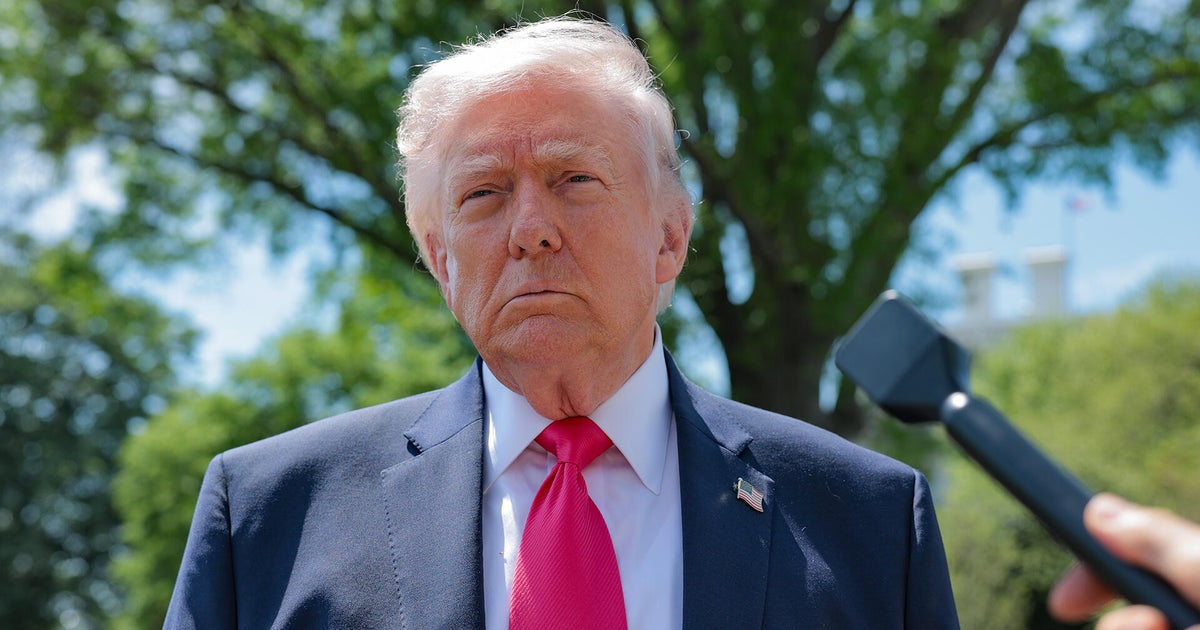
In a surprising reversal that has left many observers wondering about the true state of U.S.-Iran relations, President Trump announced on Tuesday that he would be extending the ceasefire with Iran beyond its original deadline. This decision came as a shock to many, considering that just hours earlier, the president had made it abundantly clear he had no intention of prolonging the pause in hostilities. Speaking to CNBC that same morning, Trump had been blunt about his expectations: “I expect to be bombing, because I think that’s a better attitude to go in with.” His tone suggested a commander-in-chief ready to resume military action, with the president adding that “the military is raring to go.” Yet by Tuesday afternoon, something had changed, and the ceasefire that was supposed to end that very evening would now continue indefinitely until negotiations between the two nations reach some form of conclusion.
The president’s announcement came via Truth Social, where he explained that the extension was being granted at the request of Pakistan, which has been serving as an intermediary in these tense negotiations. Trump pointed to what he described as Iran’s “seriously fractured” government as the reason for the delay in reaching an agreement, suggesting that internal divisions within Iran’s leadership have prevented them from presenting a unified negotiating position. By granting this extension, Trump said he was giving Iranian officials additional time to “come up with a unified proposal” that could serve as the basis for meaningful discussions. Despite this apparent gesture of diplomatic flexibility, the president made it clear that the U.S. military would remain on high alert, continuing the naval blockade of Iranian ports and maintaining readiness to resume combat operations at a moment’s notice. As of Tuesday evening, Iran had not publicly responded to Trump’s announcement of the ceasefire extension.
The Rocky Road of Recent Negotiations
The path to this point has been anything but smooth. The original two-week ceasefire was agreed upon by both nations as a way to create breathing room for diplomacy, a pause in the violence that would allow negotiators from both sides to sit down and try to find common ground. However, those hopes for productive dialogue quickly hit roadblocks after an initial meeting between U.S. and Iranian representatives in Islamabad, Pakistan’s capital. Senior-level talks essentially stalled after that first encounter, disappointing those who had hoped the ceasefire would lead to substantive negotiations that might resolve the underlying tensions between the two countries. Following that initial round of discussions, President Trump publicly criticized Iran, accusing the Iranian government of refusing to agree to terms on its nuclear program that the United States would find acceptable.
The situation has been further complicated by mutual accusations of ceasefire violations from both sides. Iran has reportedly been blocking commercial and military vessels from passing through the Strait of Hormuz, one of the world’s most critical maritime chokepoints for oil shipments, while the United States has maintained its blockade of Iranian ports, effectively strangling the country’s ability to conduct international trade. These actions have created an atmosphere of distrust, with each side pointing fingers at the other for not honoring the spirit of the ceasefire agreement. The confusion has extended to the U.S. side as well, with President Trump announcing on Monday that Vice President JD Vance, special envoy Steve Witkoff, and his son-in-law Jared Kushner were traveling to Islamabad for negotiations—an announcement that turned out to be premature, as a White House official had to clarify that the delegation merely “plans to travel to Islamabad soon.” By Tuesday, when the ceasefire extension was announced, Vice President Vance was still in Washington, highlighting the somewhat chaotic nature of the diplomatic efforts.
Mixed Messages and Shifting Narratives
Perhaps most confusing to outside observers has been the president’s shifting messaging about where negotiations actually stand. Over the past several days, Trump’s statements have painted wildly different pictures of the progress being made. On Friday, the president made the optimistic claim that Iran has “agreed to everything,” suggesting that a comprehensive deal might be within reach. However, this assertion didn’t align with what was coming from Tehran, where officials told a very different story. The Iranian Foreign Ministry made it explicitly clear that Iran would not be transferring its stockpile of enriched uranium to the United States, directly contradicting President Trump’s earlier claim that the U.S. would “take” the country’s enriched uranium as part of any agreement. This disconnect between the two sides’ public statements raises serious questions about whether meaningful progress is actually being made behind closed doors, or whether both governments are simply playing to their domestic audiences while the real negotiations remain stuck.
The uranium issue is particularly significant because it sits at the heart of international concerns about Iran’s nuclear program. Enriched uranium can be used for peaceful purposes like nuclear power generation, but when enriched to higher levels, it can also be used to create nuclear weapons. The Trump administration has made limiting Iran’s nuclear capabilities a central goal of this entire military and diplomatic campaign, so the question of what happens to Iran’s existing stockpile of enriched uranium is not a minor detail—it’s fundamental to any lasting agreement. The fact that the two sides appear to be so far apart on this crucial issue, despite Trump’s claims of comprehensive agreement, suggests that the road ahead remains long and uncertain.
A Campaign That Has Stretched Beyond Its Timeline
The current situation is the result of a military campaign that has already exceeded its original timeframe by a considerable margin. When the United States and Israel jointly struck Iranian targets in late February, administration officials characterized it as a limited operation that would last somewhere between four to six weeks. The assumption was that a combination of military pressure and diplomatic engagement would bring Iran to the negotiating table relatively quickly, ready to make concessions on its nuclear program and its support for proxy forces throughout the Middle East. However, more than seven weeks have now passed since those initial strikes, and rather than winding down, the conflict has evolved into something more complex and protracted than anyone in the administration apparently anticipated.
This extension of the timeline raises important questions about the strategy’s effectiveness and the administration’s understanding of Iranian decision-making. Some analysts have suggested that the U.S. may have underestimated Iran’s willingness to endure economic pressure and military strikes, as well as the internal political dynamics that make it difficult for Iranian leaders to be seen as capitulating to American demands. Others point to the fact that Iran has faced international pressure over its nuclear program for decades, developing sophisticated strategies for resistance and negotiation that allow it to play for time while protecting its core interests. Whatever the explanation, the reality is that this conflict has become something of a quagmire, with neither side able to achieve a decisive advantage that would force the other to accept unfavorable terms.
The Human Cost and Regional Implications
While much of the discussion around this conflict focuses on diplomatic maneuvering and military strategy, it’s important to remember that real people are affected by every day this crisis continues. The blockades have disrupted trade and access to essential goods, potentially affecting the lives of millions of ordinary Iranians who have no say in their government’s policies. The military strikes that preceded the ceasefire caused destruction and casualties, and the threat of renewed bombing hangs over the region like a dark cloud. For the people living in Iran and neighboring countries, this isn’t an abstract geopolitical chess game—it’s their daily reality, filled with uncertainty about what tomorrow might bring.
The regional implications of this conflict also extend far beyond the immediate U.S.-Iran confrontation. Other nations in the Middle East are watching carefully, trying to determine how this situation might affect their own security and economic interests. Pakistan’s role as an intermediary is particularly delicate, as the country tries to maintain relationships with both the United States and Iran while managing its own complex domestic challenges. The involvement of Jared Kushner in the diplomatic efforts has raised eyebrows, given that he’s a family member rather than an official government diplomat, though he does have experience from his role in the previous Trump administration. The way this situation ultimately resolves could set precedents for how similar conflicts are handled in the future, making the stakes even higher than they might appear at first glance.
An Uncertain Path Forward
As the extended ceasefire continues with no clear end date, the fundamental question remains: Can these two nations find a way to reach an agreement that both sides can accept? President Trump’s decision to extend the ceasefire, despite his earlier tough talk about resuming bombing, suggests that he believes diplomacy still has a chance to succeed. However, the mixed messages, the stalled negotiations, and the ongoing mutual accusations of ceasefire violations paint a picture of two sides that remain far apart on key issues. The involvement of Pakistan as a mediator offers some hope, as does the fact that both nations agreed to the ceasefire in the first place, but the path from here to a lasting agreement remains unclear. As this situation continues to unfold, the world watches and waits, hoping that diplomacy will prevail over military action, and that a resolution can be found that addresses legitimate security concerns while avoiding further escalation of a conflict that has already gone on longer than anyone anticipated.