
Trump’s Controversial Jesus-Like Image Post Draws Widespread Criticism
A Divisive Social Media Post on Orthodox Easter
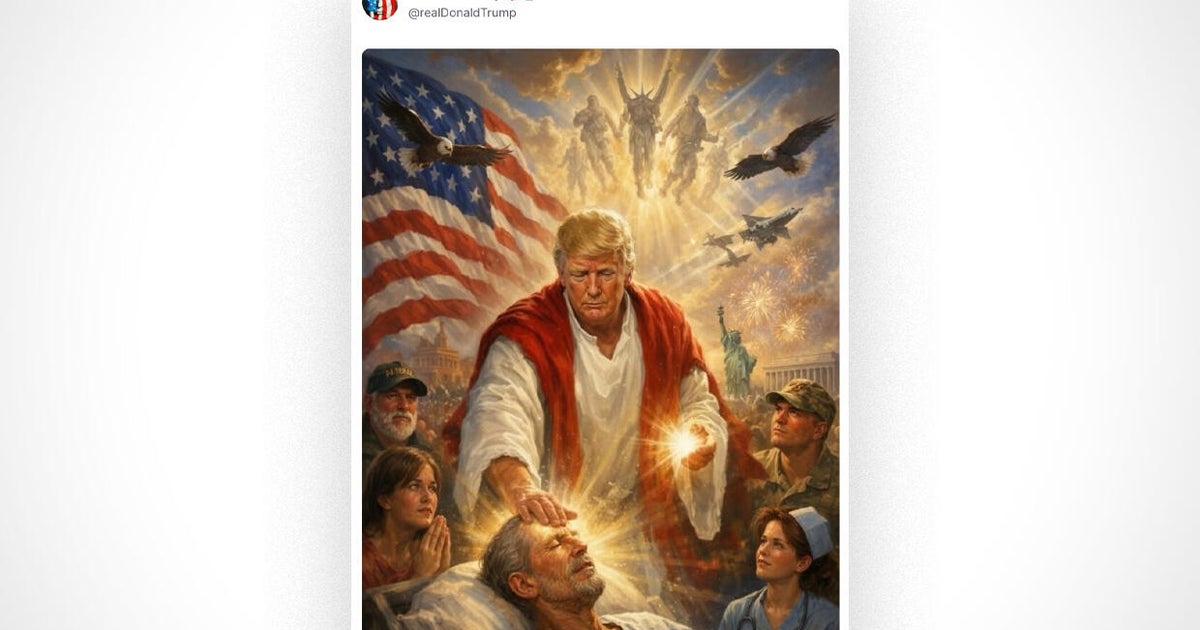
On Orthodox Easter Sunday, President Trump sparked a firestorm of controversy by posting an AI-generated image on Truth Social that depicted him in a manner resembling Jesus Christ. The manipulated photograph showed the president wearing a white robe with a red sash, holding a glowing orb of light in one hand while extending the other in what appeared to be a healing gesture. This image wasn’t entirely original—it was a slightly modified version of a post made months earlier by Nick Adams, a right-wing influencer who Trump later appointed as special presidential envoy for American tourism, exceptionalism and values. The timing of the post proved particularly contentious, coming exactly one week after Christians across the United States and worldwide had celebrated Easter Sunday, the holiest day in the Christian calendar commemorating Christ’s resurrection. As of Monday morning, President Trump had neither removed the controversial image nor issued any form of apology, despite mounting criticism from multiple corners. The White House remained silent on the matter, failing to respond to requests for comment about the president’s provocative social media activity.
Conservative Allies Break Ranks Over “Blasphemous” Content
What made this controversy particularly significant was the source of much of the criticism—Trump’s own supporters and conservative allies. Riley Gaines, the conservative activist who has served as the administration’s primary voice on transgender athletes in women’s sports, expressed genuine bewilderment at the president’s decision. “Why? Seriously, I cannot understand why he’d post this,” Gaines wrote in her response. She questioned whether the president was deliberately seeking a reaction or actually believed in the image’s message, before adding two pointed observations: that a demonstration of humility would benefit him, and that “God shall not be mocked.” Conservative media personality Cam Higby took an even stronger stance, declaring that “blasphemy from the Oval Office is not a funny troll.” Michael Knowles, a conservative author and podcaster, urged the president to remove the image regardless of his original intent, noting that advisors had likely already conveyed this message to him and emphasizing both the spiritual and political importance of taking it down. GOP Representative Don Bacon of Nebraska, who has previously criticized some of Trump’s policies, acknowledged that while the president might have intended humor, “it was a foolish post” that divided Republicans, with some defending it as trolling while others viewed it as anti-Christian. Bacon characterized the post as “gaudy and juvenile” and warned that dividing one’s own party is fundamentally self-destructive.
Former Officials and Media Figures Express Outrage
The criticism extended beyond current conservative activists to include former government officials and established media personalities. Ari Fleischer, who served as White House press secretary during the George W. Bush administration and currently contributes to Fox News, minced no words in his assessment: “It’s inappropriate and embarrassing. It’s offensive.” His straightforward condemnation reflected the sentiments of many establishment Republicans who felt the image crossed a clear line of decency and religious respect. Former Republican Representative Marjorie Taylor Greene, who has grown increasingly critical of President Trump since leaving office, offered one of the most comprehensive rebukes. She pointed out that the post came on Orthodox Easter and noted that Trump had also attacked Pope Leo XIV that same day because the pontiff opposed the administration’s military actions in Iran. Greene wrote: “President Trump attacked the Pope because the Pope is rightly against Trump’s war in Iran and then he posted this picture of himself as if he is replacing Jesus.” She referenced what she called Trump’s “evil tirade” from the previous week’s Easter and his threats against “an entire civilization,” concluding with a strong statement: “I completely denounce this and I’m praying against it!!!”
Christian Commentators Question Presidential Spiritual Guidance
Conservative Christian commentator Allie Beth Stuckey offered both critique and theological commentary on the situation. Beyond posting a meme in response to the image, she provided insight into what she believed enabled such a post to happen in the first place. Stuckey suggested that the image represented “what happens when Paula White is your personal pastor and people around you are continually comparing you to Christ.” Her comment referenced Trump’s long-standing relationship with Paula White, a controversial prosperity gospel preacher who has served as his spiritual advisor. Stuckey then addressed what she saw as the president’s fundamental spiritual need: “Trump desperately needs to understand the bad news that precedes the Good News: you are a helpless sinner in desperate need of a Savior, as we all once were.” Her statement reflected orthodox Christian theology that emphasizes human sinfulness and the need for divine salvation—a theological position that stands in stark contrast to any suggestion of a political leader assuming Christ-like qualities. Conservative podcaster Erick Erickson drew attention to what he considered the media’s misplaced focus, noting that while journalists were covering conservative podcast personalities breaking with Trump over Iran policy, they were missing the more significant story: “What they really should be paying attention to are the Christian Trump supporters who have stood with him through Iran, who are waking up to his blasphemy.”
The Pope Controversy and Original Image Context
The Jesus-like image controversy didn’t occur in isolation but was accompanied by another contentious post in which President Trump attacked Pope Leo XIV. The pontiff had been vocally critical of American military operations in Iran, advocating for peace and diplomatic solutions rather than continued warfare. When faced with presidential criticism, Pope Leo XIV maintained his position with dignity and clarity: “I will not shy away from announcing the message of the Gospel. Of inviting all people to look for ways of building bridges for peace and reconciliation, of looking for ways to avoid war anytime that’s possible.” This papal response highlighted the fundamental disagreement between religious leadership calling for peace and a political administration pursuing military action. The original AI-generated image that Trump modified and posted was created by Nick Adams, who initially shared it with the caption: “America has been sick for a long time. President Trump is healing this nation.” The messianic framing of Trump’s presidency wasn’t accidental but rather reflected a particular strand of support that views the president in near-redemptive terms. Trump’s subsequent appointment of Adams to the position of special presidential envoy for American tourism, exceptionalism and values suggested the president’s approval of Adams’ messaging and worldview, making his decision to reshare the image less surprising in retrospect.
Political and Religious Implications of the Controversy
This incident represents more than just another social media controversy—it exposes deeper tensions within the conservative coalition about the appropriate relationship between religious faith and political leadership. The widespread criticism from Trump’s own supporters suggests that even among his most loyal base, there are boundaries regarding religious imagery and claims that cannot be crossed without consequence. The fact that conservative Christians who supported Trump through numerous other controversies, including the Iran military campaign, drew the line at this particular image demonstrates the special sensitivity surrounding direct comparisons to Christ. The political ramifications may prove significant, as Representative Bacon noted, because dividing one’s own party on religious grounds creates unnecessary internal conflict when political unity might otherwise be maintained. The controversy also raises questions about who advises the president on social media content and whether adequate consideration is given to how religious imagery might be received by Christian supporters who form a crucial part of the political base. As the story continues to develop, the president’s refusal to remove the image or apologize may further alienate religious conservatives who value humility and proper reverence in matters of faith, potentially creating a lasting rift between the administration and some of its most dedicated supporters who feel their deeply held beliefs have been disrespected for the sake of a provocative social media post.