

Escalating Crisis: U.S. Pilot Missing as Middle East Conflict Intensifies
Desperate Search Operations Continue in Iranian Territory
The situation in the Middle East has reached a critical juncture as American military forces enter their second day of searching for a downed pilot in Iran’s challenging mountainous terrain. The airman’s F-15E Strike Eagle fighter jet was shot down on Friday, marking one of the most significant losses for U.S. forces since this devastating conflict began six weeks ago. While one crew member was successfully rescued from the incident, the fate of the second service member remains unknown, creating an atmosphere of uncertainty and urgency among military officials and families back home. The search is concentrated in the southwestern province of Kohgiluyeh and Boyer-Ahmad, where rugged mountains make rescue operations extraordinarily difficult. Adding to the complexity, Iranian state television has publicly encouraged local residents to turn in any “enemy pilot” to police authorities, with Tehran promising rewards for cooperation. This appeal has raised serious concerns about the safety of the missing American service member and the potential for the situation to be exploited for propaganda purposes. The Pentagon has confirmed receiving notification of the aircraft being shot down but has been notably reserved in releasing additional details, likely due to the sensitive nature of ongoing rescue operations and the precarious diplomatic situation.
Trump’s Ultimatum and the Hormuz Strait Standoff
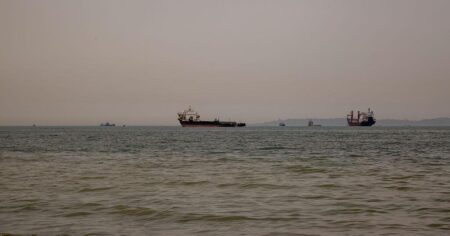
President Donald Trump has intensified pressure on Iran with increasingly urgent warnings as his self-imposed Monday deadline approaches for reopening the strategically vital Strait of Hormuz. Taking to his Truth Social platform on Saturday, Trump reminded Tehran that time was running short, stating bluntly: “Remember when I gave Iran ten days to MAKE A DEAL or OPEN UP THE HORMUZ STRAIT. Time is running out — 48 hours before all Hell will reign down on them.” This waterway represents one of the world’s most critical chokepoints for global energy supplies, and its closure has sent shockwaves through international markets, dramatically spiking fuel prices and disrupting supply chains worldwide. The President’s rhetoric reflects the mounting frustration in Washington over Iran’s refusal to back down, despite what Trump described in a Wednesday national address as the U.S. having “beaten and completely decimated Iran.” However, events on the ground tell a different story, with Iranian forces continuing to demonstrate their capability to strike back at American and allied interests across the region. The situation has created a dangerous game of brinkmanship, with both sides seemingly locked into escalatory positions that make diplomatic resolution increasingly difficult as each hour passes.
Widening Conflict and Attacks on Civilian Infrastructure
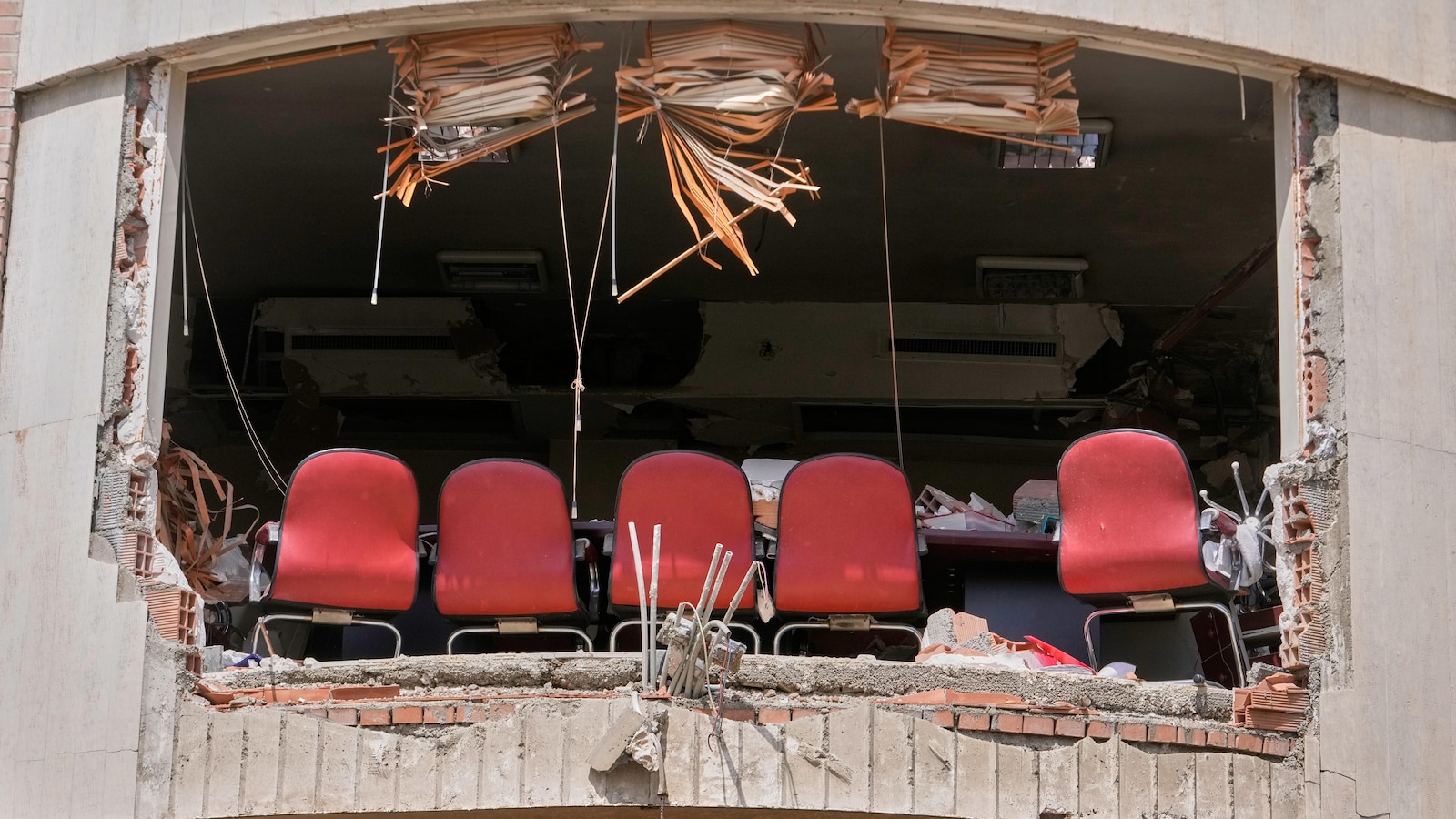
The war, which erupted on February 28th with coordinated U.S.-Israel strikes, has progressively expanded beyond military targets to encompass civilian infrastructure and commercial interests throughout the region. On Saturday, what appeared to be an Iranian drone managed to damage the Dubai headquarters of Oracle Corporation, one of America’s largest technology companies. The attack left a large hole in the building’s southwestern corner, though thankfully no injuries were reported. Iran’s Revolutionary Guard has specifically threatened major U.S. tech companies, accusing them of involvement in “terrorist espionage” operations and declaring them legitimate targets—a chilling expansion of the conflict into the corporate sphere. Previous strikes had already hit Amazon Web Services facilities in both the United Arab Emirates and Bahrain, demonstrating Iran’s willingness to target the digital infrastructure that underpins much of the modern global economy. Meanwhile, Israeli Prime Minister Benjamin Netanyahu announced his forces had struck a petrochemical complex in Mahshahr, which he claimed helps fund Iran’s war effort, along with air defense systems and ballistic missile production sites. Perhaps most alarming was news that an airstrike had hit near Iran’s Bushehr nuclear facility, killing a security guard and prompting Russia’s state nuclear corporation to evacuate 198 workers. This marked the fourth time the facility had been targeted, raising terrifying questions about the potential for a nuclear disaster that could dwarf even the immediate humanitarian catastrophe.
Mounting Casualties and Humanitarian Crisis
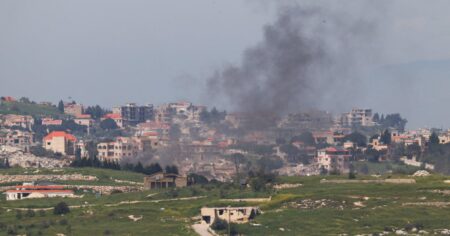
The human toll of this six-week conflict has been staggering and continues to climb with each passing day. Within Iran itself, more than 1,900 people have been killed since hostilities began, representing countless families torn apart and communities devastated by loss. The destruction has rippled across the entire region in waves of violence and displacement that threaten to destabilize the Middle East for generations to come. In Lebanon, the situation has become particularly dire, with more than 1,400 people reported dead and over one million people displaced from their homes—a humanitarian catastrophe unfolding in real-time. Gulf Arab states and the occupied West Bank have seen more than two dozen deaths, while Israel has reported 19 civilian and military casualties. For American forces, thirteen service members have been killed, with families across the United States now mourning loved ones lost in a conflict that seems to have no clear end in sight. Beyond these terrible numbers lie countless injuries, destroyed homes, shattered businesses, and traumatized children who will carry the psychological scars of this war for the rest of their lives. Both sides have been accused of hitting civilian targets and infrastructure, prompting international warnings about possible war crimes—legal concerns that seem almost academic when weighed against the immediate human suffering on display across the region.
Diplomatic Efforts and the Race Against Time
Even as military operations intensify and rhetoric grows more heated, behind-the-scenes diplomatic efforts continue in a desperate race against President Trump’s rapidly approaching deadline. Pakistan has emerged as a key mediator, with Foreign Ministry spokesperson Tahir Andrabi telling reporters that his government’s ceasefire efforts are “right on track.” Pakistan has announced plans to host direct talks between American and Iranian representatives, providing neutral ground where adversaries might find common cause in stepping back from the brink. Iran’s foreign minister, Abbas Araghchi, has signaled openness to these efforts, stating that Tehran has “never refused to go to Islamabad” for negotiations. A coalition of mediators from Pakistan, Turkey, and Egypt has been working to bridge the substantial gap between the two sides’ demands, attempting to craft a framework that would simultaneously end the fighting and reopen the Strait of Hormuz. According to regional officials speaking anonymously about sensitive closed-door diplomacy, the proposed compromise includes a cessation of hostilities that would create space for a diplomatic settlement addressing the underlying issues that sparked this devastating conflict. However, the extremely tight timeframe and hardened positions on both sides make success far from guaranteed.
Dangerous Escalation and Uncertain Future
As the Monday deadline looms, new threats suggest the conflict could expand even further across the region. Iran’s parliamentary speaker, Mohammad Bagher Qalibaf, issued a thinly veiled threat late Friday to potentially disrupt traffic through the Bab-el-Mandeb strait, a second strategically critical waterway connecting the Red Sea with the Gulf of Aden and Indian Ocean. This 20-mile-wide passage handles more than ten percent of seaborne global oil shipments and a quarter of all container ship traffic, meaning its closure would represent an economic catastrophe of historic proportions. Iran’s joint military command also claimed on Saturday to have struck two U.S. Black Hawk helicopters on Friday, though The Associated Press could not independently verify these claims, highlighting the fog of war and information challenges in this rapidly evolving situation. A second U.S. Air Force combat aircraft also went down in the Middle East on Friday under circumstances that remain unclear—officials couldn’t confirm whether it crashed due to mechanical failure or was shot down, or whether Iranian forces were involved. When asked by NBC News whether the downed aircraft would affect negotiations with Iran, President Trump suggested it would not, though his actions and statements have seemed increasingly contradictory as pressure mounts. The situation remains extraordinarily fluid and dangerous, with thousands of lives hanging in the balance and global economic stability at stake as the world watches anxiously to see whether diplomacy can prevail before Trump’s deadline expires and, in his words, “all Hell” breaks loose across the Middle East.