



Congressional Leaders Unveil New Plan to End Government Shutdown and Fund Border Security
A Sudden Reversal on Immigration Enforcement Funding
In a dramatic shift that caught many political observers by surprise, Republican leadership in Congress joined forces with President Trump on Wednesday to announce a comprehensive plan aimed at ending the partial government shutdown while ensuring full funding for the Department of Homeland Security. What makes this development particularly noteworthy is that it essentially mirrors a legislative framework that the Senate had pursued just days earlier—a plan that House Republicans had swiftly and decisively rejected. The irony wasn’t lost on political watchers in Washington, as House GOP leadership had spent an entire Friday sharply criticizing the Senate’s approach, which involved separating immigration enforcement funding from the rest of the Department of Homeland Security budget. Now, in what appears to be a complete about-face, these same Republican leaders seem ready to embrace a similar strategy, demonstrating the fluid and often unpredictable nature of legislative negotiations during times of crisis.
President Trump took to his Truth Social platform to make his position crystal clear, demanding that Congress take immediate action to fund Immigration and Customs Enforcement (ICE) and Border Patrol through a process called reconciliation. This legislative maneuver would give Republicans the ability to pass funding bills without needing any support from Senate Democrats, effectively cutting the minority party out of the decision-making process on this crucial issue. The President set an ambitious deadline of June 1st for lawmakers to get the necessary legislation to his desk for signature. In his characteristic style, Trump framed the issue in stark partisan terms, stating, “We are going to work as fast, and as focused, as possible to replenish funding for our Border and ICE Agents, and the Radical Left Democrats won’t be able to stop us.” This aggressive timeline and confrontational rhetoric signal the administration’s determination to push through their border security priorities regardless of Democratic opposition.
The Two-Track Funding Strategy Explained
The newly announced plan represents a creative, if somewhat complicated, approach to resolving the funding impasse that has paralyzed parts of the federal government. Under this dual-track strategy, the majority of the Department of Homeland Security would receive funding through the traditional appropriations process, with that funding extending through October, the end of the current fiscal year. Meanwhile, the more politically contentious elements—specifically Immigration and Customs Enforcement and Border Patrol—would be funded through the reconciliation process, which Republicans control. This bifurcated approach allows Republicans to claim they’re fully funding DHS while simultaneously using their partisan advantage to ensure immigration enforcement receives the resources they believe are necessary without having to compromise with Democrats on reform measures.
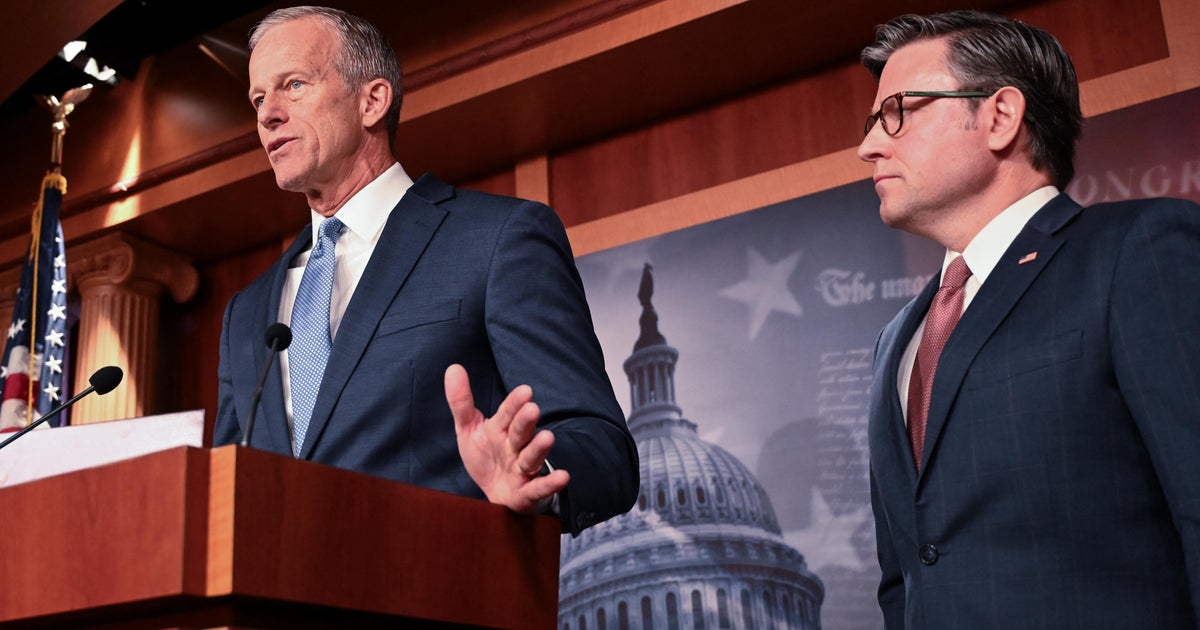
House Speaker Mike Johnson from Louisiana and Senate Majority Leader John Thune from South Dakota quickly lined up behind the President’s directive, issuing a joint statement that committed both chambers to moving forward with this two-pronged approach. “In the coming days, Republicans in the Senate and House will be following through on the President’s directive by fully funding the entire Department of Homeland Security on two parallel tracks: through the appropriations process and through the reconciliation process,” the two leaders announced. The coordination between Trump, Johnson, and Thune demonstrates a unified Republican strategy, at least at the leadership level, to resolve the crisis on their terms. The timing of implementation remains somewhat uncertain, as both the House and Senate are currently on recess, with members away from Washington. However, the urgency of the situation means that votes could come as soon as Thursday during pro forma sessions—brief meetings that both chambers will hold despite the formal recess period.
Democratic Demands and the Stalemate Over ICE Funding
At the heart of this prolonged standoff lies a fundamental disagreement about how federal immigration enforcement agencies should operate and be held accountable. Democrats have maintained a firm stance for months, refusing to approve funding for ICE without significant reforms to the agency’s practices. Their position hardened considerably following two deadly shootings involving federal agents in Minneapolis, incidents that raised serious questions about accountability, transparency, and use-of-force policies within immigration enforcement agencies. These tragic events galvanized Democratic lawmakers and their progressive base to demand meaningful changes before they would agree to continue funding the agency’s operations.
The specific reforms Democrats have been pushing for in their negotiations with Republicans and the White House paint a picture of their concerns about ICE operations. Their demands included mandatory body cameras for all ICE agents during enforcement actions, requirements that agents not wear masks that conceal their identity during operations, and critically, mandates that agents obtain judicial warrants before entering private homes. These proposals represent attempts to bring immigration enforcement more in line with standard law enforcement practices and to increase accountability for agents’ actions. For weeks, these negotiations appeared to be making real progress, particularly as the crisis at airports intensified due to Transportation Security Administration staffing shortages caused by the shutdown. The practical consequences of the impasse—with travelers facing massive delays and security concerns mounting—seemed to be creating pressure for a compromise. However, when the talks ultimately stalled without resolution, Senate Republicans decided to pursue an alternative path forward, proposing to fund all DHS operations except for the immigration enforcement components that were causing the disagreement.
The Failed Senate Compromise and House Opposition
In the early morning hours of last Friday, the Senate managed to achieve something increasingly rare in today’s polarized political environment—unanimous approval of a compromise measure. The legislation they passed would have funded the entire Department of Homeland Security with the notable exception of ICE and certain parts of Customs and Border Protection. Significantly, this Senate bill did not include most of the reforms to federal immigration enforcement that Democrats had been demanding, representing a Democratic concession on their policy priorities in the interest of reopening the government and ensuring that most DHS functions could continue. The President had separately directed that TSA employees be paid through an alternative funding source, addressing the immediate crisis at airports that had captured public attention and concern.
However, this carefully negotiated Senate compromise ran into an immediate brick wall when it reached the House of Representatives. Conservative Republicans in the House refused to support the legislation, objecting strenuously to the very idea of separating funding for immigration enforcement from the rest of the department. In their view, this separation represented an unacceptable precedent and a capitulation to Democratic pressure on immigration issues. Instead of bringing the Senate bill to the floor for a vote, GOP leaders offered their own solution—a 60-day continuing resolution that would have funded the entire department at current levels, including immigration enforcement, without any of the reforms Democrats wanted. According to Democratic leadership, the Senate plan likely had enough support to pass the House if it had been brought up for a vote, as it could have attracted sufficient Democratic votes combined with moderate Republicans. Instead, House leadership pushed through their short-term funding measure in a vote that fell almost entirely along party lines, passing with Republican support but with virtually no chance of being accepted by the Senate, essentially returning both chambers to square one.
The Current Republican Strategy and Partisan Rhetoric
Wednesday’s announcement represents the Republican leadership’s latest attempt to break through the stalemate, this time by embracing a strategy that, ironically, bears significant resemblance to the approach they had criticized days earlier. Senate Majority Leader Thune and House Speaker Johnson made clear in their joint statement that they view the impasse as entirely the fault of Democratic intransigence. “It is now abundantly clear that Democrats place allegiance to their radical left-wing base above all else,” they declared, framing the opposition party’s insistence on reforms as bowing to extreme elements rather than legitimate concerns about accountability and civil liberties. They continued with even stronger language: “We cannot allow Democrats to any longer put the safety of the American public at risk through their open border policies, so we are taking that off the table.”
This rhetoric represents a deliberate strategy to shift public perception of who bears responsibility for the shutdown and to frame the issue in terms of national security and border control rather than government operations and accountability. By using the reconciliation process for immigration enforcement funding, Republicans are explicitly removing Democrats from the equation, ensuring they can fund ICE and Border Patrol for an ambitious three-year period without any need for bipartisan cooperation or compromise on the reform measures Democrats have sought. This aggressive approach carries both opportunities and risks for Republicans—while it allows them to deliver on campaign promises regarding border security without Democratic interference, it also means they own the outcomes completely, and any future controversies involving ICE or Border Patrol operations cannot be shared with the opposition party. As Washington waits to see whether this new plan can actually pass both chambers and end the partial shutdown, the broader questions about immigration enforcement accountability remain unresolved, likely to resurface in future legislative battles.