


Trump’s Iran Dilemma: The Limits of Military Power
Growing Presidential Frustration Over Limited Options
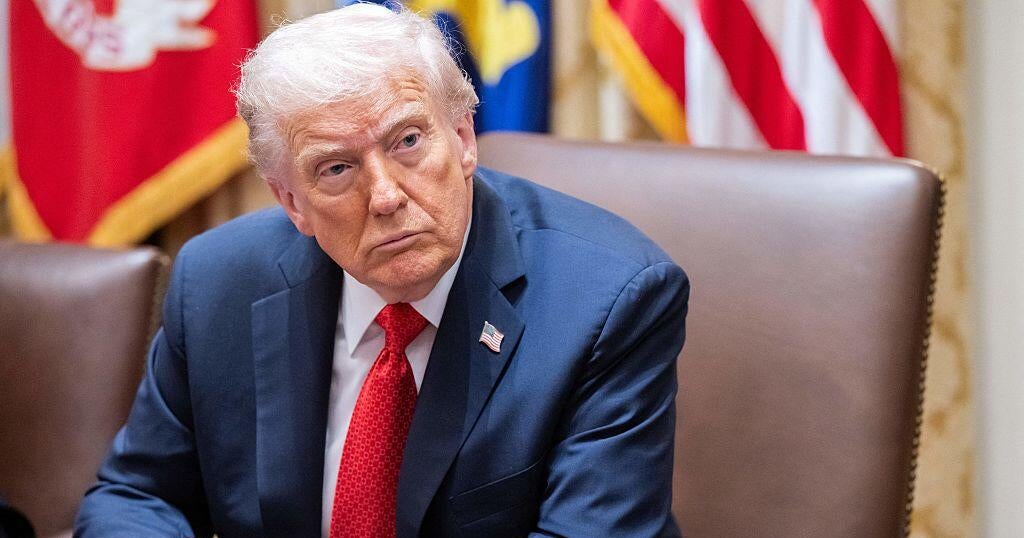
President Trump finds himself in an increasingly uncomfortable position as he confronts the realities of military action against Iran. According to multiple sources who spoke anonymously to CBS News about sensitive national security matters, the president has become noticeably frustrated with what his advisers are describing as the inherent limitations of using military force against Tehran. Unlike previous operations that appeared more straightforward—such as the recent action that successfully removed Venezuelan leader Nicolás Maduro from power—military planners have been clear with Trump that any strike against Iranian assets would be fundamentally different in nature and consequence. The sobering assessment delivered to the president is that there exists no “silver bullet” option, no single decisive strike that would cleanly resolve the standoff with Iran. Instead, military experts have warned that even limited strikes could potentially open a Pandora’s box, creating a pathway to a much broader confrontation that risks pulling the United States into exactly the kind of protracted Middle Eastern conflict that Trump has historically sought to avoid. This reality has created a palpable tension within the administration between the president’s desire for forceful action and the cautious assessments being provided by military leadership about the potential consequences of such actions.
The President’s Public Pushback and Military Assurances
Responding to reports about divisions within his administration, President Trump took to social media to refute suggestions that General Dan Caine, the Chairman of the Joint Chiefs of Staff, opposes military action against Iran. In his characteristic direct style, Trump pushed back against what he characterized as inaccurate reporting, stating that while General Caine “would like not to see War,” the general’s position is clear: if a decision is made to take military action against Iran, “it is his opinion that it will be something easily won.” The president went further, emphasizing that General Caine “has not spoken of not doing Iran, or even the fake limited strikes that I have been reading about.” According to Trump, the general “only knows one thing, how to WIN and, if he is told to do so, he will be leading the pack.” This public statement appeared designed to project unity within the administration and to counter any narrative suggesting that top military brass are opposed to potential action. However, a senior military official told CBS News that military planners are continuing to provide what they characterized as unbiased, professional advice to the commander-in-chief. When contacted for clarification or additional comment, the White House simply referred CBS News back to the president’s social media statement, suggesting the administration wanted Trump’s own words to serve as the definitive position on the matter.
The Search for a Reset Through Force
At the core of President Trump’s impatience with the current situation is his fundamental desire for some form of forceful action that would, in his view, fundamentally reset the diplomatic landscape with Iran. The president has repeatedly pressed his national security advisers to present him with military options that would deliver what he considers a sufficiently punishing strike—one substantial and dramatic enough to compel Iranian leadership to return to the negotiating table, but this time under terms far more favorable to Washington’s interests. This approach reflects Trump’s longstanding belief in negotiating from positions of strength and his preference for using displays of American power as leverage in diplomatic confrontations. However, military planners have provided the president with a far more nuanced and sobering assessment, cautioning him that such a clean outcome simply cannot be guaranteed. The gap between what the president wants—a decisive military action that changes the calculation in Tehran without triggering wider conflict—and what military experts say is realistically achievable represents one of the central tensions currently playing out within the administration’s Iran policy deliberations.
Military Warnings About Escalation Risks
In private meetings with President Trump, General Caine has provided detailed briefings about the significant risks associated with any sustained military campaign against Iran. These private assessments have been considerably more cautious than the public posture suggested by Trump’s social media posts. Caine has specifically warned the president that military action against Iran would likely carry substantial repercussions that would extend well beyond the initial strikes themselves. Chief among these concerns is the near certainty of retaliation from Tehran and its extensive network of proxy forces operating throughout the region. Such retaliation could target American military forces stationed across the Middle East, as well as U.S. regional allies who might find themselves in Iran’s crosshairs. Perhaps most significantly from a strategic perspective, Caine has cautioned that what might begin as limited strikes could easily spiral into a drawn-out engagement that would require the commitment of additional American troops and substantial military resources—precisely the kind of open-ended Middle Eastern entanglement that Trump has spent years criticizing. These warnings reflect broader concerns within the military establishment about the unpredictable nature of armed conflict and the difficulty of controlling escalation once hostilities begin. Meanwhile, special envoy Steve Witkoff revealed in a weekend interview with Lara Trump on Fox News that the president is genuinely “curious” about why Iranian leaders “haven’t capitulated” despite the mounting pressure. Witkoff elaborated on Trump’s puzzlement: “Why, under this sort of pressure, with the amount of sea power, naval power that we have over there, why they haven’t come to us and said, ‘We profess that we don’t want to be—we don’t want a weapon. So, here’s what we’re prepared to do.’ And yet, it’s hard to sort of get them to that place.” This statement reveals the administration’s apparent expectation that the massive display of American military might would be sufficient to bring Iran to heel, and the corresponding frustration that this pressure campaign has not yet produced the desired diplomatic breakthrough.
Massive Military Buildup Raises the Stakes
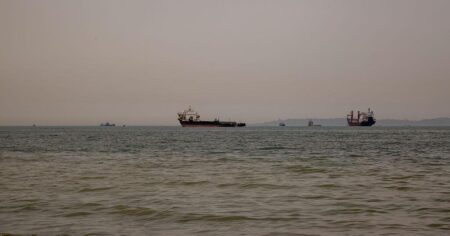
In recent weeks, the United States has dramatically expanded its military presence throughout the Middle East region, creating what amounts to one of the largest concentrations of American firepower seen in the area in years. The USS Gerald R. Ford carrier strike group, accompanied by its full flotilla of escort warships, is expected to position itself within striking range of Iranian territory. This formidable force will join the already-deployed USS Abraham Lincoln carrier strike group, along with numerous aircraft squadrons stationed at military bases scattered throughout the Persian Gulf region. Beyond naval forces, the Pentagon has also reinforced defensive systems designed to protect American personnel and regional allies from potential Iranian retaliation, deploying both Patriot missile defense batteries and the more advanced Terminal High Altitude Area Defense (THAAD) systems to multiple locations. Pentagon officials have been careful to characterize these extensive deployments as fundamentally defensive in nature, designed primarily to deter any potential Iranian escalation rather than to prepare for offensive operations. However, the unprecedented scale and rapid tempo of this military buildup tells a more complex story, one that underscores just how seriously defense planners are taking the possibility of armed conflict. The sheer magnitude of forces being assembled also highlights an uncomfortable reality: any strike against Iran would almost certainly trigger some form of response from Tehran. This retaliation could take multiple forms—direct missile attacks against American forces or allies, harassment of commercial and military shipping through the strategically vital Strait of Hormuz through which much of the world’s oil passes, or attacks conducted by Iranian proxy forces operating in Iraq, Syria, Lebanon, Yemen, and elsewhere across the region. The military buildup thus serves a dual purpose: demonstrating American resolve and capability while simultaneously preparing for the very real possibility that deterrence might fail and conflict might begin.
The Political-Military Divide and Uncertain Path Forward
The ongoing deliberations within the White House regarding Iran policy have exposed a fundamental and perhaps unbridgeable tension between political objectives and military realities. While President Trump seeks a dramatic show of force that he believes will strengthen his negotiating position and demonstrate American power, senior military commanders have emphasized repeatedly that wars rarely unfold according to predetermined scripts and that even the most carefully calibrated and limited strikes can produce unpredictable and potentially dangerous consequences. This disconnect between political desires and military assessments is not unique to this administration, but it has taken on particular urgency given the current high-stakes standoff. For now, the buildup of American military hardware throughout the region continues unabated as contingency plans are continuously refined and updated. Whether this massive accumulation of forces ultimately culminates in some form of limited military strike or remains primarily a posture of deterrence designed to pressure Tehran without actual combat may depend on factors beyond just President Trump’s acknowledged frustration with the current stalemate. Tehran’s next moves will likely play a crucial role in determining whether this crisis is resolved through diplomacy or descends into armed conflict. Equally important will be the question of how much risk Washington is ultimately prepared to bear—not just the immediate risks of strikes and counterstrikes, but the longer-term risks of becoming entangled in another protracted Middle Eastern conflict with no clear exit strategy. As this tense standoff continues, the gap between what President Trump wants to achieve and what his military advisers say is prudently achievable represents perhaps the most significant challenge facing American national security policy in the region.