
U.S. Military Readiness for Potential Iran Strikes: What We Know
Military Preparations Underway as Diplomatic Efforts Continue
The relationship between the United States and Iran has reached another critical juncture, with top national security officials briefing President Trump on the military’s readiness to conduct potential strikes against Iranian targets. According to sources familiar with the sensitive discussions, the U.S. military could be prepared to execute operations as early as this weekend, though the actual timeline for any military action would likely extend beyond the immediate few days. What makes this situation particularly noteworthy is that President Trump has not yet made a final decision about whether to authorize such strikes, leaving the situation in a state of careful deliberation. These conversations have been characterized as fluid and constantly evolving, reflecting the complexity of the decision at hand. The White House is carefully weighing multiple factors, including the significant risks of military escalation in an already volatile region, as well as the political and military consequences that could result from choosing restraint over action. This delicate balancing act demonstrates the administration’s awareness that any decision regarding military action against Iran carries profound implications not just for U.S.-Iran relations, but for regional stability and America’s broader foreign policy objectives in the Middle East.
Pentagon Repositioning Personnel Ahead of Possible Action
In what appears to be a precautionary measure, the Pentagon has begun moving some of its personnel temporarily out of the Middle East region over the next three days. According to multiple officials with knowledge of the situation, these personnel are being relocated primarily to Europe or back to the United States. This repositioning is taking place in anticipation of either potential U.S. military action or possible counterattacks by Iran should the United States decide to move forward with an operation. However, sources are quick to point out that such movements are standard operating procedure for the Pentagon when preparing for potential U.S. military activity. One source emphasized that these personnel movements don’t necessarily indicate that an attack on Iran is imminent or inevitable—rather, they reflect prudent military planning and force protection measures. When contacted by CBS News on Wednesday afternoon, a Pentagon spokesperson declined to provide any information about these movements or the broader situation, which is typical for sensitive operational matters. Additionally, Secretary of State Marco Rubio has plans to visit Israeli Prime Minister Benjamin Netanyahu in approximately two weeks for further discussions, suggesting that diplomatic channels remain active and that coordination with key allies continues to be a priority for the administration.
White House Weighs Military and Diplomatic Options
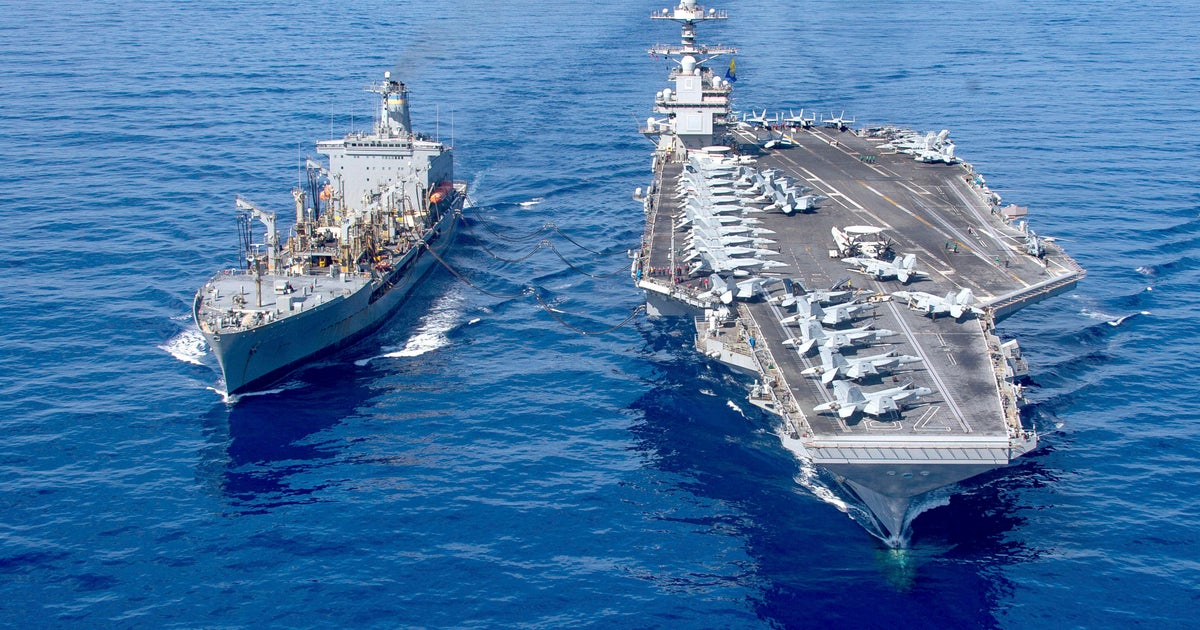
During a White House briefing on Wednesday, Press Secretary Karoline Leavitt addressed questions about potential military action against Iran, acknowledging that there are “many reasons and arguments that one could make for a strike against Iran.” However, she was careful to emphasize that diplomacy remains President Trump’s first option when dealing with the Islamic Republic. Leavitt declined to discuss whether any potential strike would be coordinated with Israel, maintaining operational security around such sensitive matters. Interestingly, she referenced what she described as “a very successful operation in June that targeted Iran’s nuclear facilities,” though details about this operation remain unclear. Leavitt delivered a direct message to Iran’s leadership, stating that “Iran would be very wise to make a deal with President Trump and with his administration.” This comment suggests that the administration still sees room for a diplomatic resolution to current tensions. Meanwhile, the United States has significantly bolstered its military presence in the region. The USS Abraham Lincoln aircraft carrier group, along with its flotilla of accompanying warships, is already positioned in the Middle East. Additionally, a second carrier group—the USS Gerald Ford—was en route to the region as of Wednesday, with maritime vessel tracking data showing it off the coast of West Africa, making its way toward the Middle East theater.
Iran Responds with Defiance and Warnings
Iran’s response to the increased U.S. military presence has been characteristically defiant. On Tuesday, Iran’s Supreme Leader Ayatollah Ali Khamenei posted an AI-generated image on social media platform X showing the USS Gerald Ford at the bottom of the ocean—a clear symbolic threat to American naval forces. Accompanying the provocative image, Khamenei wrote: “The US President constantly says that the US has sent a warship toward Iran. Of course, a warship is a dangerous piece of military hardware. However, more dangerous than that warship is the weapon that can send that warship to the bottom of the sea.” This aggressive rhetoric demonstrates Iran’s willingness to publicly challenge American military power, even as both nations engage in diplomatic talks. The posting of such images represents a form of psychological warfare, intended to project strength and resolve to both domestic and international audiences. On Wednesday, Iran also issued warnings to pilots to avoid the southern region of Iran on Thursday due to planned rocket launches, adding another layer of tension to an already fraught situation. These warnings could indicate military exercises designed to demonstrate Iran’s capabilities, or they could be related to legitimate space program activities—Iran has previously conducted satellite launches from this region.
Nuclear Negotiations Continue Despite Tensions
Despite the military posturing on both sides, diplomatic efforts to address Iran’s nuclear program continue. Iranian and American negotiators held mediated talks on Tuesday in Geneva, Switzerland, with the discussions lasting several hours. The Trump administration has indicated that some progress has been made during these negotiations, though significant gaps remain. On Wednesday, Press Secretary Leavitt acknowledged the challenges, stating, “We’re still very far apart on some issues.” She indicated that the Iranians are expected to provide additional details and responses within the next couple of weeks, and that President Trump would continue monitoring how the situation develops. Notably, no specific date has been set for follow-up consultations, suggesting that while diplomatic channels remain open, there is no clear timeline for reaching an agreement. The nuclear issue has been a central point of contention between the United States and Iran for years, particularly since the Trump administration withdrew from the Joint Comprehensive Plan of Action (JCPOA) during his first term. According to two sources, President Trump told Prime Minister Netanyahu during a meeting at Mar-a-Lago in December that he would support Israeli strikes on Iran’s ballistic missile program if negotiations between Washington and Tehran failed to produce an acceptable deal. This revelation indicates that the administration has been considering military options for some time and has been coordinating with Israel on potential responses to Iran’s weapons programs.
Regional Implications and Path Forward
The current situation represents a critical moment in U.S.-Iran relations with potentially far-reaching consequences for Middle East stability. The dual-track approach of maintaining military readiness while pursuing diplomatic engagement reflects the complexity of dealing with Iran, a regional power with significant military capabilities and proxy forces throughout the Middle East. Any U.S. military action against Iran would likely trigger retaliatory responses, not only from Iran directly but potentially from aligned groups in Iraq, Syria, Yemen, and Lebanon. This risk of escalation is undoubtedly a major factor in President Trump’s deliberations. The movement of two aircraft carrier groups to the region represents a significant show of force, but it also serves as a tool of deterrence and a signal of American commitment to protecting its interests and those of its allies. The involvement of Secretary of State Rubio in upcoming discussions with Israeli leadership suggests that any decision will be made in close consultation with America’s closest Middle East ally, which has its own security concerns regarding Iran’s nuclear program and ballistic missile development. As the situation continues to develop over the coming days and weeks, the world will be watching to see whether diplomacy can produce a breakthrough or whether the military options being prepared will ultimately be employed. The fact that President Trump has not yet made a final decision indicates that the door to a diplomatic solution remains open, even as military preparations continue as a contingency. The coming weeks will be crucial in determining whether this latest crisis can be resolved through negotiation or whether the region is heading toward another military confrontation.