
Trump’s Fury: A President’s Public Rebuke of His Own Supreme Court Appointees
A Historic Confrontation Between the Executive and Judicial Branches
In an extraordinary display of presidential frustration, President Trump launched a scathing attack on the Supreme Court following their decision to strike down his comprehensive global tariff plan. The ruling represented a significant blow to the administration’s economic strategy, but what made the president’s response particularly remarkable was his willingness to publicly criticize justices he himself had appointed to the nation’s highest court. Speaking to reporters, Trump didn’t mince words, declaring he was “ashamed of certain members of the court” and singling out the conservative justices who ruled against him as especially disappointing. The president’s anger wasn’t directed at the three liberal justices, whom he dismissed as predictably opposed to his agenda—calling them an “automatic no.” Instead, his sharpest criticism was reserved for the three conservative justices who concluded that existing law doesn’t grant the president unilateral authority to impose sweeping tariffs. This moment highlighted a fundamental tension in American governance: the independence of the judiciary versus a president’s expectations of loyalty from his appointees.
The Justices Who Defied Presidential Expectations
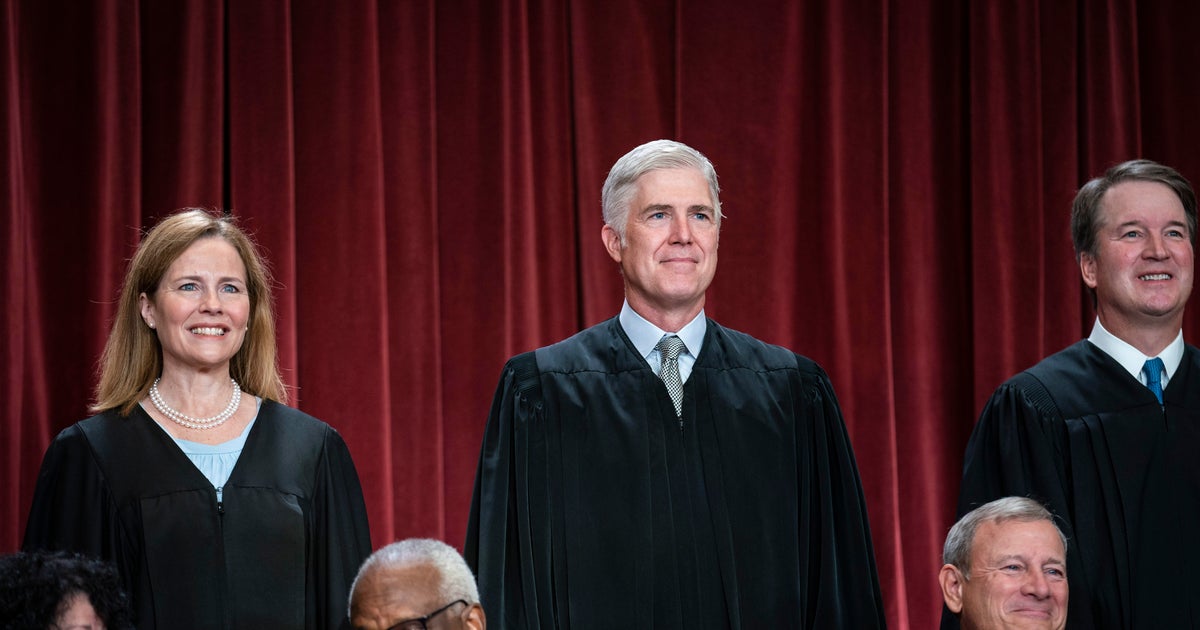
The three conservative justices who voted against the Trump administration’s tariff strategy formed an unexpected coalition that crossed the court’s ideological lines. Chief Justice John Roberts, appointed by President George W. Bush, was joined by two of Trump’s own nominees: Justice Neil Gorsuch and Justice Amy Coney Barrett. Their legal reasoning centered on the International Emergency Economic Powers Act (IEEPA), which they determined doesn’t provide the executive branch with the authority to unilaterally implement broad-based tariffs without congressional involvement. When reporters asked President Trump whether he regretted nominating Gorsuch and Barrett to the Supreme Court, he notably refused to answer directly. However, his subsequent comment calling the decision “an embarrassment to their families” revealed the depth of his disappointment. The president also made unsubstantiated allegations that the court had been “swayed by foreign interests” and described the majority justices as “fools and lap dogs for the RINOs and the radical left Democrats.” This language represented an unprecedented level of personal attack from a sitting president against members of the Supreme Court, particularly those he had personally selected for their lifetime appointments.
Kavanaugh’s Dissent Earns Presidential Praise
While Trump expressed disappointment with two of his three Supreme Court appointees, he showered praise on Justice Brett Kavanaugh, who authored the principal dissenting opinion in the tariff case. Kavanaugh’s dissent argued that the president’s powers under IEEPA should be interpreted broadly enough to encompass tariff authority, providing the legal justification Trump had hoped the entire court would embrace. Beyond simply supporting the administration’s position, Kavanaugh’s opinion offered a roadmap of alternative legal authorities that might potentially be invoked to justify similar trade measures in the future. The president seized on this guidance, indicating his intention to explore these other legal avenues. Trump called Kavanaugh a “genius” and declared that his “stock is on the rise,” comments that not only praised the justice but also seemed to send a message about the kind of judicial reasoning the president values. This public contrast between his treatment of Kavanaugh versus Gorsuch and Barrett underscored Trump’s transactional view of judicial appointments—rewarding those who support his positions while criticizing those who rule against him, regardless of their legal reasoning.
An Awkward State of the Union Invitation
The Supreme Court ruling created an unusually tense situation ahead of President Trump’s upcoming State of the Union address, an annual event traditionally attended by members of all three branches of government, including Supreme Court justices. When asked about the justices’ attendance, Trump’s response was characteristically blunt and petty. He stated that while all justices remained technically invited, the six who ruled against him were “barely invited,” whereas the three dissenters were “happily invited.” He added dismissively, “I couldn’t care less if they come.” This public differentiation between justices based on their rulings represents a break from presidential norms and threatens to turn what should be a unifying national address into another battleground in Trump’s ongoing conflict with the judicial branch. The Supreme Court’s spokesperson did not immediately respond to requests for comment about whether justices would attend the address despite the president’s hostile remarks. The situation recalled Justice Samuel Alito’s response to President Obama’s 2010 criticism of the Citizens United decision during a State of the Union address—Alito visibly shook his head and appeared to mouth “not true,” and he hasn’t attended a State of the Union since. The difference is that Obama’s criticism focused on the policy implications of a decision, while Trump’s attacks have become distinctly personal.
Presidential Criticism of the Court: Then and Now
While President Trump’s attacks on the Supreme Court were particularly harsh and personal, he’s not the first president to publicly criticize the judicial branch when it ruled against his agenda. However, the tone and intensity of his criticism represents a significant departure from historical norms. Former President Joe Biden criticized the Supreme Court when it struck down his student loan forgiveness plan in June 2023, calling the decision “a mistake” and “wrong,” and saying the majority “misinterpreted the Constitution.” Similarly, when the court ruled on presidential immunity in July 2024, Biden described it as a “terrible disservice to the people of this nation.” President Obama famously criticized the Citizens United campaign finance decision during his 2010 State of the Union address, warning it would “open the floodgates for special interests.” The key difference between these examples and Trump’s current attacks lies in their focus—previous presidents criticized the legal reasoning and policy implications of decisions, while Trump has made his criticism deeply personal, attacking the character and motives of individual justices. Trump himself has a history of criticizing the Supreme Court when it doesn’t rule in his favor. After the court declined to hear Texas’s lawsuit challenging the 2020 election results, he said the court “really let us down. No Wisdom, No Courage!” In a 2023 speech while out of office, he joked that his appointees “don’t help me much” and “vote against me too much,” treating judicial independence as a personal betrayal rather than a constitutional principle.
The Legacy of Trump’s Judicial Transformation
The irony of Trump’s current anger at his Supreme Court appointees isn’t lost on observers of American politics, given the transformative impact his three nominations have had on American law and society. His appointments of Gorsuch, Kavanaugh, and Barrett shifted the Supreme Court decisively to the right, creating a 6-3 conservative majority that has reshaped the legal landscape. Since Barrett’s confirmation in 2020, replacing the late Justice Ruth Bader Ginsburg, the court has delivered historic victories for conservative causes: overturning Roe v. Wade and ending the constitutional right to abortion, eliminating affirmative action in higher education, curtailing the regulatory authority of federal agencies, and expanding gun rights by recognizing Second Amendment protections for carrying firearms in public. These accomplishments represent the fulfillment of conservative legal movement goals that had been decades in the making. Trump’s selection of these justices was heavily influenced by Leonard Leo, a former Federalist Society leader who advised the president on Supreme Court picks. However, Trump has since had a falling out with Leo, publicly calling him a “sleazebag” and a “bad person” who “probably hates America” after an appellate court ruled against his tariffs. This pattern—praising advisers and appointees when they deliver desired results, then viciously attacking them when they demonstrate independence—has become a hallmark of Trump’s approach to governance. The current controversy ultimately raises fundamental questions about the proper relationship between the executive and judicial branches, the meaning of judicial independence, and whether lifetime appointments should insulate justices from presidential pressure or whether presidents have legitimate grievances when their appointees rule against their agenda.