
Trump Hosts Latin American Leaders at Miami Golf Club for “Shield of the Americas” Summit
A Strategic Gathering Amid Global Turmoil
President Trump welcomed Latin American leaders to his Miami-area golf resort on Saturday for what the White House dubbed the “Shield of the Americas” summit, signaling his administration’s renewed commitment to focusing on the Western Hemisphere despite ongoing international crises demanding attention. The timing of this gathering is particularly significant, coming just two months after a dramatic U.S. military operation that captured Venezuela’s former president Nicolás Maduro and brought him to American soil to face serious drug conspiracy charges. During his opening remarks, Trump made his intentions clear, telling the assembled leaders that they share a common determination to end the lawlessness that has plagued their hemisphere for far too long. The meeting brought together high-ranking U.S. officials including Secretary of State Marco Rubio, Defense Secretary Pete Hegseth, Treasury Secretary Scott Bessent, Commerce Secretary Howard Lutnick, and U.S. Trade Representative Jamison Greer. Also present was former Homeland Security Secretary Kristi Noem, who now holds the title of Special Envoy for The Shield of the Americas – Western Hemisphere, highlighting the administration’s commitment to regional engagement.
Balancing Regional Priorities with Global Crises
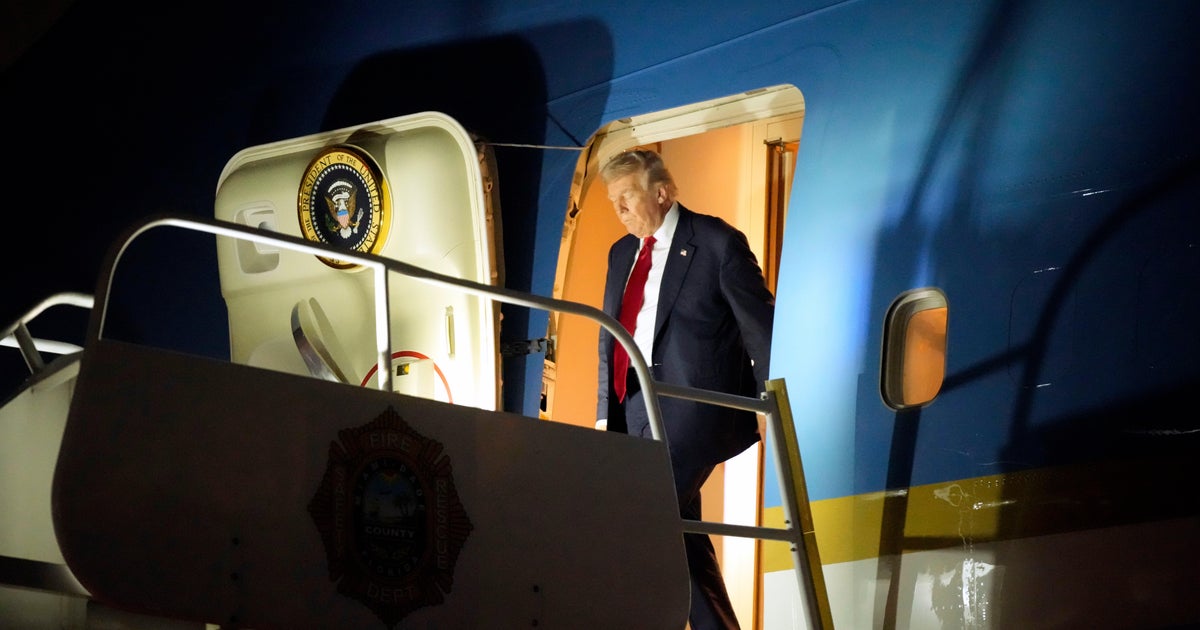
The summit took place against the backdrop of increasingly complex international challenges that have tested Trump’s ability to maintain focus on multiple fronts simultaneously. Just one week before this Miami gathering, Trump made the momentous decision to join forces with Israel in launching military operations against Iran, a conflict that has already claimed hundreds of lives, sent shockwaves through global financial markets, and destabilized the broader Middle East region. The president’s schedule on the day of the summit itself illustrated the difficult balancing act his administration faces—his time with Latin American leaders was necessarily limited because he needed to fly to Dover Air Force Base in Delaware later that day to honor six U.S. troops killed in a drone attack on a command center in Kuwait, casualties from the recently launched U.S.-Israel military campaign against Iran. Despite these pressing global concerns, Trump used the summit as an opportunity to redirect attention, even if only briefly, toward the Western Hemisphere and his ambitious plans to reassert American dominance in what has traditionally been considered the United States’ backyard.
Pushing Back Against Chinese Influence
A central theme of the summit was Trump’s determination to counter what he views as years of damaging Chinese economic encroachment in Latin America. Defense Secretary Pete Hegseth captured this sentiment when addressing regional leaders and defense ministers who had gathered in Florida earlier in the week for discussions on combating powerful drug cartels. “Under previous leaders, we grew obsessed with every other theater and every other border in the world except our own,” Hegseth declared, criticizing what he called the “benign neglect” of past administrations that he argued was anything but benign in its consequences. The gathering at Trump National Doral Miami—the same golf resort where Trump plans to host the Group of 20 summit later this year—brought together leaders from Argentina, Bolivia, Honduras, and the Dominican Republic. The concept for this summit of conservative-minded hemispheric leaders emerged from the wreckage of what was supposed to be the 10th Summit of the Americas, which was ultimately canceled during last year’s U.S. military buildup off Venezuela’s coast. The original summit had been mired in controversy when the Dominican Republic, under White House pressure, excluded Cuba, Nicaragua, and Venezuela from participation, prompting threats of boycotts from leftist leaders in Colombia and Mexico and ultimately forcing Dominican President Luis Abinader to postpone the event due to what he called “deep differences” in the region.
The “Shield of the Americas” Vision and Notable Absences
The “Shield of the Americas” name itself reflects Trump’s vision for an “America First” foreign policy approach toward Latin America that would deploy U.S. military and intelligence resources on a scale not seen in the region since the Cold War era ended decades ago. Trump’s national security strategy prominently features what he calls the “Trump Corollary” to the 19th-century Monroe Doctrine, which originally aimed to prevent European powers from interfering in the Americas. This updated version specifically targets Chinese infrastructure projects, military partnerships, and investments in the region’s resource industries. However, the summit’s guest list revealed significant gaps that speak to the challenges Trump faces in building regional consensus. Conspicuously absent were leaders from Brazil and Mexico, the hemisphere’s two most powerful nations, as well as Colombia, which has long been the cornerstone of U.S. anti-drug efforts in Latin America. Richard Feinberg, who helped organize the first Summit of the Americas in 1994 while serving on President Clinton’s National Security Council, noted the stark difference between that inclusive gathering of 34 nations with a comprehensive agenda and this hastily arranged meeting. Now a professor emeritus at the University of California, San Diego, Feinberg observed that while the original summit “projected inclusion, consensus and optimism,” the Shield of the Americas event “conjures a crouched defensiveness, with only a dozen or so attendees huddled around a single dominant figure.”
Demonstrating Muscle Through Actions
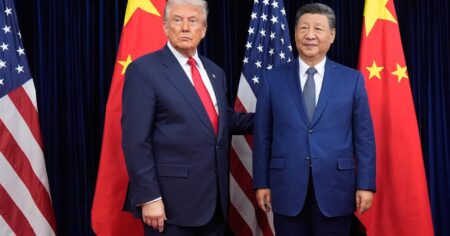
Since returning to the White House, Trump has wasted no time in demonstrating his more aggressive approach to the region, with countering Chinese influence ranking among his top priorities. The administration’s first major show of force came when Trump pressured Panama into withdrawing from China’s massive Belt and Road Initiative and reviewing long-term port contracts held by a Hong Kong-based company, backing up his demands with threats to retake the Panama Canal. More recently, the U.S. military operation that captured Maduro and Trump’s pledge to essentially “run” Venezuela threatens to severely disrupt oil shipments to China, which had been the largest purchaser of Venezuelan crude oil before the raid. This move also aims to bring one of Beijing’s closest regional allies firmly into Washington’s sphere of influence. Trump has scheduled a trip to Beijing later this month to meet with Chinese President Xi Jinping, where these regional dynamics will likely be part of the conversation.
The Challenge of Competing with Chinese Economic Diplomacy
Despite Trump’s forceful approach, experts point to significant challenges in persuading even friendly governments to distance themselves from China. Evan Ellis, an authority on Chinese engagement in Latin America at the Center for Strategic and International Studies, notes that leaders closely aligned with Trump have nonetheless shown reluctance to completely sever their Chinese connections. For many Latin American countries facing enormous development challenges—from widespread poverty to crumbling infrastructure—China’s trade-focused diplomacy fills a critical financial gap that the United States has been unwilling or unable to address. This challenge is compounded by Trump’s decision to dramatically slash foreign assistance to the region while simultaneously rewarding only those countries that support his immigration crackdown, a policy that remains deeply unpopular throughout Latin America. Kevin Gallagher, director of Boston University’s Global Development Policy Center and an expert on China’s economic diplomacy in the Americas, summed up the dilemma facing regional leaders: “The U.S. is offering the region tariffs, deportations and militarization whereas China is offering trade and investment.” He suggests that smart leaders in the region will maintain neutrality and hedge their bets, positioning themselves to benefit from increased U.S.-China rivalry by playing the two powers against each other to secure the best possible outcomes for their own countries. This fundamental tension between Trump’s security-focused approach and China’s economically attractive overtures represents perhaps the biggest obstacle to achieving the president’s ambitious goals for reasserting American dominance in the Western Hemisphere.