
President Trump to Award Medal of Honor to 100-Year-Old Korean War Hero
A Long-Overdue Recognition for Secret Valor
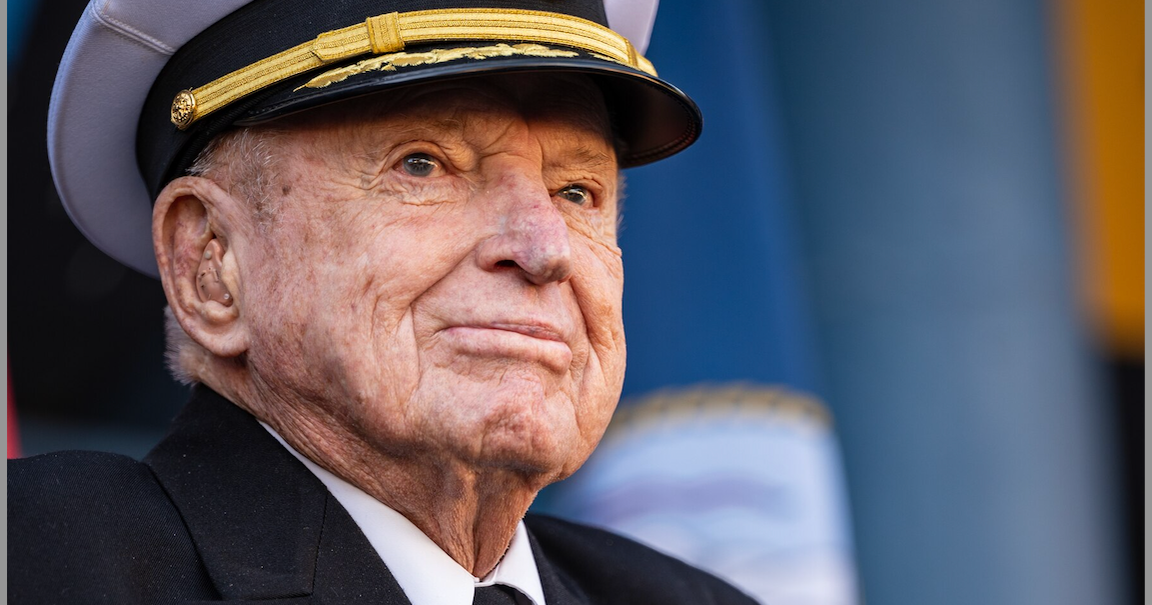
President Trump is preparing to make history Tuesday night by awarding the Medal of Honor to 100-year-old veteran E. Royce Williams during the State of the Union address, according to sources familiar with the matter who spoke with CBS News. This unprecedented move would mark the first time any president has presented the nation’s highest military honor for combat valor during a State of the Union speech. The retired Navy captain’s recognition comes more than seven decades after he engaged in one of the most remarkable aerial battles in American military history—a mission so secretive that even his own wife didn’t know about it for years. Williams will be honored for his extraordinary actions during a half-hour dogfight in 1952, when he single-handedly fought seven Soviet MiG fighter jets off the coast of Korea, shooting down four of them in what would become the longest aerial engagement in U.S. Navy history. The classified nature of the mission, which involved direct combat between American and Soviet forces during the Cold War, kept this incredible story hidden from public knowledge for decades.
The Battle That Remained Secret for Decades
At the height of the Korean War in 1952, Williams and a fellow American pilot were conducting routine operations off the Korean Peninsula when they suddenly encountered seven Soviet MiG-15 fighter jets. What happened next was an intense aerial battle that tested Williams’ skills, courage, and determination to their absolute limits. When the Soviet aircraft opened fire, Williams made a split-second decision that would define his legacy: “Since they started the fight, I shot back,” he later recalled with characteristic understatement. The engagement quickly escalated as Williams struck one of the enemy aircraft, prompting his fellow American pilot to pursue it. This left Williams alone in the sky, facing six remaining Soviet fighters—odds that would have seemed insurmountable to most pilots. Yet Williams didn’t retreat. Instead, he engaged the enemy aircraft head-on, downing three more Soviet planes while skillfully maneuvering through what military records later described as hundreds of rounds of incoming fire. Military historians who have since studied the encounter describe it as one of the most intense and skillful aerial engagements of the entire Korean War, showcasing not just Williams’ technical expertise as a pilot but his exceptional courage under fire.
A Harrowing Return and Decades of Silence
The danger didn’t end when Williams finished engaging the Soviet fighters. His own aircraft had been struck during the intense battle, leaving him with a damaged plane that he somehow had to fly back to safety. Williams turned his crippled aircraft toward an American aircraft carrier, facing the daunting challenge of landing a damaged plane on a moving ship at high speed. He later revealed that he had seriously considered ejecting from the aircraft, but the frigid conditions over the water made him conclude that such a decision would likely be fatal. His skill in bringing the damaged plane in for a successful carrier landing was almost as remarkable as the aerial combat itself. But perhaps the most extraordinary aspect of this entire episode was what happened afterward. Williams was instructed to keep the airborne clash completely secret—a directive he followed with unwavering discipline. This wasn’t just another classified military operation; it was a rare and politically fraught direct confrontation between American and Soviet forces at a time when both Cold War superpowers were desperately trying to avoid open warfare. For decades, Williams spoke of the mission to absolutely no one, not even his wife. He carried the weight of this incredible experience alone, unable to share it with the people closest to him.
The Truth Finally Emerges
The full story of Williams’ heroic actions only began to surface years after the collapse of the Soviet Union, when archival records and military histories were finally declassified and made public. As researchers pieced together what had actually happened in the skies over Korea that day in 1952, it became clear that Williams had accomplished something truly extraordinary—and that his actions had gone unrecognized for far too long. In recent years, the U.S. military has published detailed descriptions of the encounter, with official accounts portraying it as one of the most intense and significant aerial engagements of the Korean War. When asked about his actions in a 2022 interview with news outlet Task & Purpose, Williams displayed the same modest demeanor that had characterized his decades of silence: “In the moment I was a fighter pilot doing my job. I was only shooting what I had.” Three years ago, Williams finally received some measure of recognition when he was awarded the Navy Cross, the highest combat award that can be given to members of the Navy or Marine Corps for valor in combat. But many felt that even this prestigious honor didn’t fully reflect the magnitude of his achievement.
The Push for the Medal of Honor
Republican Representative Darrell Issa of California, whose San Diego-area district includes Williams’ home, became a driving force in the effort to secure the Medal of Honor for the retired Navy pilot. Issa worked with fellow lawmakers to address a significant obstacle: the longstanding requirement that the Medal of Honor be awarded within five years of the act of valor. Last year, Congress passed special authorization allowing the president to bestow the decoration on Williams, waiving the time limitation in recognition of the extraordinary circumstances. In a statement issued earlier this month, Issa eloquently summarized why Williams deserved this ultimate recognition: “The heroism and valor he demonstrated for more than 35 harrowing minutes almost 70 years ago in the skies over the North Pacific and the coast of North Korea unquestionably saved the lives of his fellow pilots, shipmates, and crew.” President Trump called Williams earlier this month, presumably to inform him of the upcoming honor, marking the beginning of what promises to be a deeply emotional recognition of service and sacrifice that went unacknowledged for most of Williams’ lifetime.
A Presentation Laden with Contemporary Significance
The timing and context of this Medal of Honor presentation carry layers of contemporary political significance that extend far beyond the recognition of one veteran’s heroism. President Trump is set to award the Medal of Honor to a veteran specifically recognized for killing Russian pilots decades ago on a date that coincides with the anniversary of Russia’s invasion of Ukraine four years ago—a conflict that continues to shape global politics and international relations. This Ukraine conflict is currently shadowed by complex negotiations in which Kyiv has faced considerable pressure to consider ceding territory that has been seized by Moscow, making the symbolism of honoring American valor against Soviet (Russian) forces particularly resonant. While the White House spokespeople have not responded to requests for comment about the planned presentation, and sources indicate that plans could still change, the significance of this moment is undeniable. At 100 years old, E. Royce Williams represents a living link to a era of American history when the Cold War was at its most tense, when servicemembers carried out dangerous missions that couldn’t be acknowledged, and when individual acts of extraordinary courage sometimes had to remain hidden for the sake of global stability. His story reminds us that heroism doesn’t always receive immediate recognition, that duty sometimes requires profound personal sacrifice including years of silence, and that the nation’s gratitude, though sometimes delayed, eventually finds its way to those who have truly earned it. As Williams prepares to receive the Medal of Honor during this historic State of the Union presentation, he joins the most elite group of American military heroes, finally receiving the recognition that his remarkable actions earned seven decades ago.