
Trump Claims Iran Responsible for School Strike Despite Evidence Pointing to US Involvement
Conflicting Statements Amid Ongoing Investigation
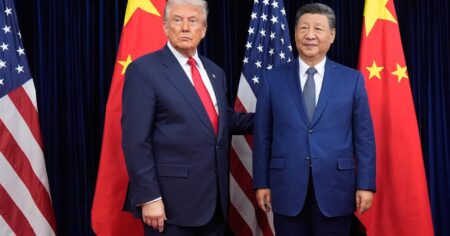
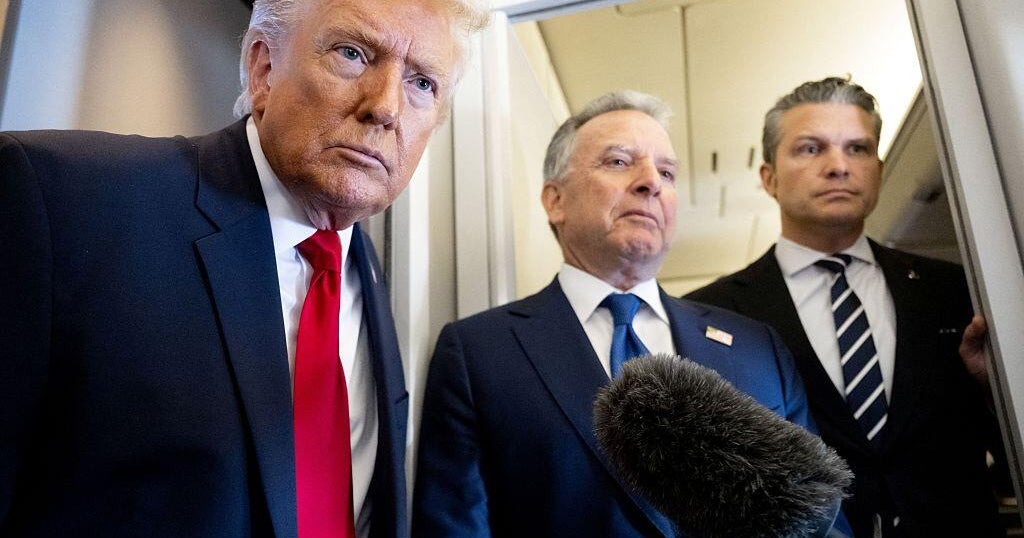
In a troubling display of contradictions between presidential statements and military intelligence, President Trump made explosive claims aboard Air Force One on Saturday, asserting without evidence that Iran was responsible for a devastating attack on a girls’ elementary school. The strike, which occurred on February 28 in the southern Iranian city of Minab, left dozens dead, including young schoolgirls between the ages of 7 and 12. Trump’s comments came just after he attended the dignified transfer ceremony for six American soldiers killed in an Iranian strike in Kuwait on March 1, a somber context that may have influenced his remarks. “In my opinion, based on what I’ve seen, that was done by Iran,” Trump told reporters, going on to justify his assessment by claiming Iranian weapons systems lack precision. “We think it was done by Iran, because they’re very inaccurate with their munitions, they have no accuracy whatsoever,” he added, though he provided no intelligence briefings or concrete evidence to support these allegations.
Pentagon and Intelligence Sources Tell Different Story
The reality on the ground appears to contradict the President’s assertions. When pressed by reporters about Trump’s claims, Defense Secretary Pete Hegseth offered only that the Pentagon was “investigating” the incident, while adding the politically charged statement that “the only side that targets civilians is Iran.” However, behind the scenes, a very different picture was emerging from both U.S. and Israeli intelligence sources. Two separate sources confirmed to CBS News that Israel was not operating in the area at the time of the strike, with one Israeli source explicitly stating that the Israeli Air Force was not behind the attack and wasn’t conducting operations near the school. Perhaps most significantly, a person familiar with the ongoing inquiry revealed that U.S. investigators actually believe the United States may have been responsible for the tragic strike. This internal assessment stands in stark contrast to the President’s public statements and raises serious questions about the coordination between the White House and the intelligence community during this sensitive investigation.
The Human Cost and the Scene of Devastation
The attack struck at the heart of civilian life in Minab, a city located in Iran’s southern Hormozgan province. Video footage captured from a nearby parking lot showed thick black smoke rising from a damaged building, its walls decorated with cheerful murals depicting crayons, children, and apples—the innocent imagery of childhood learning now juxtaposed against the horror of war. CBS News verified the location of the footage, confirming it matched a building in Minab that Iranian media identified as the Shajareh Tayyebeh elementary school. The timing of the attack made the tragedy even more devastating: the strike occurred on a Saturday, which is a regular school day in Iran, meaning the building would have been filled with young students. Iranian state media and health officials reported that the February 28 strike killed dozens of people, with the victims including schoolgirls as young as seven years old. Later reports from Iranian state media claimed that more than 170 people perished in the explosion, though this higher figure has not been independently verified by Western sources.
Geopolitical Complications and Proximity to Military Sites
The investigation into the school strike has been complicated by the building’s location. CBS News confirmed that the elementary school was situated in close proximity to two sites controlled by the Islamic Revolutionary Guard Corps (IRGC), Iran’s elite military force that the United States has designated as a terrorist organization. This proximity to legitimate military targets may explain how such a tragic mistake could occur in the fog of war, as precision strikes aimed at nearby IRGC facilities could have missed their intended targets or caused collateral damage. Iranian officials have consistently blamed the United States and Israel for the strike, accusations that now appear to have some foundation given the emerging intelligence assessments. The presence of IRGC facilities near civilian infrastructure like schools highlights one of the most challenging aspects of modern conflict: distinguishing between military and civilian targets when adversaries intentionally or circumstantially position them in close proximity. This situation underscores the devastating consequences when military operations are conducted in populated areas where children gather for education.
White House Attempts Damage Control
As the disconnect between Trump’s public statements and the actual intelligence assessment became apparent, the White House moved to clarify the situation, though without directly contradicting the President. White House spokesperson Anna Kelly released a statement on Friday emphasizing that “the investigation is ongoing” and stressing that “there are no conclusions at this time.” She characterized any claims to the contrary as “both irresponsible and false,” though this statement came before the President himself made definitive claims about Iranian responsibility the following day. Kelly’s statement also included a defense of American military practices: “As we have said, unlike the terrorist Iranian regime, the United States does not target civilians.” This assertion, while affirming American values and military doctrine, doesn’t address the possibility of tragic errors in targeting or execution—a reality of modern warfare that affects even the most technologically advanced militaries. The careful language of the official White House statement stands in notable contrast to Trump’s off-the-cuff remarks to reporters, highlighting an apparent communication gap between the President and his national security team during a critical investigation.
Broader Implications for Transparency and Accountability
This incident raises profound questions about presidential communication, military accountability, and the fog of war in modern conflicts. The apparent disconnect between what intelligence sources believe happened and what the President publicly claimed illustrates the challenges of maintaining accurate information flow during rapidly evolving military situations. If U.S. forces were indeed responsible for the strike, as investigators reportedly believe, the tragedy represents a catastrophic failure in targeting or intelligence—the very kind of mistake that President Trump attributed to Iranian military capabilities. The incident also highlights the human cost of the escalating conflict between the United States and Iran, a confrontation that has already claimed the lives of six American soldiers in Kuwait and now potentially dozens of Iranian schoolchildren. As the investigation continues, families on both sides of the conflict are left to mourn their losses while waiting for answers about what really happened. The international community will be watching closely to see whether the United States conducts a transparent investigation and, if responsible, takes accountability for what would be a tragic error. How this situation is ultimately resolved may have significant implications for American credibility, regional stability, and the rules of engagement in future conflicts. For now, the colorful murals meant to inspire young students in Minab stand as a heartbreaking reminder that in war, the most innocent often pay the highest price.