


Trump Postpones Iran Strikes Amid Conflicting Claims About Negotiations
In a dramatic early Monday morning announcement, President Donald Trump revealed that he would be delaying planned military strikes against Iranian power facilities, citing what he described as promising diplomatic discussions over the past 48 hours. The proposed airstrikes, which had been threatened just days earlier, were aimed at pressuring Iran to reopen the strategically vital Strait of Hormuz. However, the situation quickly became murkier when Iranian officials flatly denied that any negotiations had taken place, creating confusion about what actual diplomatic progress, if any, had been made. This contradictory messaging highlights the uncertain and volatile nature of current U.S.-Iran relations, with both nations seemingly operating from completely different narratives about their interactions.
Taking to social media in the early hours of Monday, President Trump announced his decision to pull back from immediate military action. “I have instructed the Department of War to postpone any and all military strikes against Iranian power plants and energy infrastructure for a five day period, subject to the success of the ongoing meetings and discussions,” the president wrote. The five-day postponement suggests a temporary reprieve rather than a permanent change in policy, with the threat of military action still hanging over the situation if diplomatic efforts fail to produce results. The president characterized recent conversations as “very good and productive,” painting an optimistic picture of potential breakthrough negotiations that could resolve the standoff over the Strait of Hormuz without resorting to military force.
Iran Denies Any Diplomatic Contact With Washington
Almost immediately after President Trump’s announcement, Iranian officials pushed back forcefully against his characterization of recent events. An unnamed Iranian source speaking to state-controlled media stated categorically that there had been “no direct or indirect communication with the U.S.” Iran’s Foreign Ministry released an official statement denying the claims made by President Trump regarding negotiations between the United States and the Islamic Republic. This stark contradiction raised immediate questions about the nature of any communications that may have occurred and whether intermediaries or back-channel discussions might account for the discrepancy in the two nations’ accounts. When Fox Business anchor Maria Bartiromo asked President Trump about this apparent contradiction, he reportedly expressed confusion about Iran’s denial, insisting that talks had indeed taken place as recently as the previous night. According to Bartiromo, the president specified that these discussions involved U.S. special envoy Steve Witkoff and Jared Kushner, the president’s son-in-law who has taken on various diplomatic roles. President Trump further told Bartiromo that Iran wants “badly” to reach a deal, suggesting that despite the public denials, Iranian leadership is eager to find a diplomatic resolution to the crisis.
From Threats of Obliteration to Diplomatic Pause
The president’s Monday morning announcement represented a significant shift in tone from his messaging just days earlier. Over the weekend, President Trump had posted on social media with dramatically different language, declaring that if Iran failed to open the Strait of Hormuz, the United States would “hit and obliterate their various POWER PLANTS, STARTING WITH THE BIGGEST ONE FIRST!” The all-caps emphasis and aggressive language suggested that military action was not only being considered but was imminent and inevitable if Iran didn’t comply with American demands. This rapid transition from threatening obliteration to announcing productive talks and postponing strikes illustrates the unpredictable nature of the current administration’s approach to the Iranian crisis. U.S. Ambassador to the United Nations Mike Waltz reinforced the administration’s willingness to consider military options during an appearance on “Face the Nation with Margaret Brennan” on Sunday. When discussing potential military actions, Waltz stated that “to the extent we’re degrading their military capability and their defense industrial base, all options should be on the table, and the president’s made that very clear.” His comments indicated that the administration views Iranian infrastructure as legitimate military targets in the context of the broader conflict.
International Concerns About War Crimes and Escalation
The potential targeting of Iran’s energy infrastructure has raised serious concerns within the international community about violations of international law and the rules of war. United Nations Secretary-General António Guterres told Politico last week that attacks on energy infrastructure by either side in the conflict could potentially constitute a war crime under international humanitarian law. This warning represented a significant intervention by the U.N.’s top diplomat and highlighted the grave risks associated with expanding the conflict to include civilian infrastructure. However, Ambassador Waltz pushed back against this characterization when asked about it during his Sunday interview. He argued that the unique nature of Iran’s governmental structure and its use of infrastructure justifies considering these facilities as legitimate military targets. “When you have a regime that has its grips in so much critical infrastructure that’s using it to further, not only the repression of its own people, to attack its neighbors and in contravention of U.N. sanctions, to march towards a nuclear weapon, then that makes those legitimate targets,” Waltz explained. This justification attempts to reframe attacks on power plants and energy facilities not as strikes against civilian infrastructure but as military operations against a regime that uses all its resources for military and repressive purposes.
The Strait of Hormuz Crisis and Global Economic Impact
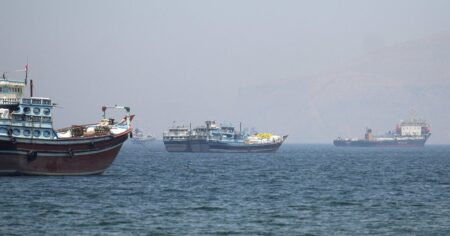
At the heart of this escalating crisis lies the Strait of Hormuz, a narrow waterway that serves as one of the world’s most critical chokepoints for energy transportation. Before the current conflict with Iran began, approximately 20% of the world’s oil shipments passed through this strategic passage, making it vital to the global economy and energy markets. Since the war began, however, the Strait has been effectively closed, creating significant disruptions to international oil flows and contributing to volatility in energy markets worldwide. Over the weekend, as President Trump issued his threats regarding Iranian nuclear power plants, Iranian officials responded with their own ultimatum. Iran stated that the Strait would remain “completely closed” if the United States followed through with strikes on nuclear facilities, effectively holding global oil supplies hostage to the diplomatic and military standoff. This mutual escalation of threats created a dangerous feedback loop where each side’s actions and statements prompted more aggressive responses from the other. The immediate market reaction to President Trump’s Monday morning announcement of postponed strikes demonstrated just how closely financial markets are watching this situation. Both oil and gas prices fell immediately following the news, as traders interpreted the postponement as reducing the immediate risk of a wider conflict that could further disrupt energy supplies. This market response illustrates how the confrontation between Washington and Tehran has implications far beyond the two nations directly involved, affecting the global economy and the daily lives of people around the world who depend on stable energy prices.