
Trump Orders Release of UFO Files: A New Chapter in America’s Search for Extraterrestrial Truth
Presidential Directive Signals Transparency Push on Decades-Old Mystery
In a move that has captured public imagination and reignited one of humanity’s most enduring questions, President Donald Trump issued a directive on Thursday calling for the declassification and release of government files related to unidentified flying objects (UFOs) and any information concerning “alien and extraterrestrial life.” The announcement, made through the president’s Truth Social platform, instructed Defense Secretary Pete Hegseth and other agency leaders to begin identifying and releasing relevant documentation that has been the subject of public fascination, conspiracy theories, and serious scientific inquiry for generations. This directive represents a significant moment in the ongoing conversation about government transparency regarding unexplained aerial phenomena and the possibility of life beyond Earth, though the extent and nature of what might actually be revealed remains uncertain.
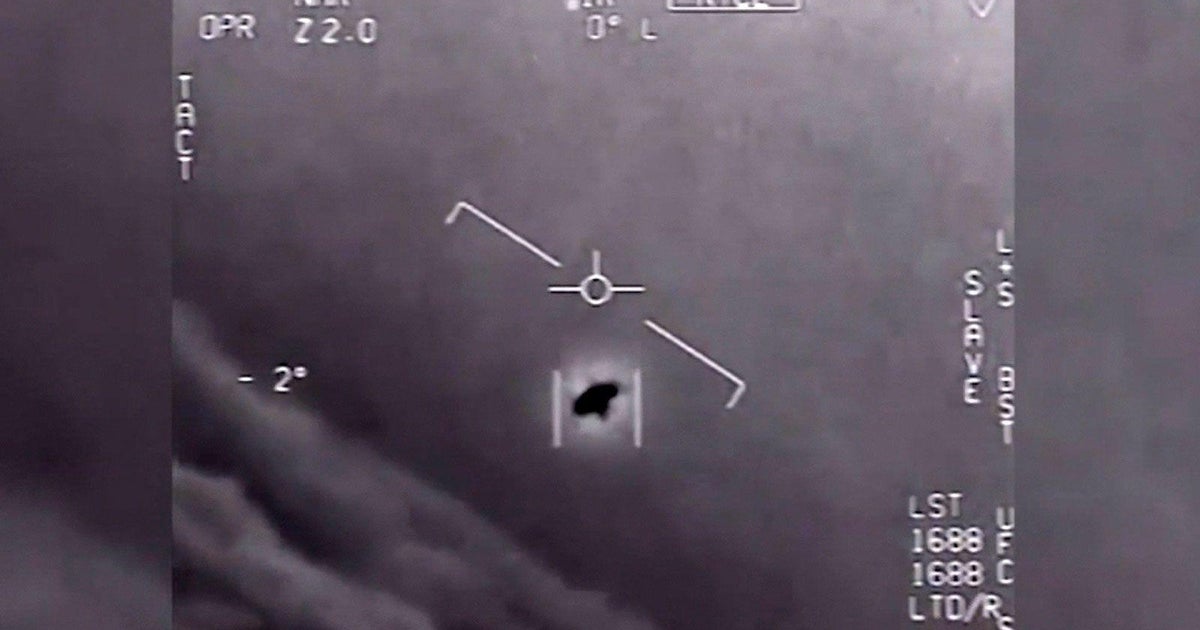
The president’s instructions were comprehensive, calling not just for UFO-related files but for “any and all other information connected to these highly complex, but extremely interesting and important, matters.” This broad language suggests that the administration may be preparing to address a wide range of documentation that has accumulated over decades of military and intelligence observations, investigations, and reports. However, it’s important to note that the actual content and significance of these files remains unknown to the public. The Pentagon has maintained official records on what it formally designates as “unidentified aerial phenomena” or UAPs for many years, representing a more scientific and less sensationalized approach to studying unexplained sightings and encounters reported by military personnel and civilians alike.
The State of Official UFO Investigations and What We Actually Know
Despite the excitement that such announcements generate, it’s crucial to understand what official government investigations have actually concluded about these mysterious phenomena. According to a comprehensive report released by the Pentagon in 2024, there is currently no evidence from any government investigation into UAPs that has confirmed the existence of extraterrestrial life. This doesn’t mean that all sightings have been explained or that the government has dismissed the topic entirely—quite the opposite, in fact. The military has taken these reports seriously enough to establish dedicated investigation programs, recognizing that unexplained aerial phenomena could represent advanced technology from foreign adversaries, previously unknown atmospheric or physical phenomena, or equipment malfunctions that need to be understood for national security purposes.
The Pentagon’s tracking of UAPs represents a systematic effort to catalog and analyze reports that come primarily from trained military observers, including pilots and radar operators, whose credibility and observational skills are generally considered reliable. Many of these reports describe objects or phenomena that display flight characteristics that don’t correspond with known aircraft capabilities, such as extreme acceleration, hovering without visible means of propulsion, or movements that would subject any human occupant to fatal g-forces. While these characteristics are genuinely puzzling and worthy of serious investigation, the leap from “unexplained” to “extraterrestrial” is one that official government reports have consistently declined to make based on the available evidence.
Obama’s Comments Spark Renewed Interest and Political Exchange
The timing of President Trump’s announcement is particularly interesting given that it came just days after former President Barack Obama made headlines by telling a podcaster that aliens are real. Obama’s comments immediately went viral and sparked intense speculation about what former presidents might know about extraterrestrial life that hasn’t been shared with the public. However, Obama quickly clarified his remarks, explaining that he never saw evidence of contact between humans and extraterrestrial beings during his eight years in the White House. His belief in the existence of alien life, he explained, stems from a more scientific and statistical perspective—the observable universe is so incomprehensibly vast, containing billions of galaxies each with billions of stars, that the mathematical probability strongly suggests life has emerged elsewhere, even if we haven’t detected it or made contact with it.
President Trump, when asked about Obama’s comments on Thursday, expressed uncertainty about whether aliens actually exist but took the opportunity to criticize his predecessor, claiming that Obama “made a big mistake” and “gave classified information.” This accusation suggests that Trump believes Obama’s comments, even in their clarified form, crossed a line regarding what former presidents should publicly discuss about sensitive national security matters. In a characteristically theatrical gesture, Trump suggested he might “get him out of trouble by declassifying” the information, turning what could have been a moment of bipartisan interest in transparency into a political exchange that highlights the persistent rivalry between the two former presidents.
The Challenge of Transparency and Public Expectations
The announcement of declassification efforts regarding UFO files presents both opportunities and challenges for government transparency. On one hand, there is legitimate public interest in understanding what the government knows about unexplained phenomena, particularly when military personnel have reported encounters that raise questions about airspace security and technological capabilities. Greater transparency can help build public trust and may even advance scientific understanding if the data is made available to researchers who can apply rigorous analytical methods. On the other hand, there’s a significant risk that public expectations will far exceed what the actual files contain, potentially leading to disappointment or fueling conspiracy theories that the “really interesting” information is still being withheld.
The reality is that most government documentation on UAPs likely consists of ambiguous radar data, witness testimony describing observations that couldn’t be immediately explained, photographs or videos of unclear provenance or quality, and investigative reports that conclude with uncertainty rather than definitive answers. The most common explanations for UAP sightings historically have included misidentification of conventional aircraft, weather balloons, atmospheric phenomena, celestial objects, or technological equipment malfunctions. While this doesn’t account for all cases—there remains a subset of reports that truly defy easy explanation—the files are unlikely to contain the kind of dramatic proof of alien visitation that popular culture has primed many people to expect. Managing these expectations while still providing meaningful transparency will be one of the key challenges facing the administration as this declassification process moves forward.
Looking Ahead: What This Means for Science, Security, and Public Discourse
As this story continues to develop, several important questions remain unanswered. What criteria will be used to identify which files should be released? Will there be redactions for legitimate national security concerns, such as protecting classified sensor capabilities or intelligence sources? How will the information be contextualized so that the public can understand what they’re seeing without misinterpretation? And perhaps most importantly, will this release actually provide new insights, or will it largely confirm what serious researchers already suspected—that the government has investigated numerous unexplained sightings but hasn’t found convincing evidence of extraterrestrial contact?
Regardless of what the files ultimately reveal, President Trump’s directive represents a notable moment in the long history of public fascination with the possibility of life beyond Earth. Whether motivated by genuine commitment to transparency, political calculation, or simple personal interest in the subject, the move acknowledges that questions about UFOs and alien life have moved from the fringes of conspiracy theory into mainstream public discourse worthy of serious governmental response. As we await further developments in this breaking story, it’s worth remembering that the search for truth about our place in the universe—whether that truth comes from government files or astronomical observation—represents one of humanity’s most profound and enduring quests. The release of these documents, whatever they contain, will add another chapter to that ongoing story, reminding us that sometimes the questions we ask are just as important as the answers we find.