
President Trump Announces $10 Billion U.S. Contribution to New “Board of Peace” Initiative
A Major Financial Commitment Amid Budget Cuts
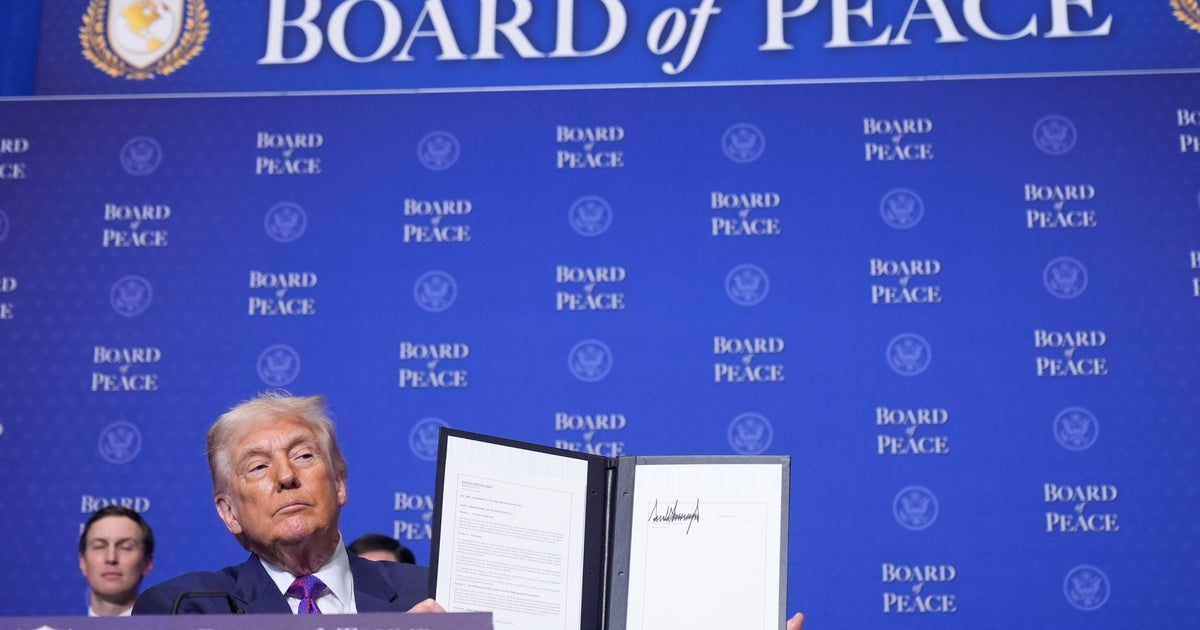
In a significant announcement that has raised both eyebrows and questions, President Trump revealed on Thursday that the United States will pledge $10 billion to his newly established “Board of Peace,” an organization created as part of his comprehensive 20-point peace plan for Gaza. Speaking to representatives from approximately 50 nations gathered in Washington, D.C., the president framed this substantial financial commitment as a worthwhile investment in peace. “I want to let you know that the United States is going to make a contribution of $10 billion to the Board of Peace,” Trump stated, characterizing the amount as “a very small number when you look at that compared to the cost of war.” However, the announcement immediately sparked confusion and concern, as the administration has not yet clarified where exactly this $10 billion will come from, particularly given the president’s recent aggressive cuts to foreign aid programs and his repeated insistence that America must prioritize its own domestic needs before addressing international concerns.
Questions About Funding Sources and Priorities
The mystery surrounding the funding source for this massive pledge has become a central point of contention and curiosity. The Trump administration has been systematically slashing foreign aid budgets, with the president consistently arguing that American taxpayer dollars should be directed toward solving problems at home rather than abroad. This makes the $10 billion commitment to the Board of Peace particularly puzzling to observers and critics alike. When pressed for details about where the money would come from, the White House remained silent, not immediately responding to requests for clarification on the funding source. This lack of transparency has led to speculation about whether the funds will come from existing budgets, require new congressional approval, or perhaps be reallocated from other international programs. Other countries attending the inaugural meeting have also pledged contributions to the board’s efforts, but like the U.S. commitment, there’s currently no clear framework for how these international donations will be tracked, managed, or spent. The absence of a transparent accountability mechanism has raised concerns among fiscal watchdogs and foreign policy experts about how effectively this substantial investment will be monitored and whether it will achieve its stated goals.
The Board’s Mission and Expanding Scope
President Trump established the Board of Peace with an initial focus on securing and rebuilding the Gaza Strip, a region that has experienced ongoing conflict and humanitarian challenges for decades. However, the president has hinted that the board’s mission may not remain confined to Gaza alone, suggesting a potentially broader mandate that could expand to address other international conflicts and peacekeeping efforts. The inaugural meeting of the board took place against a dramatic backdrop of escalating military tensions in the Middle East, with the United States conducting a massive military buildup as the president weighs whether to authorize strikes against Iran. Scores of American warplanes have been deployed to join a naval armada heading toward the region, creating a stark contrast between the peace talks happening in Washington and the preparations for potential military action thousands of miles away. This juxtaposition underscores the complex and sometimes contradictory nature of the administration’s approach to Middle Eastern policy, simultaneously pursuing diplomatic initiatives while maintaining a strong military presence and making explicit threats of force.
Ultimatum to Iran and Regional Tensions
During the Board of Peace meeting, President Trump delivered a stark ultimatum to Iran, giving the nation approximately 10 days to reach an agreement to end its nuclear program or face unspecified consequences. “Maybe we’re going to make a deal,” the president said, adding ominously, “You’re going to be finding out over the next probably 10 days,” before warning that “bad things will happen” if Iran doesn’t comply. This deadline creates an atmosphere of urgency and uncertainty, as the international community watches to see whether diplomatic efforts will succeed or whether the region will face further military confrontation. The timing of this ultimatum, delivered during a meeting ostensibly focused on peace and reconstruction in Gaza, highlights the interconnected nature of Middle Eastern conflicts and the administration’s attempt to address multiple regional challenges simultaneously. The president’s approach combines elements of diplomacy, economic investment, and military pressure, creating a complex strategy that supporters view as comprehensive and critics see as potentially contradictory or destabilizing.
A New Relationship with the United Nations
In remarks that signal a significant shift in how the United States might engage with international organizations, President Trump outlined an unusual new relationship between his Board of Peace and the United Nations. The president has long been critical of the UN, frequently questioning its effectiveness and value to American interests. However, on Thursday, he acknowledged that the United Nations has “great potential,” even while suggesting it hasn’t lived up to its capabilities. In a particularly eyebrow-raising statement, Trump suggested that his newly created Board of Peace would assume some kind of oversight role over the UN itself. “The Board of Peace is going to almost be looking over the United Nations and making sure it runs properly,” the president declared, though he provided no details about how this oversight would function or under what legal or international authority such supervision would be established. This proposition raises fundamental questions about international governance, sovereignty, and the role of multilateral institutions. The idea of a board created by one nation, even one as powerful as the United States, claiming oversight authority over an organization comprising 193 member states represents a potentially radical reimagining of international relations and peacekeeping structures.
Uncertainty and the Path Forward
As the dust settles on President Trump’s announcement, the international community, American lawmakers, and foreign policy experts are left with more questions than answers about the Board of Peace initiative. The lack of clarity regarding funding sources, accountability mechanisms, the scope of the board’s authority, and its relationship with existing international institutions creates significant uncertainty about how this ambitious plan will actually function in practice. While the goal of achieving peace and rebuilding war-torn regions like Gaza is universally shared, the means by which this new board will pursue these objectives remains vague. The coming days will be crucial, not only because of the 10-day deadline the president set for Iran but also because stakeholders will be watching closely to see whether the administration provides the transparency and detail necessary to transform this announcement from a bold statement into a workable policy framework. The success or failure of the Board of Peace could have far-reaching implications not just for Gaza and the Middle East, but for how the United States engages with international peacekeeping and reconstruction efforts in the years to come, potentially reshaping the landscape of international cooperation and conflict resolution.