
Trump Administration Takes Bold Step on Psychedelic Medicine Research
A New Chapter in Mental Health Treatment
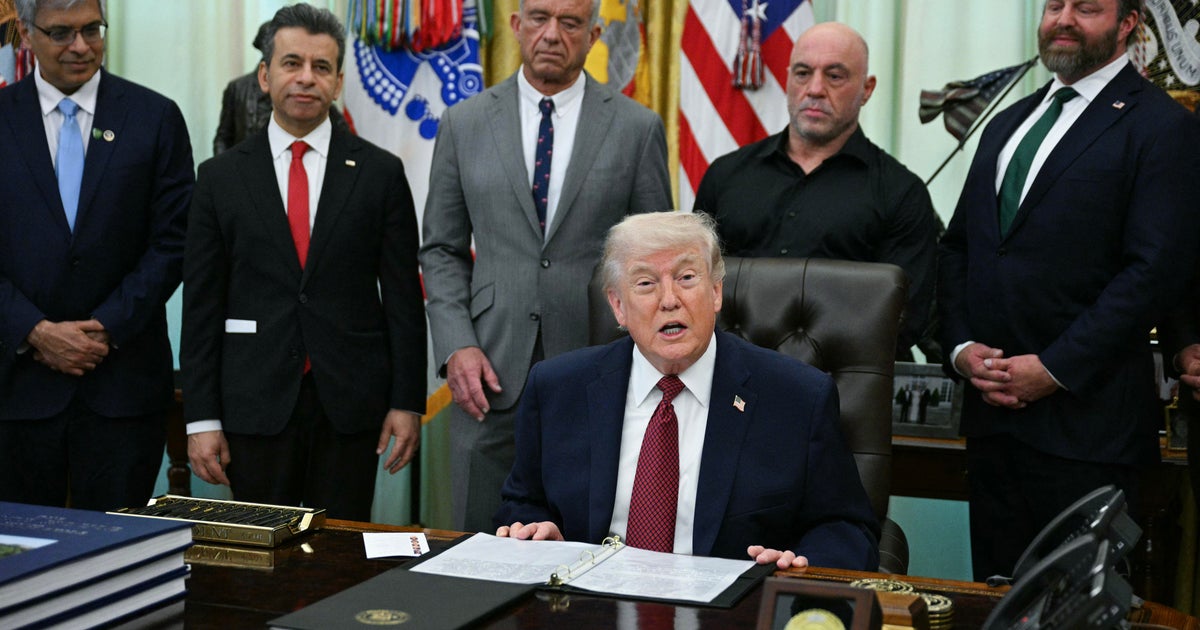
In a significant policy shift that could reshape America’s approach to mental health care, President Trump has signed an executive order to reduce restrictions on ibogaine, a controversial psychedelic substance that has shown promise in treating conditions like post-traumatic stress disorder, addiction, and depression. The signing ceremony brought together an unusual coalition of officials, including Health and Human Services Secretary Robert F. Kennedy Jr. and popular podcaster Joe Rogan, signaling a broader cultural and political shift toward alternative treatments for mental health conditions. During the announcement, President Trump emphasized the “life-changing potential” of psychedelic drugs, noting that this initiative would “dramatically accelerate access to new medical research and treatments.” The executive order represents a rare bipartisan-friendly issue in today’s polarized climate, with the President stating that “everybody is so strongly in favor of this,” particularly when it comes to helping veterans struggling with mental health challenges and alarmingly high suicide rates.
Understanding Ibogaine and Its Potential
Ibogaine is a naturally occurring compound extracted from a shrub native to Central Africa, and it has been used in various forms for decades in countries outside the United States. The substance has garnered attention from researchers and advocates who believe it could offer breakthrough treatments for some of the most challenging mental health conditions facing Americans today, including severe depression, anxiety, opioid addiction, PTSD, and traumatic brain injuries. What makes ibogaine particularly intriguing to researchers is its reported ability to help reset brain chemistry in ways that conventional medications cannot, potentially offering relief to patients who have exhausted other treatment options. However, the scientific community has been cautious about fully embracing ibogaine due to limited large-scale studies. The current evidence base consists primarily of smaller observational studies and open-label trials, with only one double-blind, placebo-controlled randomized clinical trial completed to date. This lack of rigorous scientific validation has kept ibogaine classified as a Schedule I substance by the Drug Enforcement Administration, placing it in the same category as heroin and ecstasy—substances considered to have high abuse potential and no accepted medical use.
Federal Investment and Research Pathways
The Trump administration is backing its policy change with substantial financial commitment, announcing a $50 million federal research investment specifically dedicated to studying ibogaine. This funding matches a similar commitment made by Texas Governor Greg Abbott last year, who signed legislation approving $50 million for psychedelic research in his state. FDA Commissioner Marty Makary announced that three psychedelics, including ibogaine, would be added to the National Priority Voucher pilot program—a special designation that dramatically reduces review times for drugs and biological products that address urgent national health priorities. This expedited pathway could shave years off the typical drug approval process, potentially bringing treatments to patients much faster than traditional FDA review timelines would allow. Additionally, the FDA will begin the process of enabling researchers to conduct human trials on ibogaine, which is essential for generating the kind of rigorous scientific evidence needed to determine the drug’s true safety and efficacy. The administration is also opening a pathway for ibogaine to be administered to “desperately ill patients” under the FDA’s Right To Try rule, which allows terminally ill patients to access experimental treatments that haven’t yet received full FDA approval.
The Veterans Crisis and Urgent Need for Solutions
A central motivation behind this executive order is the ongoing crisis of veteran suicide and mental health challenges facing those who have served in the military. President Trump specifically highlighted veterans during his announcement, acknowledging that traditional treatments have failed too many of those who risked their lives for their country. The statistics are sobering: veterans face significantly higher rates of PTSD, depression, substance abuse, and suicide compared to the general population, and conventional treatments often provide inadequate relief. Many veterans have taken matters into their own hands, traveling to unregulated clinics in Mexico, the Caribbean, and other countries where ibogaine treatment is available, despite the legal and medical risks involved. These underground treatment centers operate without the oversight and safety protocols that would be standard in FDA-approved facilities, yet desperate veterans continue to seek them out because they feel they have no other options. Commissioner Makary captured the urgency of the situation when he stated, “This is an unmet public health need and there are potentially promising treatments. That’s why there is a sense of urgency around this.” The hope is that by facilitating legitimate research and potentially approved treatments within the United States, veterans and other patients will have access to these therapies in safe, regulated environments with proper medical supervision.
Safety Concerns and the Risk-Benefit Calculation
Despite the enthusiasm surrounding ibogaine’s potential, significant safety concerns cannot be ignored. Scientific studies have documented that ibogaine can cause dangerous heart rhythm disturbances, which in some cases have proven fatal. A comprehensive 2023 review examining 24 studies that included 705 participants found the risk of death from cardiac problems “worrying,” documenting at least 27 deaths directly linked to ibogaine use. These fatalities have occurred both in unregulated clinic settings and in contexts where medical supervision was present, highlighting that ibogaine is not without serious risks. The cardiac issues stem from ibogaine’s effects on the heart’s electrical system, which can lead to potentially deadly arrhythmias, particularly in individuals with pre-existing heart conditions or when the substance is combined with other drugs. This is precisely why rigorous clinical trials are so essential—researchers need to identify which patients are good candidates for ibogaine treatment, what doses are safe and effective, what monitoring protocols should be in place, and how to manage potential complications. Critics of the rapid move toward ibogaine access worry that the administration may be prioritizing speed over safety, potentially exposing vulnerable patients to unnecessary risks before the science is sufficiently developed. However, supporters argue that the current system has left too many people without hope, and that carefully managed expanded access, combined with aggressive research investment, represents a reasonable middle ground that could save lives while building the evidence base.
Looking Forward: What Comes Next
The details of how this executive order will be implemented remain somewhat unclear, with sources indicating that strategies were still being finalized in internal discussions this week. The administration will need to navigate complex regulatory terrain, balancing the desire for rapid access with the imperative to protect patient safety and generate credible scientific evidence. Questions remain about how the $50 million in federal research funding will be distributed, which institutions will lead the clinical trials, what populations will be prioritized for study, and what timelines are realistic for producing meaningful results. The addition of psychedelics to the National Priority Voucher program could incentivize pharmaceutical companies and research institutions to invest in this area, potentially accelerating development beyond what government funding alone could achieve. There’s also the broader question of how this policy shift might affect the legal status of other psychedelic substances currently being studied for therapeutic use, such as psilocybin (found in “magic mushrooms”) and MDMA (commonly known as ecstasy), both of which have shown promise in clinical trials for PTSD and other conditions. The inclusion of Joe Rogan in the signing ceremony is noteworthy, as it signals the administration’s recognition of the role that alternative media and cultural influencers have played in changing public attitudes toward psychedelic medicine. What seemed fringe just a decade ago has increasingly moved into the mainstream conversation about mental health treatment. If the research investment and expedited pathways lead to successful clinical trials demonstrating clear benefits with manageable risks, ibogaine and other psychedelics could become standard treatment options within the next several years. However, if safety concerns prove more serious than anticipated or if the therapeutic benefits don’t hold up under rigorous scientific scrutiny, this bold experiment could face significant setbacks. For now, patients, researchers, veterans’ advocates, and mental health professionals will be watching closely as this new chapter in American medicine unfolds.