
Trump Attacks Pope Leo XIV Over Foreign Policy and Immigration Stance
The relationship between political leaders and religious authorities has always been complex, but recent events have brought this tension into sharp focus. In an unprecedented public confrontation, President Trump has launched a scathing attack on Pope Leo XIV through social media, marking one of the most dramatic clashes between an American president and the leader of the Catholic Church in modern history. The dispute centers on fundamentally different worldviews regarding war, immigration, and America’s role on the global stage. What makes this conflict particularly noteworthy is not just the harsh language used by the president, but the deep philosophical divide it reveals between secular political power and spiritual moral authority.
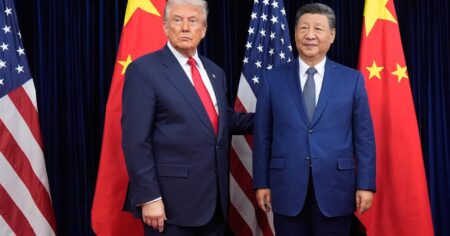
The president’s criticism came in a lengthy social media post on Sunday night, where he didn’t mince words about his displeasure with the pontiff. Trump characterized Pope Leo XIV as “WEAK on Crime, and terrible for Foreign Policy,” launching into a detailed explanation of why he believes the pope’s positions are harmful to American interests. The president specifically took issue with the pope’s criticism of the war in Iran and his statements opposing the Trump administration’s aggressive stance on illegal immigration. Trump wrote that he doesn’t want “a Pope who thinks it’s OK for Iran to have a Nuclear Weapon” and expressed frustration with Leo’s criticism of America’s military action in Venezuela. The president justified the Venezuela operation by noting that the country had been “sending massive amounts of Drugs into the United States” and allegedly emptying their prisons of dangerous criminals, including “murderers, drug dealers, and killers,” directly into America. This represents a president who clearly believes that national security and law enforcement priorities should supersede moral objections, even from one of the world’s most influential religious leaders.
The Pope’s Call for Peace and Dialogue
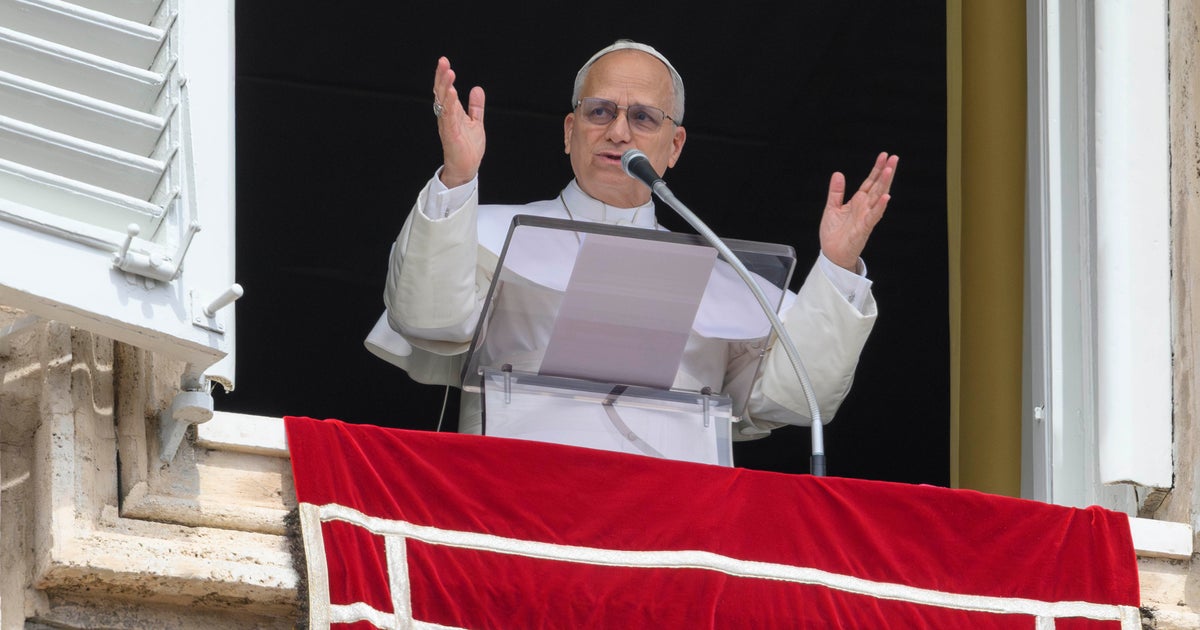
Pope Leo XIV has been increasingly vocal in his opposition to military conflicts and what he sees as dangerous escalation of violence around the world. The pontiff called President Trump’s threat to completely destroy Iranian civilization “truly unacceptable,” using strong language that demonstrated the depth of his concern. Rather than simply making statements from the Vatican, Leo has been actively encouraging Catholics and people of conscience everywhere to take action, urging them to “contact the authorities — political leaders, congressmen — to ask them, tell them to work for peace and to reject war, always.” During a prayer vigil for peace at St. Peter’s Basilica on Saturday, the pope delivered what many interpreted as a direct rebuke to Trump’s approach, even though he didn’t mention the president by name. His words were powerful and unmistakable: “Enough with the idolatry of self and money! Enough with the display of force! Enough with war! True strength is manifested in serving life.” These statements reflect the Catholic Church’s longstanding teaching on peace and the dignity of human life, principles that Leo clearly believes are being violated by current American military policy.
The pope didn’t stop there. He passionately urged world leaders to pursue diplomatic solutions rather than military ones, pleading with them to recognize that “this is the time for peace!” He called on leaders to “sit at the tables of dialogue and mediation, not at the tables where rearmament is planned and death is deliberated!” This represents a fundamental challenge to the militaristic approach favored by the Trump administration. On Friday, Leo took to social media to reinforce his message, writing that “God does not bless any conflict” and declaring that “Anyone who is a disciple of Christ, the Prince of Peace, is never on the side of those who once wielded the sword and today drop bombs.” Perhaps most provocatively, during a Palm Sunday homily last month, the pope appeared to directly criticize Defense Secretary Pete Hegseth, stating that Jesus “does not listen to the prayers of those who wage war.” These statements represent some of the strongest papal criticism of American military policy in recent memory and demonstrate Leo’s willingness to speak truth to power, regardless of political consequences.
Trump’s Personal Attacks and Political Calculations
President Trump’s response went beyond policy disagreements into personal territory, making claims about the pope’s election that many Vatican observers would consider unfounded. The president asserted that Leo “was only put there by the Church because he was an American, and they thought that would be the best way to deal with President Donald J. Trump.” This claim suggests that Trump believes the pope’s election was politically motivated rather than spiritually guided, a perspective that many Catholics would find deeply troubling. Trump made his position crystal clear: “I don’t want a Pope who criticizes the President of the United States.” This statement reveals a fundamental misunderstanding of the pope’s role, or perhaps a deliberate attempt to frame the pontiff as someone who should defer to political authority rather than speak from moral conviction. The president then offered what he apparently considered advice, telling Leo to “get his act together as Pope, use Common Sense, stop catering to the Radical Left, and focus on being a Great Pope, not a Politician.” Trump warned that the pope’s current approach “is hurting him very badly and, more importantly, it’s hurting the Catholic Church!”
When speaking to reporters Sunday night after returning to Washington, D.C., Trump doubled down on his criticism, repeating his claims and adding new attacks. “We don’t like a pope who says it’s OK to have a nuclear weapon,” Trump told journalists, apparently mischaracterizing or misunderstanding the pope’s actual position. He then offered a blunt assessment of the pontiff’s performance: “I don’t think he’s doing a very good job. He likes crime, I guess.” This accusation—that the pope “likes crime”—represents one of the most inflammatory statements ever made by an American president about a sitting pope. Trump concluded by labeling Leo “a very liberal person,” using a political categorization that seems designed to discredit the pope among conservative Americans. These comments reveal a president who sees the world primarily through a political lens and who appears unable or unwilling to recognize that religious leaders operate from a different set of principles and priorities than political ones.
The Deeper Conflict Between Political Power and Moral Authority
This confrontation between President Trump and Pope Leo XIV represents more than just a disagreement between two powerful individuals—it highlights a fundamental tension in how we understand leadership, authority, and moral responsibility in the modern world. The president operates from a framework of national sovereignty, security, and what he perceives as practical necessity. From his perspective, protecting American citizens from foreign threats, whether those threats come in the form of nuclear weapons, illegal drugs, or criminal immigrants, justifies strong military action and strict border enforcement. He views the pope’s criticism as naive at best and actively harmful to American interests at worst. For Trump, the pope’s calls for peace and dialogue represent weakness in the face of real dangers, and his compassion for immigrants and refugees represents a failure to prioritize American citizens who might be victimized by those who enter the country illegally.
Pope Leo XIV, however, operates from an entirely different framework—one rooted in the teachings of Jesus Christ and the Catholic Church’s social doctrine. From this perspective, all human life has inherent dignity, war is a failure of human wisdom and compassion, and the powerful have a special obligation to protect the vulnerable rather than exploit or destroy them. The pope sees the president’s threats to destroy entire civilizations, his willingness to use overwhelming military force, and his harsh treatment of desperate migrants as violations of fundamental moral principles that no political calculation can justify. For Leo, being “weak” on issues of war and peace is actually being strong in the truest sense—showing the moral courage to resist the easy path of violence and the humility to recognize that no nation, however powerful, has the right to play God with the lives of millions of people. This clash represents an age-old tension between those who wield political and military power and those who claim to speak for higher moral truths, a tension that has played out countless times throughout history but rarely with such public intensity in the modern American context.
The implications of this conflict extend far beyond the personal relationship between these two leaders. For Catholics in America, particularly those who support President Trump, this creates a difficult tension between political loyalty and religious authority. For the wider world, it raises questions about America’s role on the global stage and whether military might and national interest should trump international norms and moral considerations. As this confrontation continues to unfold, it will be worth watching how other religious leaders, political figures, and ordinary citizens respond to these fundamentally different visions of what leadership looks like and what values should guide our collective decisions about war, peace, immigration, and human dignity.