


Supreme Court Strikes Down Trump Tariffs: What It Means for American Businesses and Trade
A Landmark Ruling That Hasn’t Ended the Uncertainty
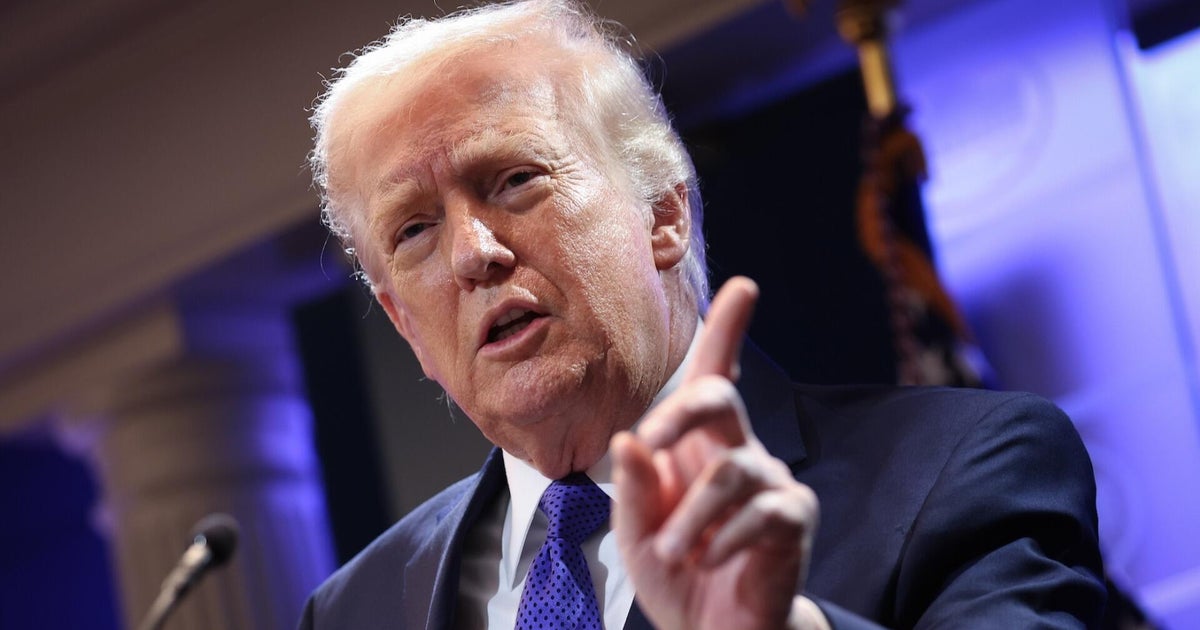
In a significant blow to President Trump’s trade agenda, the Supreme Court delivered a 6-3 ruling on Friday that struck down the administration’s sweeping “Liberation Day” tariffs. The decision found that the International Emergency Economic Powers Act (IEEPA) doesn’t give the president the authority to impose such broad-based tariffs, effectively limiting how the administration can use emergency powers to reshape trade policy. However, rather than bringing clarity to American businesses and trading partners, the ruling has only deepened the confusion surrounding U.S. trade policy. Within hours of the Supreme Court’s decision, President Trump responded by announcing a temporary 10% global tax on imports, which he then increased to 15% just a day later. The president didn’t hide his frustration, taking to social media to blast the high court’s ruling as “ridiculous” and “extraordinarily anti-American.” William Reinsch, a senior adviser at the Center for Strategic and International Studies and former president of the National Foreign Trade Council, captured the prevailing mood among businesses: “There is huge uncertainty facing businesses and U.S. trading partners following the landmark decision. There is a lot of dust that has yet to be settled—companies don’t know what they will be charged.” The situation leaves American companies in limbo, uncertain about what tariff rates they’ll face and how long any particular policy will remain in effect.
The President’s Defiant Response and Legal Maneuvering
President Trump wasted no time in finding alternative legal grounds for his tariff policies. After the Supreme Court ruling invalidated his use of IEEPA, he quickly pivoted to Section 122 of the Trade Act of 1974, a provision that allows presidents to impose duties up to 15% for 150 days to address “large and serious” balance-of-payment issues. This legal maneuver demonstrates the administration’s determination to maintain its aggressive tariff strategy despite judicial setbacks. The president made his intentions crystal clear in a warning posted on Truth Social: “Any Country that wants to ‘play games’ with the ridiculous supreme court decision, especially those that have ‘Ripped Off’ the U.S.A. for years, and even decades, will be met with a much higher Tariff, and worse, than that which they just recently agreed to. BUYER BEWARE!!!” This combative stance raises serious questions about the stability of recently negotiated trade agreements, particularly for countries that had agreed to tariff rates higher than the new 15% baseline. The Trump administration now faces a delicate balancing act: maintaining credibility with trading partners who negotiated in good faith while simultaneously pursuing the president’s broader tariff agenda through whatever legal means remain available.
Trading Partners Reconsider Their Agreements
The rapid shifts in U.S. trade policy have left international partners scrambling to reassess their positions. Some countries that recently negotiated deals with tariff rates above 15% are now questioning whether those agreements still make sense. The situation has created what Bernd Lange, chair of the European Parliament’s international trade committee, called “pure tariff chaos on the part of the U.S. administration.” Lange elaborated on the confusion: “No one can make sense of it anymore—only open questions and growing uncertainty for the EU and other U.S. trading partners.” The European Union is seriously considering pausing ratification of its new trade agreement with the United States, while India has postponed a trade visit to Washington that was intended to finalize an interim deal that included an 18% tariff rate. U.S. Trade Representative Jamieson Greer tried to reassure partners during a Sunday appearance on “Face the Nation,” insisting that the administration stands by its trade deals and expects partners to do the same. He claimed that the agreements “were not premised on whether or not the emergency tariff litigation would rise or fall” and stated he hadn’t heard from anyone saying their deal was off. However, his optimistic assessment seems at odds with the growing skepticism among America’s trading partners about the reliability and consistency of U.S. trade commitments.
The Uncertain Road Ahead for Tariff Policy
The 150-day time limit on the Section 122 tariffs introduces yet another layer of uncertainty into an already chaotic situation. After that period expires, Congress would need to extend the tariffs—a prospect that faces significant political hurdles. Some Republican lawmakers, including Senator Rand Paul of Kentucky, have already voiced opposition to the tariff policies, suggesting that congressional approval might prove elusive. Trade expert Colin Grabow from the Cato Institute explained the predicament facing businesses: “The baseline for a lot of people is that these 15% tariffs are going to be in place in the next 150 days—but beyond that, what does that look like? Also, uncertainty.” When the Section 122 tariffs expire, the Trump administration could turn to other legal provisions, such as Section 301 of the Trade Act, which would allow country-specific tariffs if the U.S. Trade Representative determines that another nation engages in unfair trade practices. However, this approach would raise new questions about timing, specific tariff levels, and which countries would be targeted. As Grabow bluntly put it: “No one should be under the impression, because of the IEEPA ruling, that the tariff question has been solved. The only questions are, ‘What are the exact levels, what are the tools and when will they come into force?'” The current effective U.S. tariff rate stands at 13.7%, according to the Yale Budget Lab, which is actually lower than the 16% rate that was in effect before Friday’s Supreme Court ruling.
Economic Impact: Mixed Results and Uncertain Benefits
While Goldman Sachs suggested in a research note that the relatively modest change in effective tariff rates would have only a limited impact on the economy, the broader picture raises serious questions about whether the tariff strategy is achieving its stated goals. President Trump has consistently argued that tariffs would revive U.S. manufacturing and generate substantial revenue for the federal government. The revenue generation has certainly materialized—the Treasury Department collected $287 billion in tariffs during 2025, with approximately $130 billion stemming from the now-invalidated IEEPA tariffs. However, the Supreme Court ruling may prompt businesses to seek refunds for those IEEPA-related payments, potentially putting that revenue in jeopardy. More troubling for the administration’s narrative is the performance of the manufacturing sector, which lost 108,000 jobs in 2025 according to government data. As William Reinsch observed: “What’s not happening is the return of manufacturing to the United States. Tariffs are not producing the desired outcome, let’s put it that way.” Manufacturers that import components for products assembled in the United States have faced higher costs due to the tariffs, potentially making them less competitive globally. The manufacturing challenges extend beyond tariffs, including long-term trends toward automation and intense global competition from trading partners who have increased subsidies to key industries to help offset the higher tariff costs imposed by the United States.
Unprecedented Territory with No Clear Resolution
The current situation represents uncharted waters for American trade policy, with experts struggling to predict where things will ultimately land. The Trump administration has demonstrated an unwavering commitment to tariffs as both an economic and foreign policy tool, despite judicial setbacks and questionable economic results. This determination suggests that businesses should prepare for continued volatility in trade policy, regardless of specific legal rulings or economic data. Colin Grabow summed up the situation perfectly: “We’re literally in unprecedented territory. The only thing we know for sure is that we have an administration that is undeterred from its use of tariffs.” For American businesses, this means continuing to operate in an environment of profound uncertainty, where tariff rates, legal justifications, and international agreements can shift dramatically with little warning. For U.S. trading partners, it raises fundamental questions about the reliability of negotiated agreements and whether engaging in good-faith negotiations with the current administration makes strategic sense. The broader implications for the global trading system are equally concerning, as the United States—traditionally a champion of rules-based international trade—pursues an increasingly unilateral and unpredictable approach. As the dust continues to swirl around this landmark Supreme Court decision and the administration’s response, one thing seems certain: the uncertainty itself has become the only constant in American trade policy.