


Escalating Tensions: Understanding the US-Iran Military Confrontation
Iran Prepares Defenses as American Forces Mobilize
The situation between the United States and Iran has reached a critical point, with both nations adopting increasingly confrontational stances. As President Trump ordered thousands of additional American military personnel to the Middle East and issued stark warnings about the potential consequences if Iran refuses to meet his demands, Iranian military commanders have responded with their own declarations of readiness. Brigadier General Ali Jahanshahi, who leads Iran’s ground forces, made it clear during a recent border inspection that his troops are monitoring every movement and prepared to defend their nation’s territory with unwavering determination. Speaking in front of Iranian state media cameras, Jahanshahi emphasized that Iranian soldiers are relying on their faith and resolve as they stand ready on the frontlines, promising to decisively counter any enemy action. This exchange of threats and military posturing has created an atmosphere of extreme tension, with the international community watching nervously to see whether diplomacy can prevail or if the situation will deteriorate further into full-scale conflict.
The Human Cost and Economic Shockwaves
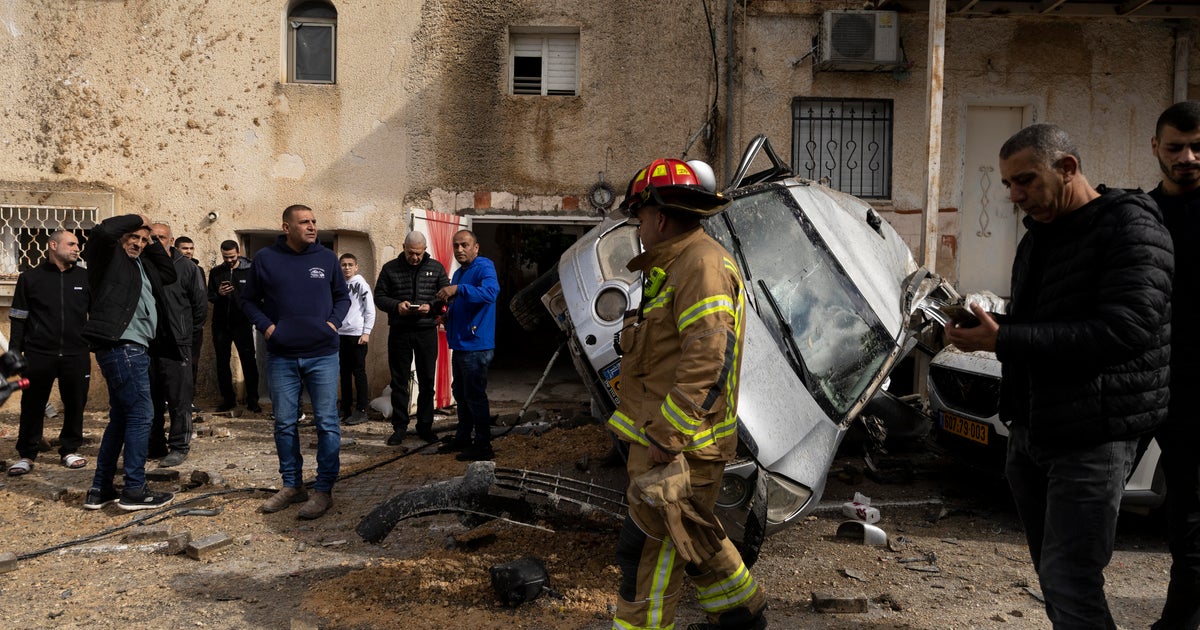
While political and military leaders trade threats, ordinary people across the region are already paying the price for this escalating conflict. On Thursday alone, at least nine Israelis were injured when Iranian missiles struck various locations throughout the country, though thankfully none of the wounds were life-threatening. Images circulating on social media showed fires burning and debris scattered across Tel Aviv, Jerusalem, and several other cities, the result of intercepted missiles and what appeared to be cluster munition impacts. The tragedy extended to the United Arab Emirates, where two people lost their lives when debris from an intercepted Iranian ballistic missile fell near Abu Dhabi. Meanwhile, Saudi Arabia reported shooting down eighteen drones, and Kuwait faced renewed missile and drone attacks. These strikes have targeted Gulf nations that Iran accuses of allowing the United States to use their territory as launching points for military operations. Beyond the immediate danger to human life, the economic consequences are rippling across the globe, particularly affecting Asian nations that depend heavily on energy supplies from the Gulf region. With the Strait of Hormuz—a crucial waterway through which roughly twenty percent of the world’s oil normally flows—remaining largely closed for nearly four weeks, oil prices have surged approximately forty percent since the conflict began, creating a crisis that threatens lasting damage to the global economy.
Mixed Messages and Diplomatic Confusion
Adding to the uncertainty surrounding this crisis is the conflicting information about whether diplomatic negotiations are actually taking place. President Trump posted on his Truth Social platform Thursday morning, describing Iranian negotiators as “very different and ‘strange'” and claiming that Tehran is “begging” for a deal while simultaneously rejecting American proposals publicly. In his characteristically direct style, Trump warned Iranian officials to “get serious soon, before it is too late,” adding ominously that “once that happens, there is NO TURNING BACK, and it won’t be pretty!” Later, speaking at a Republican fundraising event, the President made the curious admission that he’s deliberately avoiding calling the situation a “war” because of concerns about congressional authorization requirements, preferring instead to describe it as a “military operation.” Despite his careful word choice, Trump occasionally slips and refers to it as a war anyway, at one point claiming “The war essentially ended a few days after we went in.” White House Press Secretary Karoline Leavitt insisted that talks with Iran are continuing and described them as “productive,” even as Iranian state media reported that Tehran had rejected Washington’s fifteen-point plan for ending the conflict. She warned that if Iran fails to accept “the reality of the current moment” and recognize their military defeat, President Trump stands ready to “unleash hell” on the country, hitting them “harder than they have ever been hit before.” Trump himself offered an interesting perspective on why Iran might be downplaying negotiations, suggesting that Iranian officials fear being killed by their own people if they’re seen as capitulating, saying “They are negotiating, by the way, and they want to make a deal so badly. But they’re afraid to say it, because they figure they’ll be killed by their own people.”
Military Operations and Strategic Targets
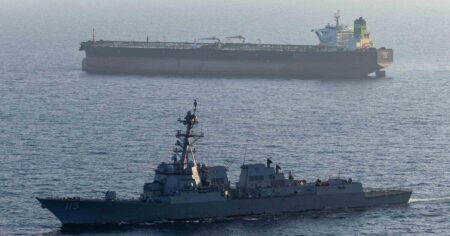
The scale and intensity of military operations in this conflict have been substantial, with American and Israeli forces conducting extensive strikes against Iranian targets. Admiral Brad Cooper, commander of U.S. Central Command (CENTCOM), provided an update Wednesday stating that operations remain “on plan or ahead of plan,” with American forces having struck more than ten thousand military targets, while Israeli forces have hit thousands more. Cooper made the significant claim that the United States has destroyed ninety-two percent of Iran’s largest naval vessels, effectively eliminating the Iranian navy’s ability to project power regionally and globally. Additionally, he reported that more than two-thirds of Iran’s missile, drone, and naval production facilities and shipyards have been damaged or destroyed. In what appears to be a strategic decapitation effort, Israeli forces have been systematically targeting Iran’s military leadership. Israeli Defense Minister Israel Katz confirmed Thursday that an airstrike had killed Commodore Alireza Tangsiri, commander of Iran’s Revolutionary Guard Corps naval forces, along with all senior officers of the naval command. Tangsiri had been directly responsible for mining and blocking the Strait of Hormuz to shipping, and just two days before his death had announced that a container ship from the UAE was being turned back for failing to comply with Iranian protocols. Interestingly, attacks on commercial vessels in the strait appear to have stopped over the past week, with the last confirmed incident reported on March 19. The conflict has also drawn in Lebanon, where Israeli ground operations against the Iran-backed Hezbollah militia have resulted in casualties, including the death of Staff Sergeant Ori Greenberg, a twenty-one-year-old Israeli soldier, bringing the total Israeli military deaths in southern Lebanon to three since Hezbollah entered the conflict on March 2.
Global Economic Emergency Responses
The closure of the Strait of Hormuz and the resulting surge in energy prices have forced governments around the world, particularly in Asia, to implement emergency economic measures to protect their citizens and economies from the worst effects of the crisis. South Korea announced Thursday that it would roll out a seventeen-billion-dollar “wartime” supplementary budget funded by excess tax revenue, along with expanded fuel tax cuts to help offset the impact of rising energy costs. This aggressive response makes sense given that South Korea imports roughly seventy percent of its crude oil from the Gulf region, making it vulnerable not only to global price increases but also to direct supply disruptions. Japan, the world’s fifth-largest oil importer and a nation that receives more than ninety percent of its oil from the Middle East, began releasing additional portions of its strategic oil reserves Thursday in an attempt to cushion the resource-poor island nation from the price shock. The Philippines, after declaring a national energy emergency, received some relief when a ship carrying more than seven hundred thousand barrels of Russian crude oil arrived in the country. Financial markets have been on a roller coaster ride throughout the crisis, with Asian stocks trading lower Thursday amid continued uncertainty about whether de-escalation is possible. Tokyo’s Nikkei, Seoul’s Kospi, Hong Kong’s Hang Seng, and Shanghai’s Composite Index all showed losses, while American futures were down half a percent. Oil prices climbed back toward the one-hundred-dollar-per-barrel mark, with Brent crude rising over three percent and U.S. benchmark crude up nearly four percent after briefly dipping below ninety-five dollars Wednesday.
The Uncertain Path Forward
As this conflict enters its fourth week, the international community faces profound uncertainty about what comes next. The disconnect between Washington’s insistence that productive negotiations are underway and Tehran’s public rejection of American demands creates confusion about whether there’s a genuine diplomatic track or if both sides are simply posturing while preparing for further military action. President Trump’s threats to avoid making the situation “pretty” if Iran doesn’t capitulate soon, combined with the White House’s warning about “unleashing hell,” suggest that American patience is wearing thin, yet the careful avoidance of the word “war” indicates some awareness of political and constitutional constraints on executive action. For Iran, the challenge is equally complex—the country has suffered significant military losses, including much of its navy and military production capacity, along with numerous senior commanders, yet Iranian officials cannot appear weak or defeated to their domestic population without risking their own positions or even lives. The human toll continues to mount, with civilians in Israel, the UAE, and across the region living under the threat of missile and drone attacks, while the economic consequences radiate outward, affecting energy markets, stock prices, and government budgets worldwide. The conflict’s expansion into Lebanon through Hezbollah’s involvement demonstrates how regional proxy relationships can quickly widen a bilateral confrontation into a broader war. As military commanders on both sides declare their readiness for any scenario and political leaders issue increasingly stark ultimatums, the question remains whether diplomacy can find a path forward that allows both sides to step back from the brink, or whether the momentum toward escalation has become unstoppable, with consequences that could reshape the Middle East and global economy for years to come.