

Trump Claims Iran Seeks Ceasefire Amid Rising Tensions
Controversial Social Media Announcement Sparks Questions
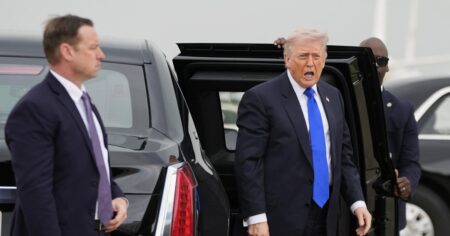
On Wednesday, President Donald Trump took to his Truth Social platform to make a striking claim: Iran’s president had reached out to the United States requesting a ceasefire. The announcement, delivered in Trump’s characteristic style, suggested a potential breakthrough in the escalating conflict between the two nations. However, the statement immediately raised eyebrows among Iran observers and diplomatic experts, as several details in Trump’s post appeared inconsistent with the current political reality in Tehran. The declaration comes at a critical moment when tensions between Washington and Tehran have reached dangerous new heights, with military threats being exchanged and regional stability hanging in the balance.
Trump’s post described Iran’s leader as a “New Regime President, much less Radicalized and far more intelligent than his predecessors,” suggesting a fresh face in Iranian leadership. However, Iran’s current president, Masoud Pezeshkian, has actually been in office since July 2024—making him neither particularly new nor representing any dramatic shift in the country’s governmental structure. This factual discrepancy has left analysts wondering whether Trump was indeed referring to Pezeshkian, whether his administration received communications from other Iranian officials, or whether the characterization of the outreach was perhaps more optimistic than the reality warranted. The confusion highlights the challenges of conducting high-stakes international diplomacy through social media posts rather than through traditional diplomatic channels.
Iran’s Actual Position: Conditional Willingness to Negotiate
What Iranian President Pezeshkian actually said differs somewhat from Trump’s characterization of a ceasefire request. In a phone conversation with the European Council president on Tuesday, Pezeshkian did express Iran’s willingness to pursue an end to the conflict, but his statement came with significant conditions attached. According to Iranian state media reports of the call, Pezeshkian stated that his country possessed the “necessary will to end this conflict,” but only if certain essential requirements were met—most importantly, security guarantees that would prevent future aggression against Iran. This represents a negotiating position rather than an unconditional plea for a ceasefire, and it reflects Iran’s long-standing concerns about its security in a volatile region.
Pezeshkian has been viewed by many Iran watchers as a more moderate figure compared to the hardline Islamic clerics and Revolutionary Guard Corps commanders who have historically wielded the most significant power in the Iranian government. His election was seen by some as potentially opening a door to more pragmatic engagement with the West, though expectations were tempered by the reality that ultimate authority in Iran still rests with Supreme Leader Ayatollah Ali Khamenei and the powerful security establishment. Pezeshkian’s statement about seeking an end to the conflict while demanding security guarantees reflects this delicate balance—attempting to pursue diplomatic solutions while addressing the concerns of hardliners who fear capitulation to American pressure. The distinction between actively requesting a ceasefire and expressing conditional willingness to negotiate may seem subtle, but in diplomatic terms, it represents a significant difference in posture and intent.
Trump’s Ultimatum: The Strait of Hormuz Deadline
President Trump’s response to Iran’s diplomatic signals was characteristically blunt and laden with threats. Rather than immediately embracing the possibility of negotiations, Trump laid down a specific condition: the Strait of Hormuz must be opened and kept “free and clear.” This narrow waterway, which connects the Persian Gulf to the Gulf of Oman and the Arabian Sea, serves as one of the world’s most critical oil transport chokepoints, with roughly one-fifth of global petroleum supplies passing through it. Iran’s ability to threaten closure of this strait has long been one of its most powerful geopolitical leverage points, and Trump’s insistence on its unimpeded operation strikes at the heart of that strategic asset.
The President’s post concluded with a stark threat, stating that until the strait is reopened, the United States would be “blasting Iran into oblivion or, as they say, back to the Stone Ages.” This aggressive rhetoric represents a continuation of the administration’s maximum pressure approach toward Iran, combining economic sanctions with military threats to compel Iranian compliance with American demands. Trump has reportedly given Iran a deadline of April 6 to reopen the Strait of Hormuz, creating a specific timeline that raises the stakes considerably. The April deadline means both countries are working within a narrow window where miscalculation or misunderstanding could lead to military confrontation with potentially devastating consequences for the region and the global economy.
Escalating Threats Against Iranian Infrastructure
Beyond the immediate demand regarding the Strait of Hormuz, President Trump has issued additional threats targeting Iran’s civilian infrastructure. Most alarmingly, he has threatened to “obliterate” Iranian civilian power plants if the country does not comply with American demands. These threats have also reportedly extended to Iranian water desalination plants and other critical infrastructure that Iranian civilians depend upon for their daily survival. Such threats represent a significant escalation in rhetoric, as they explicitly target facilities that serve civilian populations rather than purely military installations.
International humanitarian law generally prohibits attacks on civilian infrastructure, particularly facilities essential for the survival of the civilian population, such as water treatment and electrical power generation plants. The explicit threatening of such targets has raised concerns among human rights organizations and international legal experts about potential violations of the laws of war. Critics argue that threatening to destroy infrastructure that millions of ordinary Iranians depend on for electricity, clean water, and basic services amounts to threatening collective punishment of the Iranian people for the actions of their government. Supporters of the president’s approach argue that maximum pressure, including the credible threat of devastating consequences, represents the only language that Iran’s leadership understands and the only way to compel changes in Iranian behavior without a protracted military conflict.
Navigating a Dangerous Diplomatic Moment
The current situation represents one of the most dangerous flashpoints in U.S.-Iran relations in years, with both sides issuing threats while simultaneously leaving open narrow pathways toward de-escalation. Iran’s willingness to discuss ending the conflict, even with conditions attached, suggests that despite its rhetoric, Tehran recognizes the serious danger posed by the current crisis and may be seeking an off-ramp. Similarly, Trump’s acknowledgment that the United States would “consider” Iran’s purported ceasefire request indicates that despite the aggressive language, the administration has not completely closed the door to a diplomatic resolution.
The challenge now lies in finding a formula that allows both sides to step back from the brink while saving face with their respective domestic audiences. For Iran, this means securing some form of guarantee against future attacks while maintaining its revolutionary credentials and not appearing to capitulate to American threats. For the United States, it means achieving the reopening of the Strait of Hormuz and curtailing Iranian activities it views as threatening, while demonstrating strength to domestic political supporters. The discrepancy between Trump’s characterization of Iran’s position and what Iranian officials actually said complicates this already difficult diplomatic dance, as it creates confusion about what exactly is being negotiated and what commitments each side believes the other is willing to make. As the April 6 deadline approaches, the international community watches nervously, hoping that behind the public rhetoric, serious diplomatic work is occurring to prevent a conflict that could destabilize the entire Middle East and send shockwaves through the global economy.