
TSA Crisis: How the Government Shutdown is Affecting Airport Security and Travelers Nationwide
Mass Employee Absences Creating Security Nightmares at Major Airports
The ongoing government shutdown affecting the Department of Homeland Security has triggered a crisis at airports across America, with Transportation Security Administration (TSA) officers calling out sick at alarming rates that would have been unthinkable just weeks ago. Internal TSA statistics exclusively obtained by CBS News reveal a disturbing trend: unscheduled absences among airport security screeners have more than tripled since the shutdown began on February 14th, with some airports experiencing absence rates so severe that normal security operations have become nearly impossible. Nationwide, the callout rate has jumped to an average of 6% during the shutdown, compared to roughly 2% under normal circumstances when employees receive regular paychecks. But these averages don’t tell the full story. On the worst days, the nationwide absence rate has spiked as high as 9%, and at individual airports, the situation has become truly dire. Perhaps most shocking is Houston’s Hobby Airport, where on March 8th an astonishing 53% of scheduled TSA officers didn’t show up for work, followed by 47% calling out the next day—meaning nearly half the security workforce simply wasn’t there during a crucial two-day period. At New York’s John F. Kennedy International Airport, officers have averaged a 21% absence rate throughout the shutdown, the highest among major airports. Other hard-hit hubs include Atlanta’s Hartsfield-Jackson International (19% absences), New Orleans’ Louis Armstrong International (14%), and Pittsburgh International (13%). Making matters worse, extreme weather events have compounded the staffing crisis, with 77% of JFK officers and 53% of Newark Liberty officers calling out during a major February 23rd blizzard.
Hemorrhaging Employees with No Quick Solution in Sight
Beyond the daily callouts, TSA is facing an even more troubling long-term problem: employees are leaving the agency entirely. Between February 14th and March 9th, 305 TSA employees have separated from the agency—workers who won’t be easily replaced. The training pipeline for new TSA officers takes four to six months before new hires can work independently at security checkpoints, meaning the agency faces a staffing shortage that will persist long after the shutdown eventually ends. This exodus of experienced screeners represents more than just numbers—it’s a brain drain of trained professionals who understand the nuances of security screening, threat detection, and passenger management. Former TSA Administrator John Pistole, who led the agency during previous government shutdowns, expressed grave concerns about both the immediate and lasting impacts. “It’s a huge morale hit for TSA,” Pistole told CBS News, adding that he worries adversaries could potentially exploit “a perceived vulnerability because there’s not as many people at TSA showing up for work,” especially as security lines grow longer and screening becomes more rushed. Pistole’s concerns are informed by hard experience: during the 2018-2019 shutdown—the longest in U.S. history—TSA lost nearly 1,100 security officers who resigned because they desperately needed income and couldn’t afford to work without pay. If the current standoff continues, Pistole warns, repeated shutdowns could permanently damage recruitment efforts, as potential applicants question whether they want a job where they might regularly work without receiving paychecks.
“Hotspots” and Operational Chaos Spreading Across the Country
TSA has developed an internal tracking system for what it calls operational “hotspots”—situations where staffing shortages threaten to significantly slow or compromise checkpoint security operations. The numbers are staggering: Houston recorded 44 such incidents during the shutdown period, followed by New Orleans with 35 hotspots and Atlanta with 32. On the worst single day, March 8th, the agency logged 87 hotspots nationwide, meaning that on that day alone, 87 different situations arose where airports lacked sufficient staff to maintain normal security operations. This crisis is unfolding precisely as travel demand continues to rise, creating a perfect storm where fewer officers must screen more passengers. TSA officials report that staffing shortages have forced airport managers in multiple cities to consolidate security checkpoints or reduce the number of screening lanes in operation, directly increasing wait times for travelers while the remaining officers struggle to process growing passenger volumes. The operational chaos has even disrupted trusted traveler programs that frequent flyers depend on. The Department of Homeland Security initially announced it would suspend TSA PreCheck—the expedited screening program—before quickly reversing course amid public outcry, instead deciding to manage the program on an airport-by-airport basis depending on staffing availability. Meanwhile, U.S. Customs and Border Protection’s Global Entry program, which expedites re-entry for pre-approved international travelers, was actually suspended as CBP officers were reassigned from these programs to regular passenger processing to cover staffing gaps.
Real Travelers Facing Real Consequences: Hours-Long Waits and Missed Flights
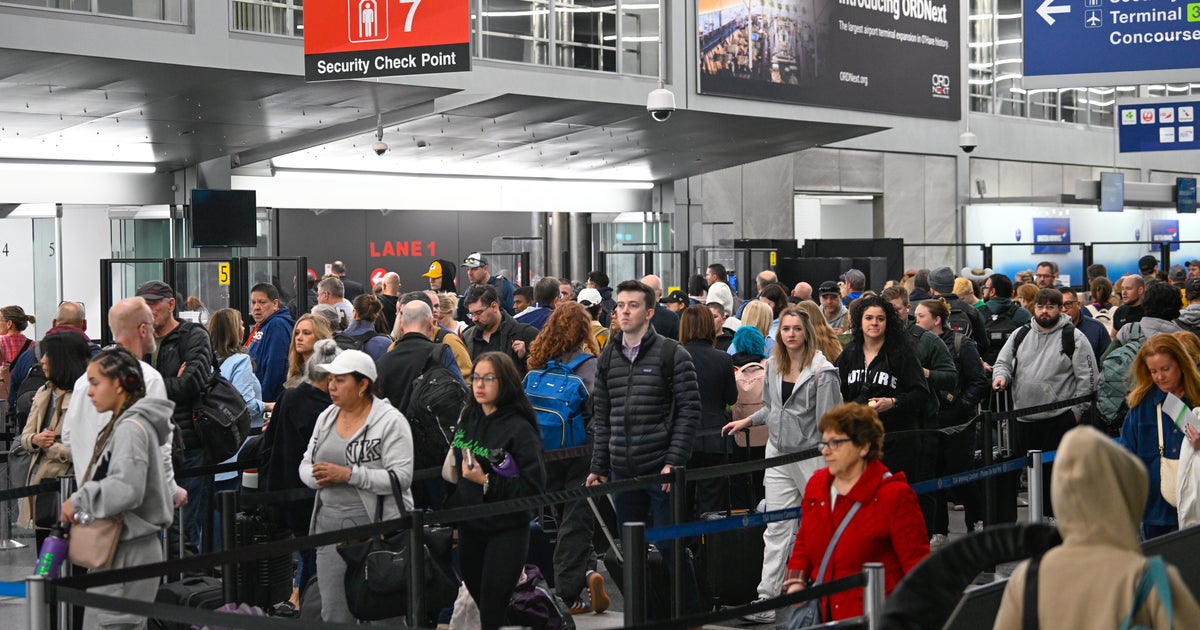
The staffing crisis at TSA isn’t just an abstract bureaucratic problem—it’s causing genuine hardship for American travelers, many of whom are experiencing unprecedented delays at security checkpoints. At Houston’s William P. Hobby Airport on March 8th, security wait times stretched beyond three hours, prompting airport officials to advise travelers to arrive four to five hours before their scheduled flights—a recommendation that sounds more appropriate for international travel through major customs checkpoints than domestic security screening. In New Orleans, the situation became so severe that airport officials warned passengers to arrive at least three hours early, yet even this proved insufficient for some unlucky travelers. Leah Turney, traveling out of New Orleans with her family, told CBS News about the frustrating reality of missing their flights despite arriving what they thought was early enough. “We were waiting in TSA just to get to security for four hours,” she explained, her planned travel completely derailed by circumstances beyond her control. Another traveler, Ellen Caldwell, highlighted just how dramatically conditions have deteriorated in a short time. “I was here three weeks ago for Mardi Gras, and it was no problem,” she told CBS News, adding with evident frustration, “This is insane.” The contrast she describes—smooth operations during one of New Orleans’ busiest tourist periods versus chaos during normal travel times just weeks later—perfectly illustrates how rapidly the shutdown has degraded airport operations. Officials at Hartsfield-Jackson Atlanta International Airport, the world’s busiest airport by passenger traffic, have also cautioned travelers that extended waits are possible as staffing shortages persist, and airline industry officials have warned that the approaching spring break travel season could turn the current problems into an absolute disaster unless Congress reaches a funding deal soon.
The First Full Missed Paycheck Arrives Friday: Will More Officers Walk Away?
TSA officers are approaching what many consider a critical breaking point in this standoff: Friday marks the arrival of the first full missed paycheck since the shutdown began. Until now, some officers received partial pay covering work performed before February 14th, but Friday represents the first complete pay period where workers will receive absolutely nothing despite reporting for work. This financial milestone has TSA management and DHS officials deeply worried that absence rates, already at crisis levels, could spike even higher as workers face the stark reality of bills they cannot pay and families they cannot support. In a statement to CBS News, a DHS spokesperson emphasized the human cost of the political standoff: TSA employees are being forced to work without pay “for the THIRD time in nearly six months.” The statement continued, “the longer this shutdown drags on, the more financial hardship our patriotic officers and their families face, leading to more staffing issues and longer wait times for travelers.” The spokesperson placed blame squarely on congressional Democrats, adding, “It’s time for Democrats to end these political games, pay our TSA officers, and re-open DHS.” The reference to this being the third shutdown affecting DHS workers in half a year underscores the cumulative toll these funding battles are taking on the frontline workforce—these aren’t just statistics but real people facing repeated financial crises through no fault of their own, asked to perform critical national security functions while wondering how they’ll pay rent, buy groceries, or cover childcare expenses.
Political Standoff Continues with No Resolution in Sight as Spring Break Travel Looms
Despite the mounting operational crisis and real hardship facing both TSA workers and American travelers, the political standoff in Washington shows no signs of resolution. White House press secretary Karoline Leavitt stated Tuesday that President Trump “wants the Department of Homeland Security to be fully funded and fully reopened,” while urging Americans affected by the shutdown to “call your Democrat member of Congress and tell them to fund the Department of Homeland Security.” However, Senate Minority Leader Chuck Schumer and Senator Brian Schatz painted a different picture of the negotiations, saying talks have stalled because the Trump administration hasn’t engaged in substantive discussions over reforms to immigration enforcement agencies. Speaking at their weekly press conference, Schumer revealed that Democrats had offered Republicans an opportunity to fund several DHS agencies—including TSA, FEMA, the Cybersecurity and Infrastructure Security Agency, and the United States Coast Guard—by separating them from disputed funding for Immigration and Customs Enforcement (ICE) and Customs and Border Protection (CBP). According to Schumer, Republicans blocked this effort. “Last week, Thursday, we gave them a chance to fund TSA and other DHS agencies,” Schumer explained. “Senate Republicans led by Senator Britt blocked Senator Murray’s attempt to pass the bill through.” Senator Schatz elaborated on the Democratic position: “We are in a deep disagreement, but an ongoing negotiation about ICE and CBP. So let’s narrow it to just that and fund the rest of the government.” He challenged Republicans to bring a bill funding non-immigration DHS agencies to the Senate floor, promising, “They should walk onto the floor and offer unanimous consent to open the Coast Guard, to open TSA, to fund FEMA, to fund CISA. I guarantee you there will not be a Democratic objector.” As this political blame game continues, the spring break travel season approaches rapidly, threatening to turn the current airport security crisis into a national transportation emergency that could affect millions of American families simply trying to take vacations they planned and paid for months ago.