


The Complex Reality of Iran’s Nuclear Program: What Military Strikes Can and Cannot Achieve
A Sobering Assessment from the UN’s Nuclear Watchdog
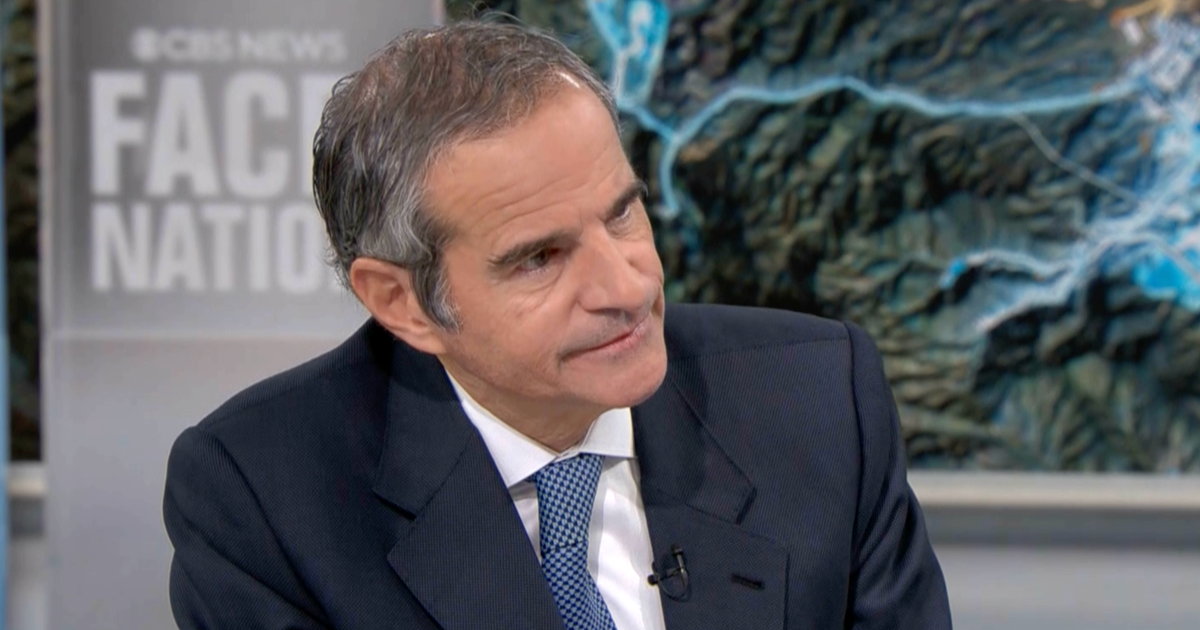
In a candid interview that challenges some of the more optimistic narratives coming out of Washington, Rafael Grossi, the head of the International Atomic Energy Agency (IAEA), delivered a sobering message to American audiences this week. Speaking on CBS’s “Face the Nation,” Grossi made it clear that while military operations have certainly damaged Iran’s nuclear infrastructure, they haven’t eliminated the country’s nuclear capabilities. His message was straightforward: bombs alone won’t solve this problem. Even after months of intensive strikes that have targeted thousands of locations across Iran, including specific attacks on nuclear facilities, much of Iran’s nuclear knowledge, equipment, and materials remain intact. This reality check comes at a crucial time, as the Trump administration continues Operation Epic Fury, which has already become one of the most extensive military campaigns against Iran in history. Grossi’s assessment suggests that regardless of how successful these strikes have been tactically, the international community will eventually need to return to the negotiating table to address Iran’s nuclear ambitions in a sustainable way.
The Limits of Military Solutions
Grossi acknowledged that previous strikes, particularly those conducted last year against three Iranian nuclear facilities, were “quite effective” and caused significant setbacks to Iran’s nuclear program. He noted that there has been “a lot of impact on the program” and that these operations “really rolled back the program considerably.” However, he expressed skepticism about claims that Iran’s nuclear capabilities have been completely destroyed or “obliterated,” as some U.S. officials have suggested. The reality, according to the IAEA director, is more nuanced than simple metrics of days, weeks, or months can capture. While physical infrastructure can be damaged or destroyed, the knowledge, expertise, and industrial capacity that Iran has developed over decades cannot simply be bombed out of existence. Grossi emphasized that “once the military effort comes to an end, we will still inherit a number of major issues that have been at the center of all of this.” These issues include Iran’s substantial inventory of uranium enriched to 60% purity—dangerously close to the 90% needed for weapons-grade material—as well as the country’s remaining facilities, infrastructure, and equipment. Even if some of this material is damaged or degraded, the fundamental problem remains: Iran has the knowledge and capability to rebuild.
The Challenge of Iran’s Uranium Stockpile
One of the most concerning aspects of Iran’s nuclear program, according to Grossi, is the substantial quantity of highly enriched uranium the country has accumulated. Before the recent U.S. strikes, Iran had amassed roughly 972 pounds—more than 440 kilograms—of uranium enriched up to 60% purity. This represents a dramatic increase from previous years and brings Iran to the threshold of being able to produce weapons-grade material relatively quickly if they chose to take that final step. President Trump has repeatedly stated that preventing Iran from developing a nuclear weapon is a primary objective of the current military operations, but Grossi’s comments suggest that the enriched uranium itself poses a unique challenge. When asked about the possibility of U.S. forces physically removing cylinders containing this enriched material from Iranian facilities, Grossi was diplomatically cautious. “I’m not saying it’s impossible. I know that here there are incredible military capacities to do that, but it would be very challenging operation for sure,” he explained. The practical difficulties of such an operation are enormous—these materials are stored in heavily fortified underground facilities, some of which have been further sealed with cement following recent strikes. Any attempt to physically seize them would require not just overwhelming military force but also specialized knowledge and equipment to handle dangerous nuclear materials safely.
Contradictions in the Official Narrative
Grossi’s assessment stands in notable contrast to some of the more triumphant declarations from Trump administration officials. Director of National Intelligence Tulsi Gabbard, for instance, told the Senate this week that Iran’s nuclear program was “obliterated” in last year’s strikes, known as Operation Midnight Hammer, and that “there has been no efforts since then to try to rebuild their enrichment capability.” She testified that the entrances to underground facilities had been “buried and shuttered with cement.” President Trump himself has boasted that the strikes on three Iranian nuclear facilities last year effectively eliminated them. However, Grossi’s more measured assessment suggests that while these strikes caused significant damage, they fell short of completely eliminating Iran’s nuclear capabilities. The IAEA director noted that before the latest round of U.S. and Israeli strikes, the agency did not observe “major activity” by Iran to rebuild its enrichment capacity, but he stressed that “a lot has still survived.” More importantly, he pointed out that “they have the capabilities, they have the knowledge, they have the industrial ability” to reconstitute their program. This fundamental reality—that Iran possesses the technical know-how and industrial base to rebuild—cannot be changed through military action alone. It’s the difference between destroying a factory and eliminating the blueprints and the engineers who designed it.
The Scale of Operation Epic Fury
The current military campaign against Iran, dubbed Operation Epic Fury, has been massive in scope. Defense Secretary Pete Hegseth revealed that U.S. forces have struck more than 7,000 targets across Iran, with the campaign intensifying in recent days. The operation reached a tragic climax nearly three weeks ago when strikes resulted in the death of Iran’s Supreme Leader, Ayatollah Ali Khamenei—a development that has fundamentally altered Iran’s political landscape. Hegseth has indicated that the strikes continue to escalate, with each day bringing larger strike packages than the one before. This sustained campaign represents an unprecedented level of military pressure on Iran, far exceeding even the most aggressive scenarios that military planners had envisioned in previous years. Yet despite this overwhelming display of American military power, Grossi’s comments remind us that military force has inherent limitations when it comes to addressing proliferation challenges. You can destroy centrifuges, flatten buildings, and crater underground facilities, but you cannot bomb away the scientific knowledge that Iranian nuclear scientists have accumulated, nor can you completely eliminate a determined nation’s industrial capacity to rebuild.
The Inevitable Return to Diplomacy
Perhaps the most significant aspect of Grossi’s interview was his emphasis on the eventual need for diplomatic engagement. When asked directly about the necessity of talks with Iran following the military operations, his response was unequivocal: “It’s going to be needed.” This acknowledgment reflects a reality that many national security experts have long understood—lasting solutions to nuclear proliferation challenges almost always require diplomatic agreements, not just military action. Interestingly, even as Operation Epic Fury has unfolded, there have been behind-the-scenes diplomatic efforts. In the weeks and hours before the second round of major strikes, special envoys Steve Witkoff and Jared Kushner, President Trump’s son-in-law, were engaged in indirect talks with Iranian negotiators about a potential nuclear deal. These efforts were ultimately overtaken by the decision to launch Operation Epic Fury, but their existence demonstrates that even the most hawkish administrations recognize the potential value of negotiated solutions. The challenge going forward will be finding a diplomatic framework that addresses legitimate concerns about Iran’s nuclear ambitions while recognizing that the recent military operations and the death of Iran’s supreme leader have fundamentally changed the political landscape in Tehran. Any future negotiations will take place in a dramatically different context than previous talks, with deep mistrust on both sides and the memory of extensive military operations fresh in everyone’s minds. Grossi’s assessment ultimately serves as a reality check for policymakers and the public alike: while military operations can set back nuclear programs and destroy infrastructure, they cannot eliminate the knowledge, capabilities, and determination that drive such programs. A comprehensive solution to the Iranian nuclear challenge will require not just military pressure but also sustained diplomatic engagement, verification mechanisms, and agreements that address the underlying security concerns of all parties involved.