
U.S. and Hungary Forge Nuclear Partnership Amid Political Tensions
A Strategic Alliance at a Critical Moment
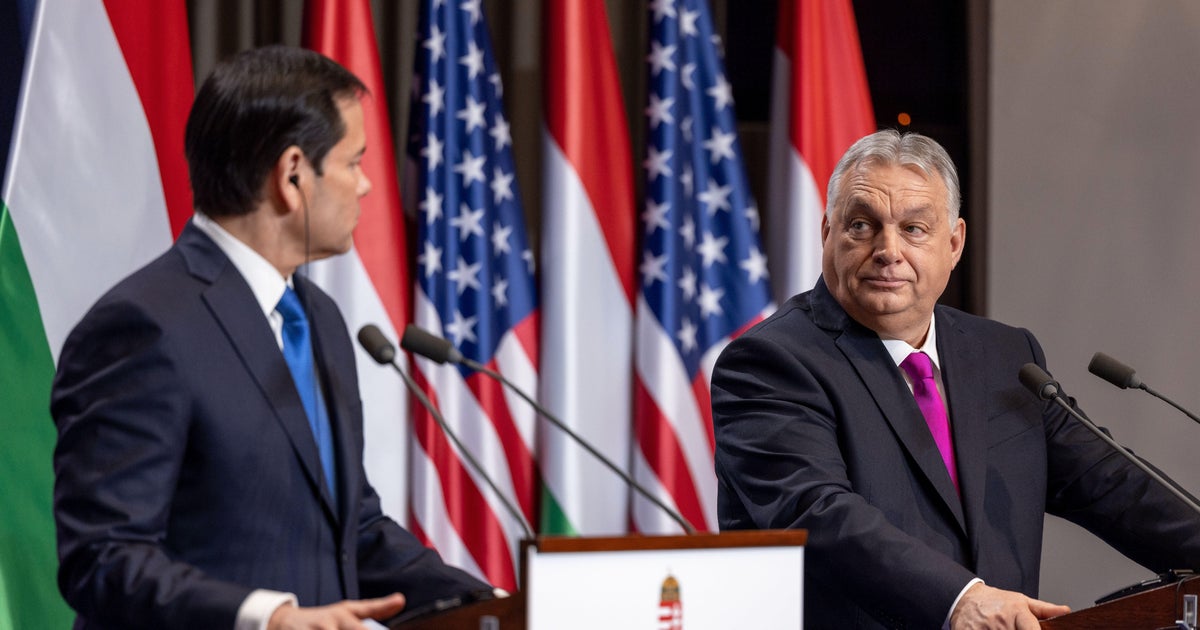
The United States and Hungary took a significant step in strengthening their bilateral relationship this week when Secretary of State Marco Rubio traveled to Budapest to sign a comprehensive civilian nuclear cooperation agreement with Hungarian Prime Minister Viktor Orbán. The timing of this deal is particularly noteworthy, coming just two months before Hungary’s parliamentary elections on April 12, which could determine whether Orbán maintains the political dominance he’s held for nearly two decades. The agreement represents more than just an energy partnership; it’s a calculated diplomatic move that carries weight for both countries. For Hungary, it offers a chance to diversify away from its heavy reliance on Russian nuclear technology. For the United States, it’s an opportunity to expand American influence in Central Europe while pushing back against Russian and Chinese presence in the region’s critical energy infrastructure. The visit and agreement underscore the unusually close relationship between President Trump and Orbán, with Rubio explicitly telling the Hungarian leader that “President Trump is deeply committed to your success.”
Breaking Free from Russian Nuclear Dependence
Hungary’s energy landscape has long been dominated by Russian technology and expertise. The country relies heavily on nuclear power to meet its electricity needs, with nearly half of its power coming from the Paks nuclear plant in central Hungary, which operates four Russian-made VVER-440 reactors built and maintained by Moscow. This dependence has become increasingly problematic as Russia’s war against Ukraine enters its fourth year, creating uncomfortable political optics for Hungary within the European Union. The new agreement with the United States charts a different course forward. Under the terms signed on Monday, Hungary will purchase nuclear fuel from American suppliers for the first time in its history, marking a fundamental shift in its nuclear supply chain. Additionally, U.S. firm Holtec International will assist Hungary in managing its spent nuclear fuel, addressing a critical long-term challenge. The foundation for this cooperation was laid in November 2025 when both countries signed a Memorandum of Understanding on Nuclear Energy, which initiated negotiations covering the broader civil nuclear industry, including cutting-edge small modular reactor (SMR) technology and spent fuel storage solutions.
America’s Vision for Hungary as a Regional Nuclear Hub
The Trump administration has ambitious plans for Hungary’s role in the region’s nuclear future. According to the U.S. State Department’s statement, the agreement will “deliver decades of cooperation in nuclear energy” and demonstrates Washington’s commitment “to making Hungary a hub for regional small modular reactor (SMR) development.” The State Department also noted that it encouraged Hungary to select U.S. SMR technology as it modernizes and expands its nuclear capabilities. This represents a significant strategic play by the United States to position American nuclear technology at the center of Central Europe’s energy transition. Small modular reactors represent the next generation of nuclear technology—they’re smaller, potentially safer, and more flexible than traditional large-scale nuclear plants. By establishing Hungary as a regional hub for this technology, the U.S. aims to create a beachhead for American nuclear exports in a market that has traditionally been dominated by Russian and, increasingly, Chinese suppliers. The deal also serves the Trump administration’s broader foreign policy objectives of advancing “mutual security interests in the region” and countering the influence of adversarial powers in Europe’s critical infrastructure sectors.
A Personal Alliance Between Two Controversial Leaders
The relationship between President Trump and Viktor Orbán goes far beyond typical diplomatic courtesy. Trump has previously described the Hungarian leader as “a great man and a very special person,” praise that reflects genuine personal affinity between the two populist leaders. Orbán, who leads the far-right Fidesz party and describes himself as a populist, was the first and only European Union leader to publicly endorse Trump’s initial presidential campaign in 2016, and the two have maintained unusually close ties ever since. After Monday’s signing ceremony, Orbán responded to the strengthened partnership with characteristic enthusiasm, declaring that “a new golden age has set upon us concerning the relationship between the United States and Hungary.” He also reiterated Hungary’s standing offer to host a peace summit between Ukraine and Russia as part of Trump’s efforts to broker an end to the four-year war in Ukraine. Both leaders had suggested in mid-October that Trump might meet with Russian President Vladimir Putin in Budapest to discuss the conflict, though the White House later clarified that no such meeting was planned. For Orbán, this American embrace comes at an ideal moment politically, offering him a significant diplomatic achievement to showcase to Hungarian voters just weeks before they head to the polls.
Orbán’s Controversial Record and European Isolation
While the Trump administration celebrates this deepening partnership, it’s important to understand why Orbán remains such a divisive figure, particularly among America’s traditional Western European allies. According to Human Rights Watch, Orbán has systematically used his party’s supermajority in the Hungarian parliament to undermine judicial independence, crack down on independent media outlets, demonize migrants, and discriminate against LGBTQ individuals. His government’s actions have been so concerning that in 2022, the European Union formally declared that Hungary could no longer be considered a “full democracy,” instead categorizing it as a “hybrid regime of electoral autocracy”—a devastating assessment from the country’s own continental alliance. This tension has only intensified due to Hungary’s tolerant stance toward Russia throughout the war in Ukraine, which has put Budapest at odds with virtually every other EU member state. While other European nations have rallied around Ukraine with military and financial support, Orbán has maintained diplomatic and economic ties with Moscow, frustrating efforts to present a united European front. When Trump returned to the White House a year ago, Orbán celebrated effusively, declaring that “The Trump tsunami swept through the entire world. It gave back hope to the world. We are no longer suffocating in the woke sea.” This rhetoric captures both the ideological alignment between the two leaders and the cultural divisions that make Orbán controversial in much of Western Europe.
Strategic Implications and Looking Forward
This nuclear cooperation agreement carries significant implications that extend well beyond the technical details of fuel supply chains and reactor technology. For the United States, it represents a concrete example of how the Trump administration is reshaping American engagement in Europe—prioritizing bilateral relationships with ideologically aligned leaders over the traditional multilateral approach that emphasized consensus among established democratic allies. The deal advances two key objectives: countering Russian and Chinese influence in Central Europe’s energy sector while simultaneously expanding markets for American nuclear technology and expertise. Interestingly, the Trump administration lifted sanctions on Hungary’s Paks nuclear plant upgrade project in 2025, removing obstacles that had previously complicated such cooperation. For Hungary, the agreement provides both practical benefits and political symbolism. Practically, it offers genuine diversification of nuclear supply sources, reducing vulnerability to Russian pressure. Symbolically, it demonstrates that Budapest has powerful friends despite its isolation within the European Union. As Hungary approaches its April 12 parliamentary elections, Orbán can point to this agreement as evidence that his approach—maintaining close ties with both Russia and the United States, even when that creates tension with Brussels—delivers tangible results for Hungarian interests. Whether this strategy will resonate with Hungarian voters, and whether this nuclear partnership will indeed reshape Central Europe’s energy landscape as intended, remains to be seen. What’s clear is that the U.S.-Hungary nuclear deal represents a significant recalibration of relationships, alliances, and strategic priorities in a rapidly changing European political environment.