
High-Stakes Nuclear Negotiations: U.S. and Iran Meet in Geneva Under Shadow of Military Threats
The Tense Backdrop to Critical Diplomatic Talks
The atmosphere in Geneva this week was thick with tension as American and Iranian negotiators gathered for what could prove to be pivotal discussions about Iran’s nuclear program. These weren’t ordinary diplomatic talks—they took place with President Trump’s explicit warning hanging in the air like an ominous cloud: reach a deal, or face the possibility of American-backed military strikes against Iranian facilities. The stakes couldn’t be higher for either side. Mediating the discussions was Oman, a nation that has historically served as a bridge between the often hostile powers. While the primary focus was Iran’s nuclear capabilities, Israeli Prime Minister Benjamin Netanyahu had been lobbying hard for the talks to encompass restrictions on Iran’s conventional ballistic missile program as well. According to sources with knowledge of conversations between Trump and Netanyahu last December, the American president reportedly promised that if negotiations collapsed, the United States would support Israeli military operations targeting Iran’s missile infrastructure. This wasn’t just diplomatic posturing—the threat was backed by tangible military muscle, with one U.S. aircraft carrier strike group already positioned in waters near Iran and another steaming toward the region as the talks commenced.
Defiant Words and Strategic Calculations
Iran’s Supreme Leader, Ayatollah Ali Khamenei, responded to the American military buildup with characteristic defiance. Speaking in Tehran precisely as negotiators in Geneva were settling into their discussions, Khamenei delivered what amounted to a veiled threat of his own, suggesting that while American warships were certainly dangerous weapons, even more dangerous were the weapons capable of sinking them—a reference to Iran’s anti-ship missile capabilities. Meanwhile, President Trump, speaking to reporters aboard Air Force One the night before the talks began, struck a somewhat more optimistic tone. He acknowledged that Iran had a well-earned reputation as a tough negotiator but expressed his belief that Tehran’s leadership genuinely wanted to reach an agreement. His reasoning was blunt: “I don’t think they want the consequences of not making a deal.” The American delegation was led by Steve Witkoff, Trump’s special envoy, alongside Jared Kushner, the president’s son-in-law, while Iran’s team was headed by Foreign Minister Abbas Araghchi. After several hours of discussion, Tuesday’s session concluded with no immediate announcements, and there was no confirmed timeline for how long this round of negotiations might continue.
What’s Driving Iran to the Negotiating Table
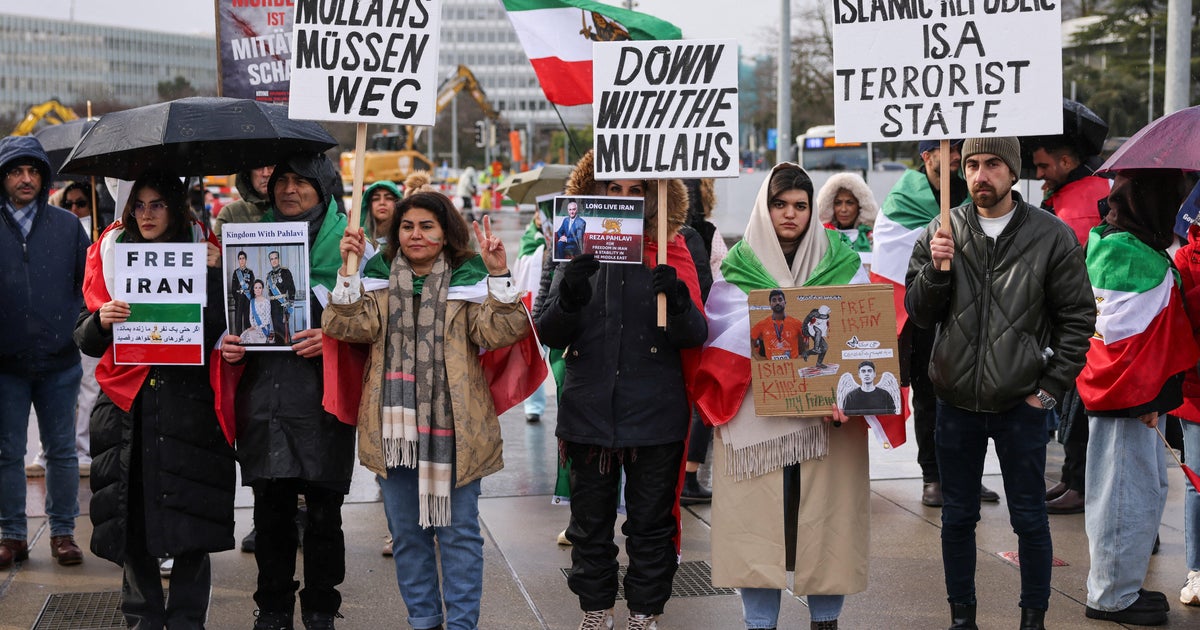
For Iran, the motivation to negotiate is straightforward and desperate: economic survival. The country has been staggering under the weight of punishing economic sanctions that have devastated ordinary Iranians’ quality of life. The situation was already dire when President Trump, during his first term, made the controversial decision to unilaterally withdraw the United States from the 2015 nuclear agreement that had been painstakingly negotiated during the Obama administration. That withdrawal opened the floodgates to even more severe sanctions that have left Iran’s economy in shambles. Inflation has skyrocketed, the national currency has plummeted in value, and basic necessities have become difficult to afford even for middle-class families who once lived comfortably. The economic pain became so acute that it sparked massive protests in early January—demonstrations that were unprecedented in their scale and intensity. The Iranian government responded with characteristic brutality, arresting thousands and continuing to threaten anyone suspected of supporting the unrest. But Iran’s leadership understands that arrests and intimidation are temporary solutions at best. To prevent another explosion of popular anger, they need sanctions relief so ordinary Iranians can once again afford food and fuel without breaking their household budgets.
Iran’s Non-Negotiable Red Lines
However, there are limits to what Iran is willing to concede to achieve that economic relief. Iranian officials have been crystal clear that they will not surrender what they consider their sovereign right to enrich uranium for civilian nuclear purposes. Foreign Minister Araghchi made this position explicit in a social media post before the talks, stating he had arrived in Geneva “with real ideas to achieve a fair and equitable deal,” but making it equally clear that “submission before threats” was not on the table. That said, Iran has shown some flexibility on the nuclear enrichment issue itself. Before the Geneva talks, Araghchi met with Rafael Grossi, the head of the United Nations’ International Atomic Energy Agency (IAEA), the organization responsible for monitoring compliance with nuclear agreements. The IAEA had previously overseen Iran’s adherence to the 2015 nuclear deal, which slowly unraveled after the American withdrawal in 2018. These preliminary discussions with Grossi suggested that Tehran might be willing to negotiate specific parameters around its enrichment activities, even if it refuses to abandon enrichment altogether—a crucial distinction that could determine whether these talks succeed or fail.
American and Israeli Demands on the Table
The American delegation entered the Geneva talks with a clear set of objectives designed to significantly constrain Iran’s nuclear trajectory. These likely include demands for Iran to reduce or completely eliminate its stockpile of enriched uranium and to accept a new, more robust monitoring regime by IAEA inspectors. But the situation is complicated by Israel’s involvement and its considerably more expansive list of demands. The Trump administration has been in regular consultation with Netanyahu’s government, and the Israeli prime minister has been insistent that any new agreement must go beyond nuclear issues. Netanyahu wants ironclad restrictions on Iran’s ballistic missile program and on Tehran’s funding and support for proxy forces throughout the Middle East—groups like Hezbollah in Lebanon and various militias in Iraq and Syria. Perhaps most significantly, Israel’s position is that Iran should have absolutely no domestic uranium enrichment capability whatsoever, a stance that directly contradicts what Iran has already declared to be a non-negotiable red line. It remains unclear how forcefully the American delegation will push these Israeli priorities in the Geneva discussions, though U.S. Secretary of State Marco Rubio struck a hopeful note on Monday, saying there was potential for a diplomatic breakthrough and emphasizing that President Trump “always prefers peaceful outcomes and negotiated outcomes to things.”
The Road That Led to Geneva
These negotiations don’t exist in a vacuum—they’re the latest chapter in a long, troubled history of diplomatic fits and starts between Washington and Tehran. The road to Geneva has been particularly rocky in recent years. A dramatic escalation occurred in June 2025, when the United States joined Israel in a 12-day military campaign against Iran, during which American forces conducted strikes specifically targeting Iranian nuclear facilities. President Trump and Defense Secretary Pete Hegseth publicly claimed these strikes had completely destroyed Iran’s nuclear program, though independent assessments have disputed the extent of the damage. Before that June conflict, Iran had been steadily expanding its enrichment program, explicitly citing the American withdrawal from the previous nuclear deal as justification. Tehran had begun enriching uranium to 60% purity—a level that represents a short, technically simple step away from weapons-grade enrichment. According to the IAEA, Iran had become the only country in the world enriching to that level without possessing nuclear weapons. For months, the IAEA had been calling on Iran to improve transparency and cooperation with its inspectors, who continue attempting to monitor enrichment activities despite the collapsed agreement. An initial round of indirect talks was held in Oman earlier this month, where the Omani foreign minister met separately with Iranian and American negotiators. President Trump characterized those preliminary discussions as “very good,” while Araghchi described them as “a good start”—cautiously optimistic assessments that set the stage for the more substantive face-to-face negotiations now underway in Geneva, where the world watches and waits to see whether diplomacy can prevail over the alternative of military confrontation.