


America’s Escalating Conflict with Iran: A Deepening Crisis
The Rescue Mission That Signals Deeper Involvement
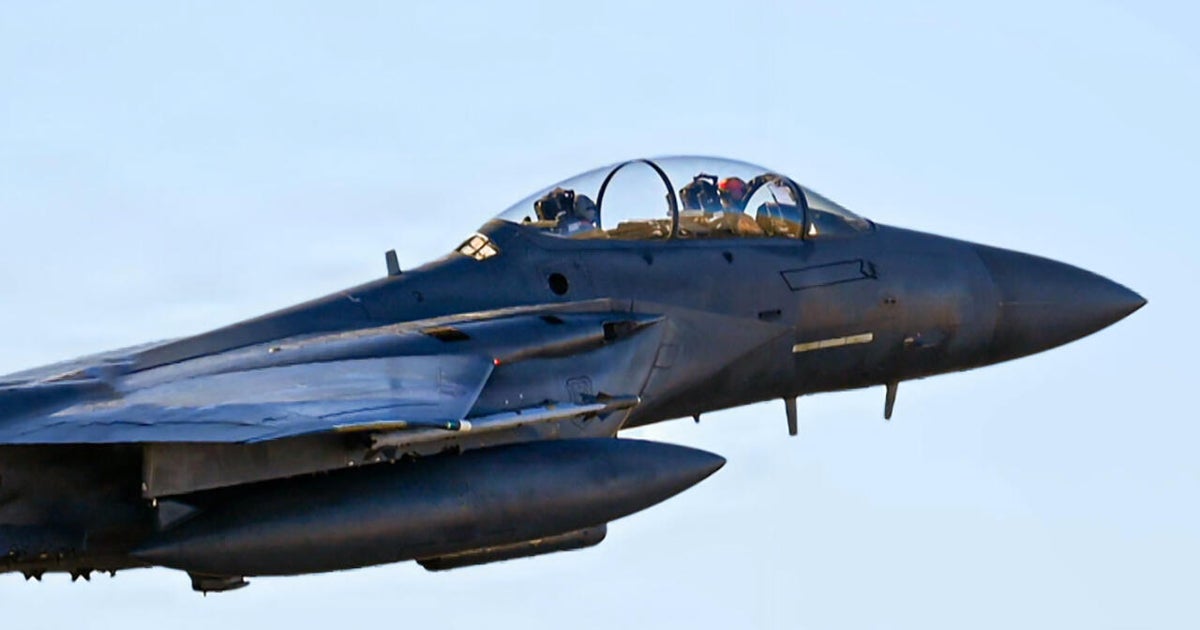
The situation in Iran has rapidly intensified following a dramatic rescue operation that unfolded in the early hours of Sunday morning local time. American aircraft were forced to fly dangerously low and slow over Iranian territory while searching for a downed aviator, coming under fire from ground forces in the process. According to both U.S. and White House officials, the airman was successfully recovered, but this incident has become emblematic of something far more concerning: the United States is being drawn increasingly deeper into a conflict that shows no signs of de-escalation. President Trump’s rhetoric has become notably more aggressive, with the commander-in-chief not only sharing strike videos but also making unprecedented threats about the scale of destruction America is prepared to inflict. His stark warning that “we’re going to bring them back to the stone ages, where they belong” signals a dramatic shift in tone and suggests the conflict may be entering a far more dangerous phase than initially anticipated.
Targeting Infrastructure: Crossing the Line Between Military and Civilian
The nature of American strikes in Iran has begun to raise serious concerns among legal experts and former government officials. While the U.S. military has primarily focused on legitimate military targets such as ammunition depots and weapons facilities, the campaign has expanded to include Iran’s largest bridge—ostensibly a civilian structure. U.S. officials have defended this decision by claiming the bridge was used to transport missiles, but this justification has done little to quiet the growing chorus of critics who warn that America may be crossing important legal and moral boundaries. The situation became even more alarming when President Trump issued an ultimatum with a Monday night deadline, threatening to escalate attacks dramatically if Iran does not agree to negotiate. In his Wednesday address to the nation, the president made clear his willingness to target Iran’s entire electrical grid, stating: “If there is no deal, we are going to hit each and every one of their electric generating plants very hard and probably simultaneously.” This threat has sent shockwaves through the international legal community and raised fundamental questions about the laws of armed conflict.
Legal and Moral Concerns About Collective Punishment
Tess Bridgeman, who served as a legal adviser to President Obama’s National Security Council, has been among the most vocal critics of the proposed escalation, pointing out the devastating humanitarian consequences that would follow the destruction of Iran’s power infrastructure. “Electrical generating plants power hospitals, they power schools, water sanitation facilities, the things that you need to sustain basic day-to-day living for a civilian population,” Bridgeman explained, emphasizing that these are not merely conveniences but essential services that keep people alive. Her assessment is unequivocal: “Obliterating all power plants, threatening coercive actions against the civilian population to try to bring a government to the negotiating table, those kinds of things are flatly illegal.” This criticism isn’t coming only from those outside the administration’s ideological circle. Elliott Abrams, who served as special representative for Iran during President Trump’s first term, has also expressed reservations about targeting civilian infrastructure, though from a more strategic perspective. “We want the Iranian people on our side,” Abrams noted, highlighting the counterproductive nature of punishing ordinary citizens for their government’s actions. “I’d rather see us go after regime targets, assets they use to repress the Iranian people, not assets Iranians use to live their daily lives.” This rare alignment between legal scholars and former Trump administration officials underscores just how concerning the proposed escalation has become.
The Nuclear Question: Mission Unaccomplished
Perhaps the most troubling aspect of the current situation is that the stated objective of the military campaign—preventing Iran from building a nuclear weapon—remains largely unachieved despite the significant destruction already inflicted. President Trump has repeatedly framed this conflict as necessary to ensure Iran cannot develop nuclear capabilities, but experts in the field paint a much more complicated picture. David Albright, president of the Institute for Science and International Security and one of the world’s leading authorities on Iran’s nuclear program, delivered a sobering assessment when asked if the president has accomplished his stated goal: “Unfortunately not.” While Albright acknowledges that Iran’s nuclear program has been seriously degraded and set back by the strikes, he points to a critical vulnerability in the American strategy. “The most important part that remains is the highly-enriched uranium, and that has not been destroyed or taken by the United States or Israel,” he explained. This highly-enriched uranium is the essential ingredient for building nuclear weapons, and as long as Iran possesses it, the country maintains a viable path to becoming a nuclear power. The challenge is compounded by the fact that approximately half of Iran’s stockpile of highly-enriched uranium is believed to be buried deep inside the Isfahan mountain complex, a heavily fortified facility that would be extremely difficult to destroy completely.
The Uranium Problem and Incomplete Solutions
President Trump has attempted to reassure the American public about the uranium that remains in Iranian hands, particularly the material stored in the Isfahan mountain facility. “We have it under intense satellite surveillance and control,” the president claimed, adding that “if we see them make a move, even a move for it, we’ll hit them with missiles very hard again.” However, experts like David Albright remain skeptical that surveillance and threats of retaliation constitute an adequate long-term solution. While the U.S. military could potentially bomb the mountain complex to make the buried uranium even more difficult to access, this would not address the fundamental problem. “It’s a big question about where is the rest, because the rest is enough for at least two or three nuclear weapons,” Albright warned, highlighting the fact that a significant portion of Iran’s highly-enriched uranium stockpile remains unaccounted for and presumably hidden in locations unknown to American intelligence. This reality means that even in a best-case scenario where the Isfahan facility is rendered completely inaccessible, Iran would still possess sufficient fissile material to build multiple nuclear weapons if the regime decides to pursue that path.
Long-Term Consequences and the Paradox of Force
The ultimate irony of the current military campaign may be that it achieves the opposite of its intended effect. Rather than permanently dismantling Iran’s nuclear ambitions, the conflict may actually strengthen the regime’s determination to obtain nuclear weapons as the ultimate guarantee of survival. Elliott Abrams articulated this concern clearly: “I think the war leads them to believe that they need a nuclear weapon.” However, he doesn’t expect an immediate breakout attempt. “I don’t think they’re going to do this tomorrow morning. I think they’ll return to it over time, if the regime survives.” This assessment suggests that the current military campaign may be creating the very threat it was designed to eliminate, teaching Iran’s leadership that only nuclear weapons can deter American military action. When asked directly whether we have seen the last of Iran’s nuclear program, David Albright’s response was pessimistic: “The way things are going now, I don’t think we’re going to see the end of it.” This sobering conclusion suggests that the current conflict, with all its destruction and humanitarian costs, may ultimately prove counterproductive to America’s long-term security interests. The combination of incomplete destruction of nuclear materials, threats against civilian infrastructure, and the regime’s likely conclusion that nuclear weapons are necessary for survival creates a dangerous dynamic that could haunt American foreign policy for decades to come. As the Monday deadline approaches and the world watches to see whether Iran will capitulate to American demands or whether President Trump will follow through on his threats to plunge the country into darkness, the fundamental question remains unanswered: has this conflict made America safer, or has it simply postponed and intensified a crisis that will return with even greater force in the future?