
Russian Military Aircraft Intercepted Near Alaska: What You Need to Know
Another Day at the Edge of American Airspace
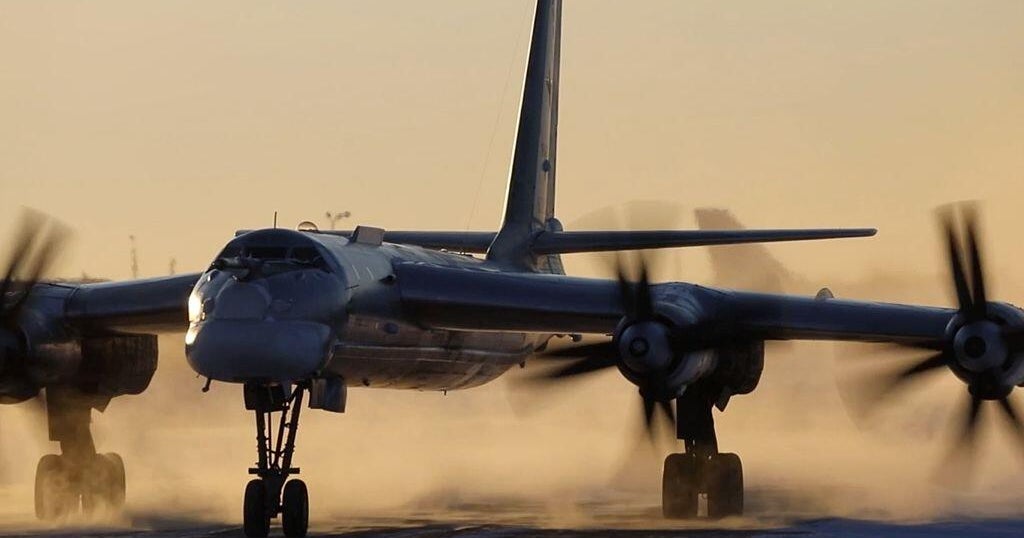
On Thursday, American fighter pilots found themselves scrambling into their cockpits once again, this time to respond to a sizeable group of Russian military aircraft approaching the Alaska coastline. The North American Aerospace Defense Command (NORAD) detected not just one or two planes, but a full formation consisting of two Tu-95 bombers, two Su-35 fighter jets, and an A-50 spy plane flying through what’s known as the Alaskan Air Defense Identification Zone. While this might sound alarming to those unfamiliar with these types of military encounters, authorities were quick to point out that this is actually a fairly routine occurrence in this part of the world. The United States responded by launching an impressive escort force of its own—two F-16 fighters, two advanced F-35 stealth fighters, and four KC-135 refueling tankers—to shadow the Russian aircraft and ensure they didn’t cross any red lines. The Russian planes never actually entered American or Canadian sovereign airspace, staying instead in international territory, though in an area where the U.S. and Canada maintain heightened vigilance for national security reasons.
Understanding the Alaskan Air Defense Identification Zone
For many Americans, the concept of an Air Defense Identification Zone might seem confusing or even contradictory—how can there be a zone that requires monitoring if it’s technically international airspace? The Alaskan ADIZ exists in that gray area where international airspace begins, right at the edge of where U.S. and Canadian territorial sovereignty ends. Think of it as a buffer zone or early warning area that allows North American defense forces to identify and track aircraft before they could potentially enter actual sovereign airspace. According to NORAD’s definition, this zone represents “a defined stretch of international airspace that requires the ready identification of all aircraft in the interest of national security.” Essentially, while any nation’s aircraft have the legal right to fly through this international airspace, the United States and Canada claim the right to know exactly who is flying there and what they’re doing. It’s a practical arrangement that gives military commanders precious time to assess intentions and respond appropriately if a foreign aircraft appears to be heading toward actual North American airspace. The existence of this zone reflects Cold War-era thinking that remains relevant today—the idea that early detection and identification of potential threats provides critical decision-making time for national defense.
A Pattern of Russian Activity Near Alaska
Thursday’s intercept wasn’t an isolated incident but rather the latest chapter in an ongoing pattern of Russian military activity in the region surrounding Alaska. Just last September, American fighter jets were similarly scrambled to intercept Russian Tu-95 bombers and Su-35 fighters in the same general area. Going back even further to August of the previous year, NORAD found itself particularly busy when it intercepted a Russian IL-20 COOT—a reconnaissance aircraft dating back to the Cold War era—not just once but four separate times within a single week. The frequency of these encounters raises interesting questions about Russian military strategy and messaging. Some defense analysts view these flights as Russia’s way of demonstrating its continued military capabilities and reach, particularly during periods of geopolitical tension. Others see them as training exercises that serve dual purposes: maintaining pilot proficiency in long-range operations while simultaneously testing American response times and procedures. There’s also a symbolic element to these flights—they send a message that despite economic sanctions and international isolation over various conflicts, Russia’s military remains capable of projecting power across vast distances. For American and Canadian forces, these regular encounters serve as real-world training opportunities as well, keeping intercept procedures sharp and ensuring that the coordination between detection systems and response aircraft remains seamless.
Close Encounters and Expanding Complications
Some of these intercepts have resulted in uncomfortably close encounters between Russian and American aircraft. In September 2024, NORAD released a brief 15-second video that showed just how close these interactions can get—the footage captured a Russian fighter jet flying mere feet away from a NORAD aircraft within the Alaskan ADIZ. Such close passes raise the stakes considerably, as even a minor miscalculation or mechanical failure at such proximity could result in a catastrophic collision between military aircraft from two nuclear powers. These tense moments in the sky happen far from public view, with pilots on both sides maintaining professional composure while operating their aircraft in close formation. The incidents also highlight the importance of established protocols and communication procedures that help prevent misunderstandings that could spiral into more serious confrontations. Perhaps even more concerning than Russian activity alone was an incident in July 2024 that marked a significant escalation in the complexity of these encounters. That month, both Russian and Chinese bombers entered the Alaskan ADIZ together, prompting a U.S. interception. A defense official speaking to CBS News at the time noted the historical significance of this event—it represented the first time that Russian and Chinese aircraft had jointly entered the Alaska ADIZ, and it was also the first occasion when Chinese H-6 bombers had approached the Alaskan coast. This development suggested a new level of military cooperation between Russia and China, two nations that have been drawing closer together strategically as both face various tensions with the United States and its allies. The joint flight represented a concerning evolution in the strategic picture facing North American defense planners.
Why NORAD Says There’s No Need for Alarm
Despite the frequency of these encounters and the sometimes intimidating nature of the aircraft involved, NORAD has consistently maintained that these Russian flights don’t constitute a threat to the United States or Canada. In their official statements, defense officials describe Russia’s activity in the Alaskan ADIZ as “a regular occurrence” that follows predictable patterns. This characterization is important because it helps prevent public panic while also sending a message that American and Canadian forces have these situations well in hand. The military’s calm response reflects decades of experience with similar incidents. During the Cold War, Soviet bombers regularly tested North American air defenses, and these encounters continued, though with less frequency, after the Soviet Union’s collapse. From NORAD’s perspective, as long as Russian aircraft remain in international airspace and don’t make movements suggesting hostile intent, these flights are simply exercises in international aviation rights, no different in principle from U.S. military aircraft operating in international airspace near other nations. The measured response—launching escort aircraft rather than more aggressive intercept maneuvers—reflects established protocols designed to be firm without being unnecessarily provocative. Still, defense officials remain vigilant, knowing that the situation could change if Russian aircraft deviated from their usual flight patterns or showed signs of approaching actual sovereign airspace.
The Bigger Picture: Geopolitics in the Arctic
These regular encounters off the Alaskan coast reflect broader geopolitical dynamics playing out in the Arctic region, an area of increasing strategic importance as climate change makes previously inaccessible areas more navigable and resource extraction more feasible. Russia has been significantly expanding its military presence in its Arctic territories, rebuilding Cold War-era bases and establishing new facilities along its northern coast. From Moscow’s perspective, the Arctic represents both a defensive perimeter and an area of future economic opportunity as warming temperatures open new shipping routes and reveal natural resources. The United States and its allies have been working to counter this Russian buildup with increased military exercises, improved infrastructure, and enhanced cooperation among Arctic nations. The flights near Alaska serve multiple Russian objectives: they provide valuable training in Arctic operations, demonstrate continued military capability despite economic pressures, remind the United States that Russia remains a power to be reckoned with, and gather intelligence on American response procedures. For the United States, maintaining a robust and visible response capability serves its own strategic purposes, reassuring allies, deterring potential aggression, and maintaining institutional knowledge about operating in one of the world’s most challenging environments. As climate change continues to transform the Arctic, these encounters will likely remain a regular feature of the region’s military landscape, requiring continued vigilance and professionalism from all parties involved to ensure that routine encounters don’t accidentally escalate into something far more dangerous.