



USA Hockey Dominates Latvia in Olympic Opener: A Display of American Hockey Excellence
A Rocky Start Gives Way to Overwhelming Victory
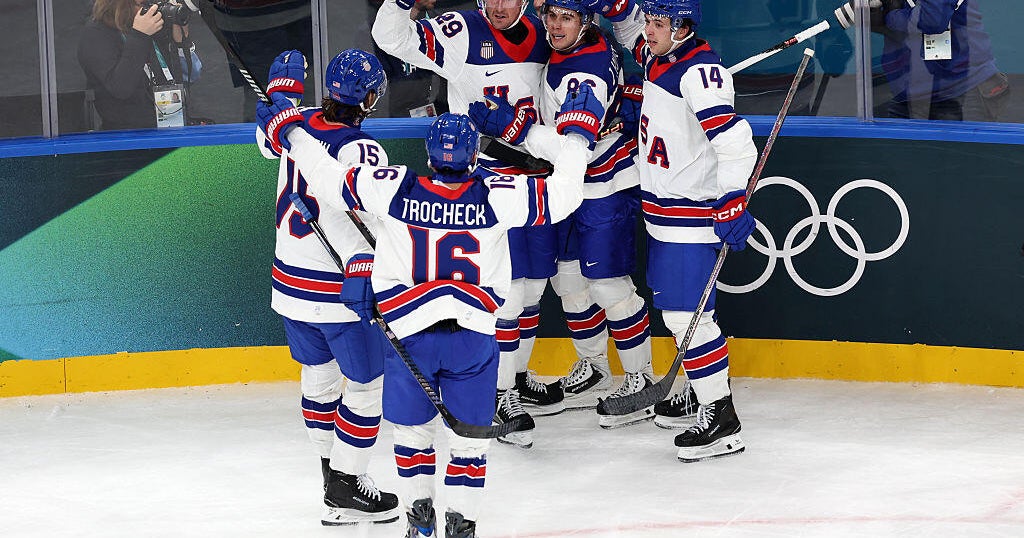
The American hockey team’s Olympic journey got off to an unusual but ultimately triumphant start Thursday night at Milano Rho Ice Hockey Arena. While Lynyrd Skynyrd’s “Free Bird” echoed through the arena seven times celebrating goals, two of those celebrations were cut short when video reviews wiped them off the scoreboard. Despite these frustrating setbacks, the U.S. team demonstrated the resilience and depth that makes them medal contenders, ultimately crushing Latvia 5-1 in their opening Group A match. The victory showcased the overwhelming talent advantage Team USA possesses, with contributions coming from throughout their NHL-laden roster. Brock Nelson emerged as the star of the night with two goals, while four different players recorded two assists each, proving that this American squad doesn’t rely on just one or two superstars but rather boasts dangerous scoring threats on every line.
American Depth on Full Display
What makes this U.S. team particularly dangerous isn’t just the star power at the top of the roster—it’s the incredible depth throughout all four lines. “We believe in the depth we have,” winger Jake Guentzel said after the game. “There’s good players on every line. That’s just where American hockey is right now.” This sentiment perfectly captures the evolution of American hockey over the past two decades. The days when the U.S. relied heavily on a few elite players are long gone. Now, the challenge for opposing teams is that there’s no letdown when the third or fourth line takes the ice. The goal scorers came from different lines, the assists were spread around, and every shift seemed to put pressure on the overwhelmed Latvian defense. This depth isn’t accidental—it’s the result of decades of investment in youth hockey programs, improved coaching at all levels, and the growing number of Americans making their mark in the NHL.
Finding Their Rhythm After a Strange First Period
The opening period didn’t go quite as smoothly as the Americans might have hoped. Two goals were called back after coach’s challenges, disrupting the team’s momentum and giving Latvia unexpected hope. When Latvia managed to tie the game during that chaotic first period, there might have been concerns that the U.S. team was feeling the pressure of Olympic expectations. Those concerns proved unfounded. “I felt like we controlled the play,” center Jack Eichel said afterward. “We’re going to continue to get better every game in this tournament, every period in this tournament. That’s our goal, and it’s a good start for us.” After shaking off the rust and the frustration of the video reviews, the Americans settled into their game and simply overwhelmed their opponents. The final shot count told the story: 38-18 in favor of the United States. For long stretches, Latvia could barely touch the puck, chasing the play in their own zone while the Americans cycled with confidence and precision.
A Goal That Captured Team USA’s Dominance
If one moment captured just how outmatched Latvia was, it came late in the second period with Brock Nelson’s second goal of the night. What started as an odd-man rush turned into something resembling a Harlem Globetrotters exhibition on ice. The puck moved from Jack Hughes to his brother Quinn, then to Matthew Tkachuk, back to Jack, and finally to Nelson, who simply tapped it into a half-open net with just 11.1 seconds remaining in the period. Latvian goaltender Elvis Merzlikins, who had been under siege all night, could only sit in his crease with his head bowed in his lap after the goal. “I don’t think there’s much to do,” Merzlikins said with resignation. “If that guy wouldn’t score, probably the other guy would score because I felt completely two open guys, and it’s hard to save something like that.” It was a moment that perfectly illustrated the gulf in talent between these two teams. After allowing four goals on 32 shots, Merzlikins was mercifully pulled to start the third period, replaced by Arturs Silovs. The change didn’t help much—captain Auston Matthews welcomed the new goaltender to the Olympics with a power-play goal, assisted by Eichel and Quinn Hughes.
The Special Teams Advantage and Offensive Firepower
Beyond the even-strength dominance, the United States also flexed its special teams muscle. The power play looked crisp and dangerous, with coach Mike Sullivan making the interesting decision to deploy 6-foot-6 winger Tage Thompson on the loaded top unit. Thompson made his coach look brilliant by roofing a beautiful backhander that showcased both his size advantage and his soft hands. Matthews’ power-play goal in the third period was simply icing on the cake. The assist distribution showed how balanced this offense truly is—Quinn Hughes, Jack Hughes, Matthew Tkachuk, and Eichel each finished with two helpers. “I just think the depth that we have, it showed,” Brady Tkachuk said. “I thought everybody played a great game tonight. You just see the buy-in. You see the buy-in of every line playing the right way.” Meanwhile, goaltender Connor Hellebuyck had a relatively quiet night in the American net, needing to make only 17 saves, though he was sharp when called upon to preserve the comfortable lead.
Looking Ahead: Olympic Hockey’s Return and What’s Next
The return of NHL players to the Olympics has generated tremendous excitement among hockey fans worldwide. Jack Hughes addressed the smaller Olympic ice surface—a frequent topic of discussion—telling CBS News that it hasn’t been a major adjustment. “Talking about it beforehand, you think it would be a much bigger deal,” Hughes explained. “The rink’s pretty nice. I’m sure as the tournament gets along, the ice will get better. When you’re out there, the size isn’t too big of a difference.” Tage Thompson spoke to the broader significance of having the world’s best players competing in the Olympics: “I just think it’s best on best, you know, I think any time you’re taking all the best hockey players and having them represent their country, there comes another level of pride when you wear your colors. And obviously, the intensity gets heightened.” The United States will look to build on this dominant performance when they face Denmark on Saturday night, followed by a preliminary round finale against Germany 24 hours later. If this opening performance is any indication, the Americans are genuine medal contenders who will be difficult for any team to handle. The depth, skill, goaltending, and special teams are all there—now it’s about maintaining focus and continuing to improve as the competition gets tougher in the medal rounds.