
U.S. Military Drug Interdiction Strikes Kill 11 in Latest Operations
Deadly Escalation in War on Drug Trafficking
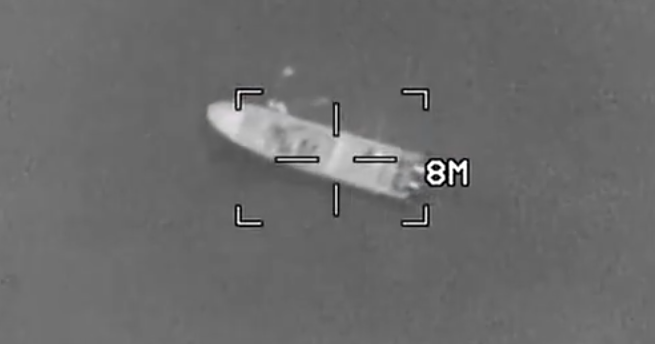
The United States military has intensified its controversial campaign against alleged drug traffickers in Latin American waters, with three separate strikes conducted on Monday resulting in eleven deaths. This operation marks one of the deadliest single days since the Trump administration launched this aggressive interdiction strategy in early September. According to U.S. Southern Command, the military targeted three small vessels suspected of drug smuggling—two boats carrying four people each were struck in the eastern Pacific Ocean, while a third vessel with three occupants was hit in the Caribbean Sea. The deaths bring the total number of people killed in these operations to at least 145 across 42 known strikes over the past several months. The military released videos on social media showing the moments before the boats were destroyed, with footage depicting the small, open vessels either moving through or floating on the water before being engulfed in flames and explosions. In some of the videos, people can be clearly seen sitting in the boats just moments before they were obliterated, raising serious questions about the human cost of this military campaign and whether those aboard had any opportunity to surrender.
Questions About Evidence and Effectiveness
One of the most significant controversies surrounding these strikes is the lack of concrete evidence provided by the military to substantiate claims that the targeted vessels were actually transporting drugs. While U.S. Southern Command maintains that it only targets alleged drug traffickers along known smuggling routes, officials have not released proof that the destroyed boats were carrying narcotics. This absence of verification has fueled criticism from lawmakers, legal experts, and human rights advocates who question whether the military is conducting proper intelligence gathering before launching lethal strikes. Furthermore, critics have pointed out a fundamental flaw in the strategy’s logic: the fentanyl responsible for the majority of fatal overdoses in the United States typically doesn’t arrive by small boat through Caribbean or Pacific waters. Instead, most fentanyl is trafficked overland from Mexico, where it’s manufactured using precursor chemicals imported primarily from China and India. This reality raises serious doubts about whether destroying small boats in Latin American waters will have any meaningful impact on the drug crisis affecting American communities. The disconnect between the military’s targets and the actual drug supply chain suggests that these strikes may be more about demonstrating aggressive action than implementing an effective counter-narcotics strategy.
Legal and Ethical Controversies
The legality of these military operations has become a flashpoint for debate between the Trump administration and its critics. President Donald Trump has declared that the United States is in “armed conflict” with drug cartels in Latin America, using this characterization to justify what he describes as a necessary escalation to stop the flow of illegal drugs into the country. However, this framing has been challenged by legal scholars and Democratic lawmakers who argue that the administration hasn’t obtained proper congressional authorization for what amounts to a military campaign in international waters. The controversy intensified dramatically when it was revealed that the military had conducted a follow-up strike on survivors of the very first boat attack, effectively executing people who had survived the initial assault. While the Trump administration and Republican lawmakers defended this action as both legal and necessary under the rules of engagement for combating “narcoterrorists,” Democratic legislators and international legal experts condemned the killings as murder or potentially even war crimes. The fundamental question remains: Can the U.S. military legally use lethal force against suspected drug smugglers without trial, without verified evidence of criminal activity, and without a formal declaration of war? This grey area of international law and military authority has created deep divisions in Congress and raised concerns about the precedent being set for future military operations.
Pattern of Deadly Encounters and Failed Rescues
The pattern of these strikes reveals a troubling trend in how the military handles these interdictions. Earlier in the month, another alleged drug-carrying boat was struck, resulting in two deaths and leaving one survivor adrift at sea. According to a U.S. Coast Guard spokesperson, Southern Command notified the Coast Guard about a “person in distress” following the strike, but the subsequent search-and-rescue effort failed to locate the survivor. This incident highlights another controversial aspect of the campaign: what happens to survivors after their vessels are destroyed in the middle of the ocean? The military’s practice of destroying boats without making provisions for capturing suspects or providing immediate rescue raises questions about whether the primary objective is interdiction and law enforcement or simply elimination of targets. Traditional law enforcement and even military operations typically include provisions for detaining suspects and providing medical care to wounded individuals, but these boat strikes appear to prioritize destruction over detention. The release of videos showing people visible in boats moments before they’re destroyed has also sparked outrage, with critics arguing that the military is essentially conducting executions without due process, trial, or even confirmation that those aboard are actually involved in drug trafficking rather than potentially being fishermen or migrants.
Military Buildup and Broader Regional Strategy
These boat strikes are part of a much larger expansion of U.S. military presence and operations in Latin America, representing one of the biggest buildups of American military power in the region in decades. The campaign reached a dramatic peak with the capture of then-Venezuelan President Nicolás Maduro on January 3rd during a raid by American forces. Maduro was subsequently brought to the United States to face drug trafficking charges, marking an unprecedented action against a sitting head of state in the Western Hemisphere. The world’s largest aircraft carrier, the USS Gerald R. Ford, was deployed to the Caribbean late last year as part of this show of force, accompanied by three destroyers to demonstrate American military dominance in the region. However, the shifting global security situation has already impacted this deployment. Last week, the Ford was ordered to redirect toward the Middle East as tensions between the United States and Iran have escalated. By Tuesday, the carrier strike group had reached the mid-Atlantic and was no longer in U.S. Southern Command’s area of operations, heading to join the USS Abraham Lincoln carrier group already stationed in Middle Eastern waters. Since Maduro’s capture, American forces have not only continued the boat strikes but have also seized oil tankers connected to Venezuela, as part of the Trump administration’s broader strategy to gain control over the South American nation’s substantial oil resources and reshape the political landscape of the region.
Congressional Opposition and Uncertain Future
The boat strike campaign has created a significant political divide in Washington, with most Democratic lawmakers expressing strong opposition to the military operations. Their criticism centers on two main points: the administration’s failure to provide sufficient evidence that the targeted boats were actually trafficking drugs to the United States, and the lack of proper congressional authorization for what effectively constitutes a military campaign against non-state actors in international waters. Several Democratic legislators have introduced measures to restrict or halt the boat strikes, arguing that the executive branch has overstepped its constitutional authority by waging what amounts to warfare without a formal declaration or specific authorization from Congress. However, these legislative efforts have consistently failed to gain enough support in both the House and Senate, where Republican majorities have largely backed the Trump administration’s aggressive approach to counter-narcotics operations. The political stalemate means that the boat strikes are likely to continue unless there is a dramatic shift in public opinion or a legal challenge successfully winds its way through the courts. Meanwhile, the human cost continues to mount, with 145 people now dead and questions remaining about how many were actually involved in drug trafficking versus how many might have been innocent fishermen, migrants, or others caught in the wrong place at the wrong time. As this controversial campaign continues, it raises fundamental questions about the appropriate use of military force, the balance between security objectives and human rights, and whether the United States is truly addressing the root causes of its drug crisis or simply creating new international tensions while failing to stem the actual flow of narcotics into American communities.